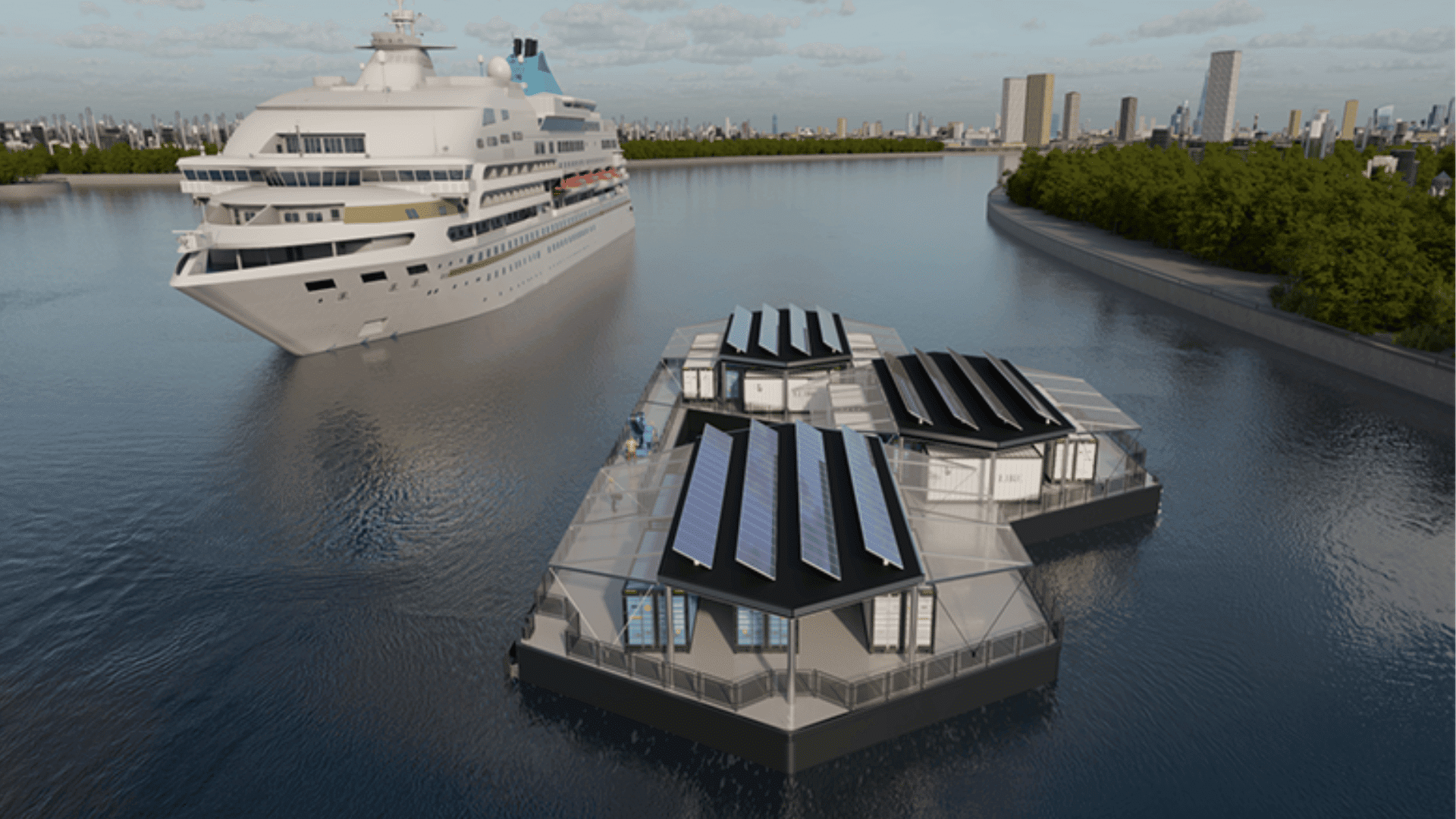
Ports around the world are trying to transition to cleaner energy. However, the electric grid continues to be a challenge. Plugging large ships into the shore requires serious power. Building that infrastructure on land takes anywhere from three to seven years, largely due to grid delays, high costs, and a lack of space.
A new floating system might offer a legitimate solution to these bottlenecks. Putting the power infrastructure straight onto the water allows ports to bypass land constraints entirely.
The hydrogen system uses three connected floating platforms that together take up about 1,200 square meters. It packs a mix of technologies, including 45 megawatt-hours of battery storage, hydrogen fuel cells, and onboard solar panels. It can reportedly deliver 5 megawatts of continuous clean power, which is enough to support medium-sized cruise ships and other large vessels.
Moving Hydrogen Power to the Water
Advertisement
Instead of using giant generators, the platform uses smaller 1.3-megawatt hydrogen fuel cells that run continuously. They slowly charge the onboard batteries during the week, and then the batteries quickly dump that power into ships when they dock. This setup uses about 7,500 to 8,000 kilograms of hydrogen a week, stored in containers right on the platform. Onboard solar panels also provide up to 146 kilowatts of power to save on hydrogen.
A recent six-month validation program in the UK tested the setup. Wave tank testing at the University of Strathclyde showed the platform stays stable in different sea conditions, and mooring analysis found no big technical barriers to building it.
Analysis shows the system can cut a vessel’s docking emissions by about 77% compared to using standard diesel generators. Right now, this energy is pricier than standard shore power, costing around £0.25 to £0.50 per kilowatt-hour. However, the partners noted that the real value is how fast it can be deployed.
Additionally, if demand shifts, the whole floating platform can simply be moved to a new location. ELIRE Maritime is already looking at future deployments in the UK, Europe, and Australia.
 Read Exclusive Stories
 Bookmark & Save Articles For Later