If you’ve ever felt your phone get uncomfortably hot while running a bunch of apps, it’s because the device is struggling to keep cool. For a long time, we’ve relied on metals like copper and silver to move heat away from sensitive parts, but engineers are starting to hit a wall.
Recently, a team of researchers working at the Argonne National Laboratory found a potential solution. They discovered a specific metallic material called theta-phase tantalum nitride that carries heat much better than anything currently in use.
A New Heat-Conducting Material
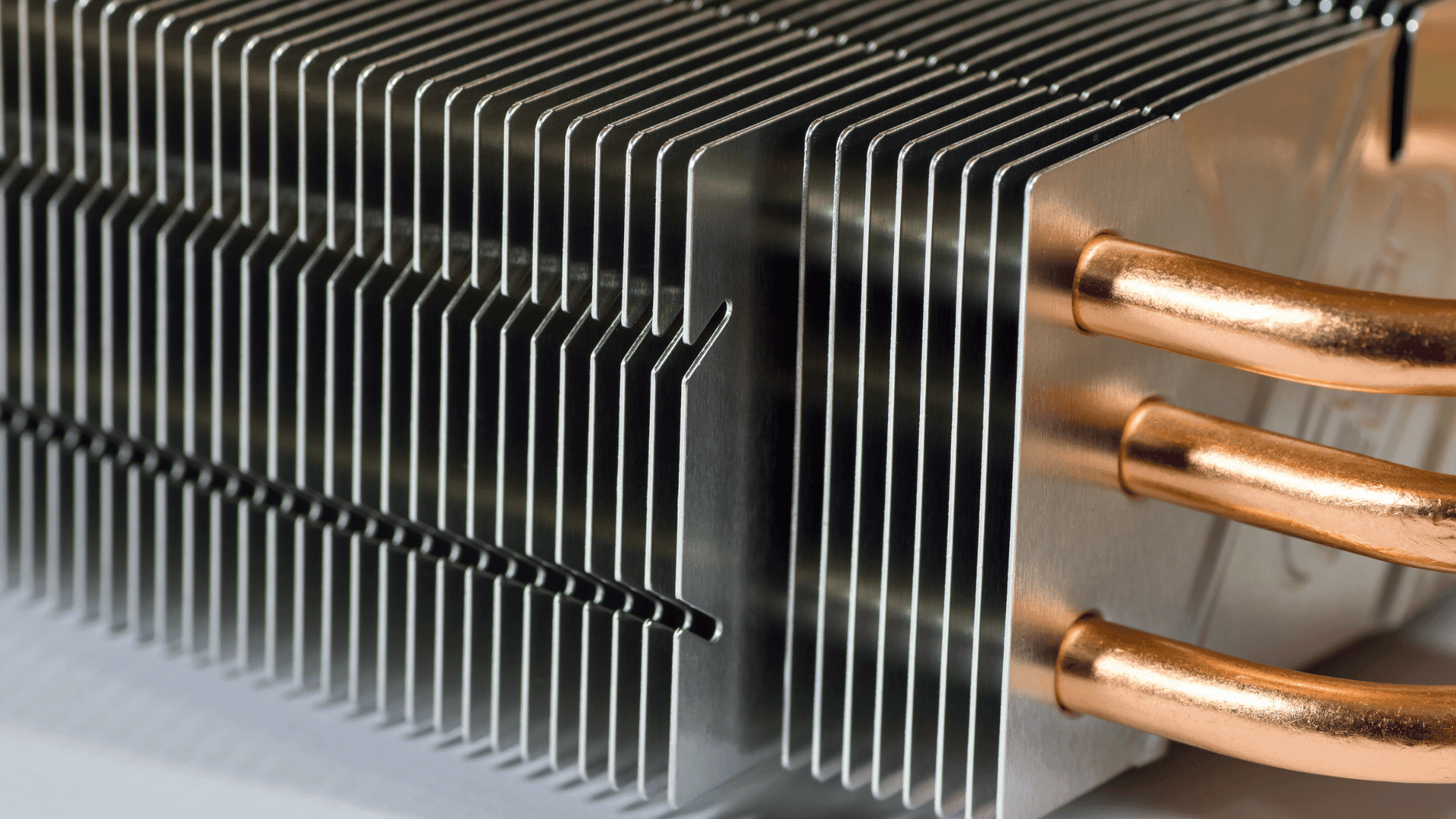
Right now, copper is the go-to choice for keeping electronics cool. It handles about 30% of the thermal management market. However, even copper has its limits. While it has a thermal conductivity of about 400 watts per meter-Kelvin, this new material hits roughly 1,100, which is nearly three times more efficient than the best metals.
Advertisement
“At a time when AI technologies advance rapidly, heat-dissipation demands are pushing conventional metals like copper to their performance limits, and the heavy global reliance on copper in chips and AI accelerators is becoming a critical concern,” Yongjie Hu, a professor at UCLA who led the team, explained. “Our research shows that theta-phase tantalum nitride could be a fundamentally new and superior alternative for achieving high thermal conductivity and may help guide the design of next-generation thermal materials.”
Keeping Our Devices Cool
In most metals, heat travels through a mix of moving electrons and vibrations called phonons. Usually, these two bump into each other, which slows down the cooling process. However, when the team tested this new material at the Advanced Photon Source (APS), they found those interactions were unusually weak. This allows heat to flow through the metal without getting stuck.
“The enhanced capabilities of the upgraded APS made these precise measurements possible,” Ahmet Alatas, a scientist at Argonne, said. “Together, experiment and theory provide a microscopic explanation for the record-high thermal conductivity.”
This discovery could eventually help keep data centers running smoothly or improve the cooling systems in airplanes and quantum computers.
 Read Exclusive Stories
 Bookmark & Save Articles For Later