For over a hundred years, tower cranes have done the heavy lifting in our cities, carrying steel, moving concrete, and helping to build our skylines. However, their job hasn’t changed much. For the most part all they do is move materials from one spot to another.
A tech company named LUYTEN is trying to take these cranes to the next level. The company recently announced Ascend, a platform that turns standard tower cranes into robotic 3D concrete printing systems. Instead of moving supplies, these cranes will build structures up to 328 feet (100 meters) tall all on their own.
Turning Old Cranes into 3D Printing Robots
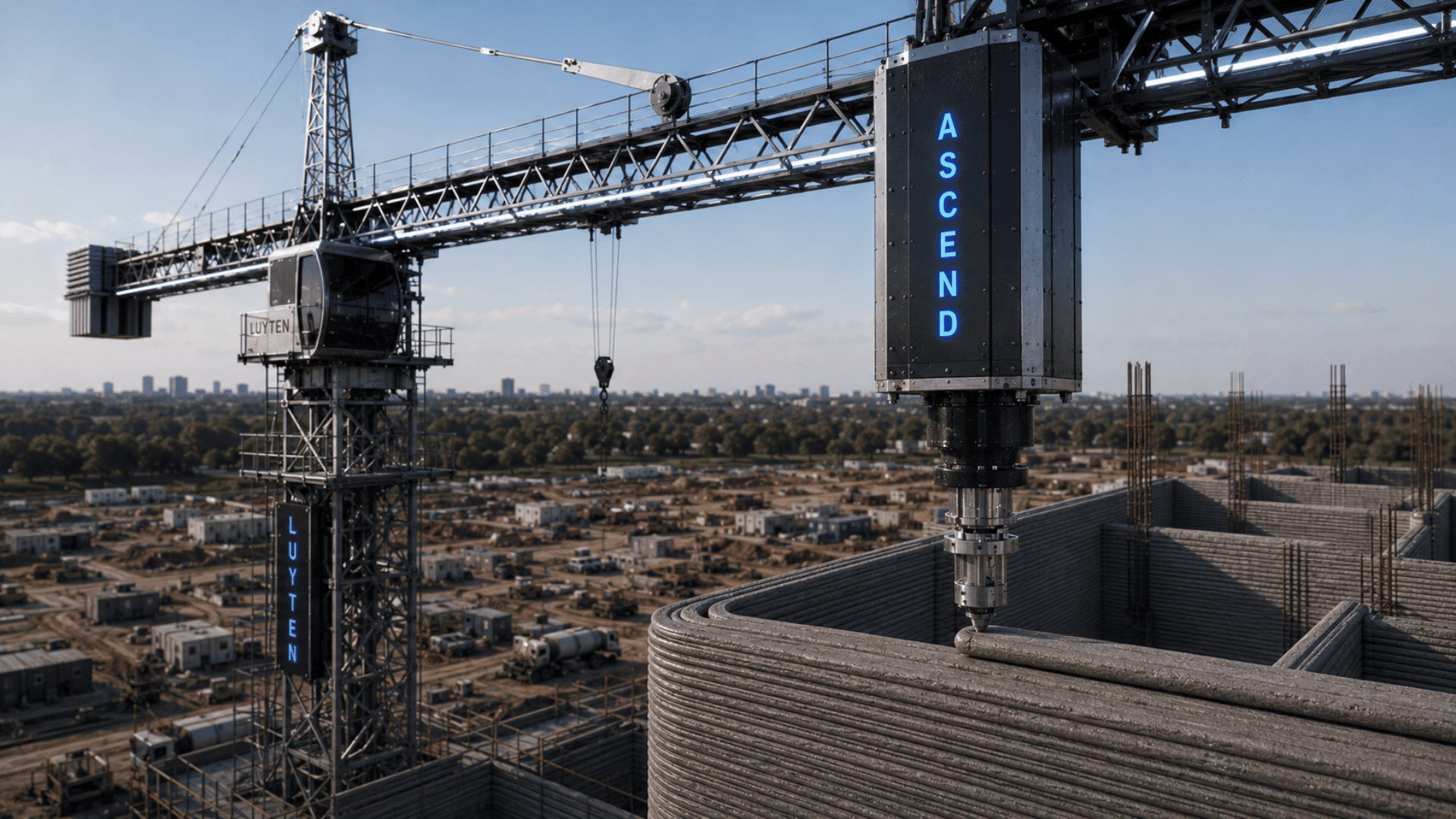
The construction industry is under a lot of pressure right now as cities continue to grow, housing demands increase, and major labor shortages. LUYTEN thinks the fix is making construction work more like modern manufacturing, using robots and digital designs to get things done faster and with less waste.
Instead of building a brand-new type of robot, LUYTEN upgraded the machinery builders already use. Ascend works with standard tower cranes, giving them a robotic arm that prints engineered concrete directly from a digital blueprint. It can reach out up to 147 feet (45 meters), making it useful for apartment buildings, warehouses, and defense infrastructure.
“The construction industry has spent decades trying to automate around the tower crane,” Professor Ahmed Mahil, the founder and CEO of LUYTEN, explained. “We chose a different path. We turned the tower crane itself into a robot.”
The Future of Building
This new approach means companies don’t have to toss their old equipment out to get the benefits of new technology.
“There are hundreds of thousands of tower cranes operating around the world today,” Mahil said. “The construction industry does not need to replace its existing infrastructure to benefit from automation. It needs technologies that integrate with the infrastructure already shaping our cities.”
As tech advances, the company believes that cranes will become the center of the modern job site.
“We believe the next chapter of construction will be defined by intelligent infrastructure,” Mahil said. “Physical assets that once moved materials will become digitally enabled manufacturing systems. Every tower crane becomes a potential construction robot.”
Advertisement
 Read Exclusive Stories
 Bookmark & Save Articles For Later