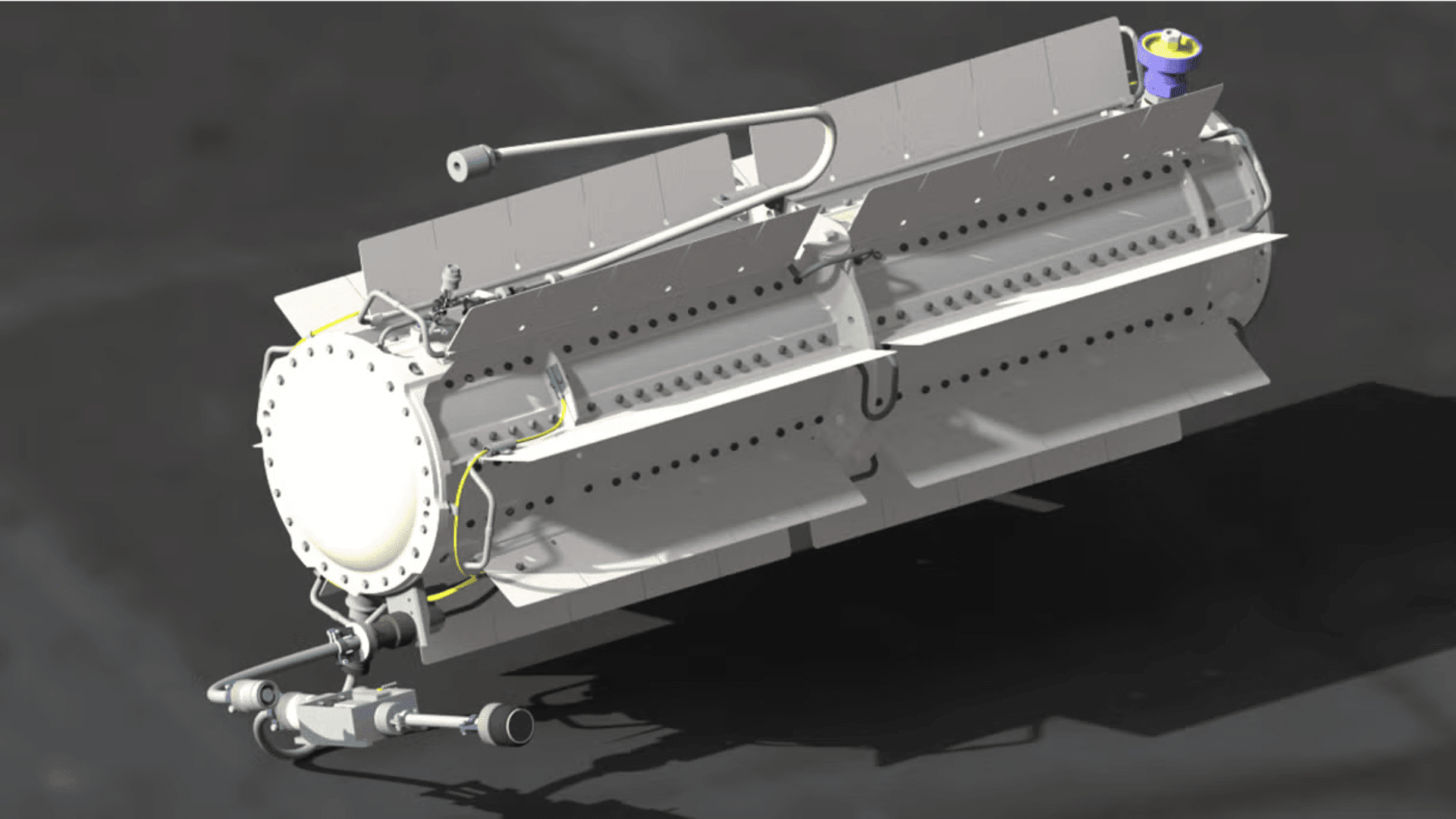
Exploring the outer edges of our solar system is a tough job because traditional space probes travel so far from the Sun that solar panels become useless. To survive, these spacecraft need a reliable internal power source. L3Harris Technologies recently finished the design for a next-generation nuclear battery that will hopefully solve this and power NASA’s future deep space missions
The system is called the Next-Generation Radioisotope Thermoelectric Generator, or Next Gen RTG. It officially cleared its critical design review on April 2, 2026. This means the design works on paper and is ready to be built.
“Passing the CDR is an important milestone because it validates that our design meets all the technical requirements and can be manufactured,” said Bill Sack, General Manager, RocketWorks and Power Systems at L3Harris. “It also demonstrates we’ve successfully re-established this critical capability after years of limited production.”
Next-Gen Tech For NASA
NASA has used RTGs for 60 years, taking the heat from decaying plutonium-238 and turning it into electricity. Early versions are still powering the Voyager probes today.
Advertisement
However, this new version is built specifically for the vacuum of space, unlike the ones currently running the Mars rovers. Because it is built for the cold vacuum, it can reject heat better and create more power without adding extra weight. Each unit will generate about 250 watts of power at the start of its life.
“The Next Gen RTG represents a significant leap forward in efficiency,” added Sack. “We’re delivering more power in the same mass envelope, which is critical when every kilogram matters for deep space missions.”
NASA hopes to use these in the early 2030s for a proposed mission to Uranus. The spacecraft would use two generators to keep its instruments warm and running. Additionally, it could help fund future trips to Neptune, Pluto, or even beyond.
Rebuilding the Past
L3Harris started this project in 2021 for the U.S. Department of Energy. The main challenge was that the company did not build the original systems from decades ago. They had to figure out how to make them again from old records.
“We are proving we can do it again,” said Leo Gard, Space Propulsion & Power Systems Program Manager at L3Harris. “While we didn’t build the original generators, we’ve successfully reconstructed incomplete documentation and identified modern equivalents for obsolete components through creative problem-solving.”
 Read Exclusive Stories
 Bookmark & Save Articles For Later