Most use EV batteries lithium iron phosphate (LFP) because it is safe, long-lasting, and avoids expensive metals like cobalt or nickel. In fact, LFP batteries make up nearly half the global market. However, when these batteries die, recycling them usually requires intense heat or harsh chemicals.
“These processes are not environmentally friendly,” said Wei Li, a researcher at the University of California San Diego. They also consume a lot of energy and create large amounts of waste and emissions.
Upgrading the EV Batteries
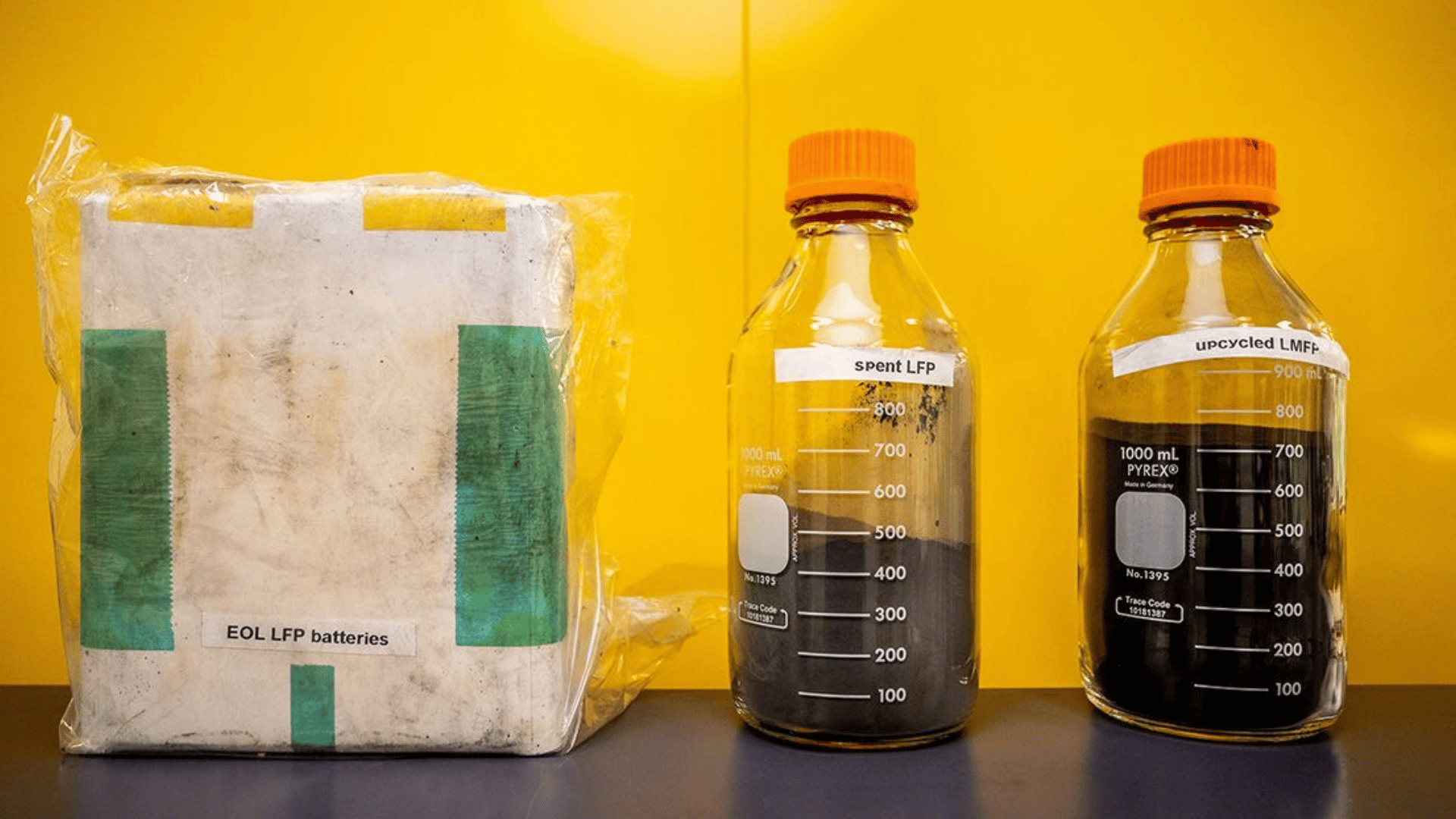
A team of engineers at UC San Diego found a cleaner way to handle this waste. Instead of breaking old batteries down to raw chemicals, they upgrade the spent material into something better. They turn LFP into lithium manganese iron phosphate (LMFP), a material that stores more energy.
The lab previously figured out how to restore spent LFP back to fresh LFP. “This could offer a more valuable end use for spent batteries,” added Zheng Chen, the senior author of the study.
The team opens the used battery packs, unrolls the tightly wound layers, and soaks them in water. Gently agitating the water separates the active material from its aluminum backing. “The aluminum foil can also be recycled separately,” Li said.
Advertisement
Making the Pieces Fit
The leftover sludge is dried and ground into a dark powder. Then, researchers add lithium, manganese, and phosphate salts. However, the old battery powder and the new salts do not naturally mix.
“Their structures are incompatible,” Li said. “If mixed directly, the atomic distribution of the end product will not be uniform and will have worse electrochemical performance.”
To fix this, the team grinds the mixture together to make the particles very fine and then heat it up.
“This is where the exciting chemistry happens,” Chen said.
As it heats, the salts form an intermediate structure that perfectly matches the original battery material. Manganese atoms slowly replace some iron atoms, blending the mixture into a single, uniform LMFP structure. A thin carbon coating also forms around the particles to protect the material and improve electrical conductivity.
The final product holds more energy than the original LFP battery while staying just as safe and durable. The researchers showed this process works on different battery brands and can safely scale up to kilogram amounts. Next, they plan to improve the process yield so it works better for large-scale industrial use.
 Read Exclusive Stories
 Bookmark & Save Articles For Later