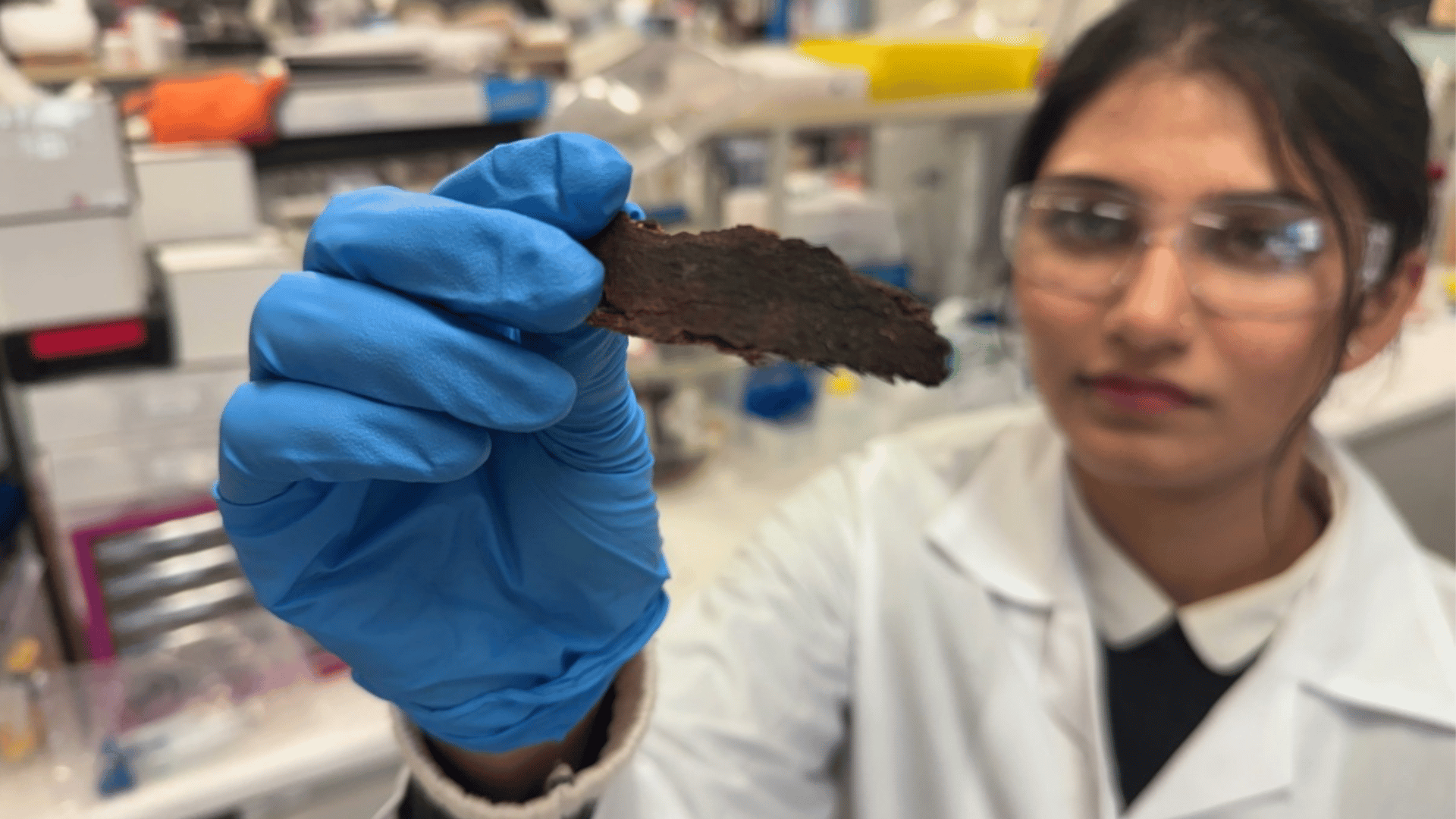
Eucalyptus bark is often stripped from logs and treated as waste. Researchers at RMIT University found a new way to use it instead of throwing it away. They turned the bark into a porous form of carbon that can trap pollutants from air and water.
Porous carbon is already used in water filters and air purifiers. These materials have a network of microscopic pores. As air or water passes through, unwanted molecules get trapped.
Usually, making porous carbon involves complex, multi-stage routes that need extra energy. The team at RMIT used a simple, one-step process instead. PhD researcher Pallavi Saini led the experimental work and said that the bark’s performance surprised the team.
“It is usually treated as low‑value waste, but with a simple process we were able to convert it into a highly porous material with strong adsorption performance,” Saini said. “It highlights how overlooked biomass can be transformed into something useful.”
Why Eucalyptus and What’s Next
Advertisement
Researchers worldwide study plant waste for these filters, checking the availability, sustainability, processing complexity, and performance. Eucalyptus bark compares well, especially in Australia.
“The strength of this approach lies in its simplicity,” Dr. Deshetti Jampaiah explained. “We are converting a widely available waste material into a functional carbon with promising performance, without relying on complex processing steps. That makes it highly relevant for real‑world environmental applications.”
Australia has over 900 species of eucalyptus trees. Because the bark comes from existing forestry operations, it doesn’t compete with food production and fits with circular-economy and waste-reduction goals.
Next, the researchers plan to work with Indigenous people and organizations to find which species work best. They plan to combine scientific analysis with ecological knowledge to understand species-specific traits. Eventually, this bark-derived carbon could help with water purification, air filtration, and carbon dioxide capture.
“This work shows how eucalyptus bark can be transformed into materials that support cleaner water, cleaner air and carbon capture,” Professor Suresh Bhargava AM added, Director of the Centre for Advanced Materials and Industrial Chemistry (CAMIC) at RMIT, added.
 Read Exclusive Stories
 Bookmark & Save Articles For Later