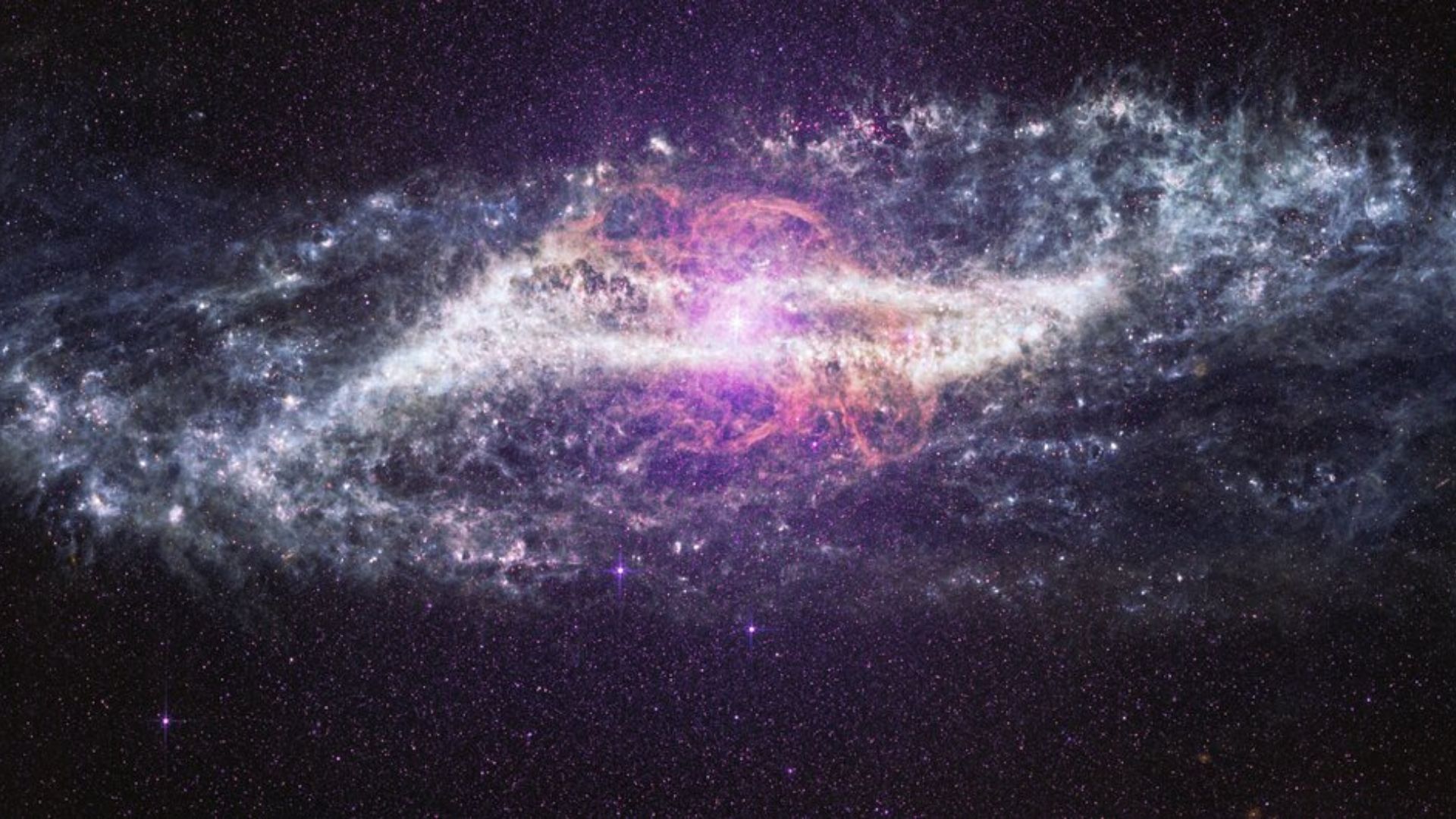
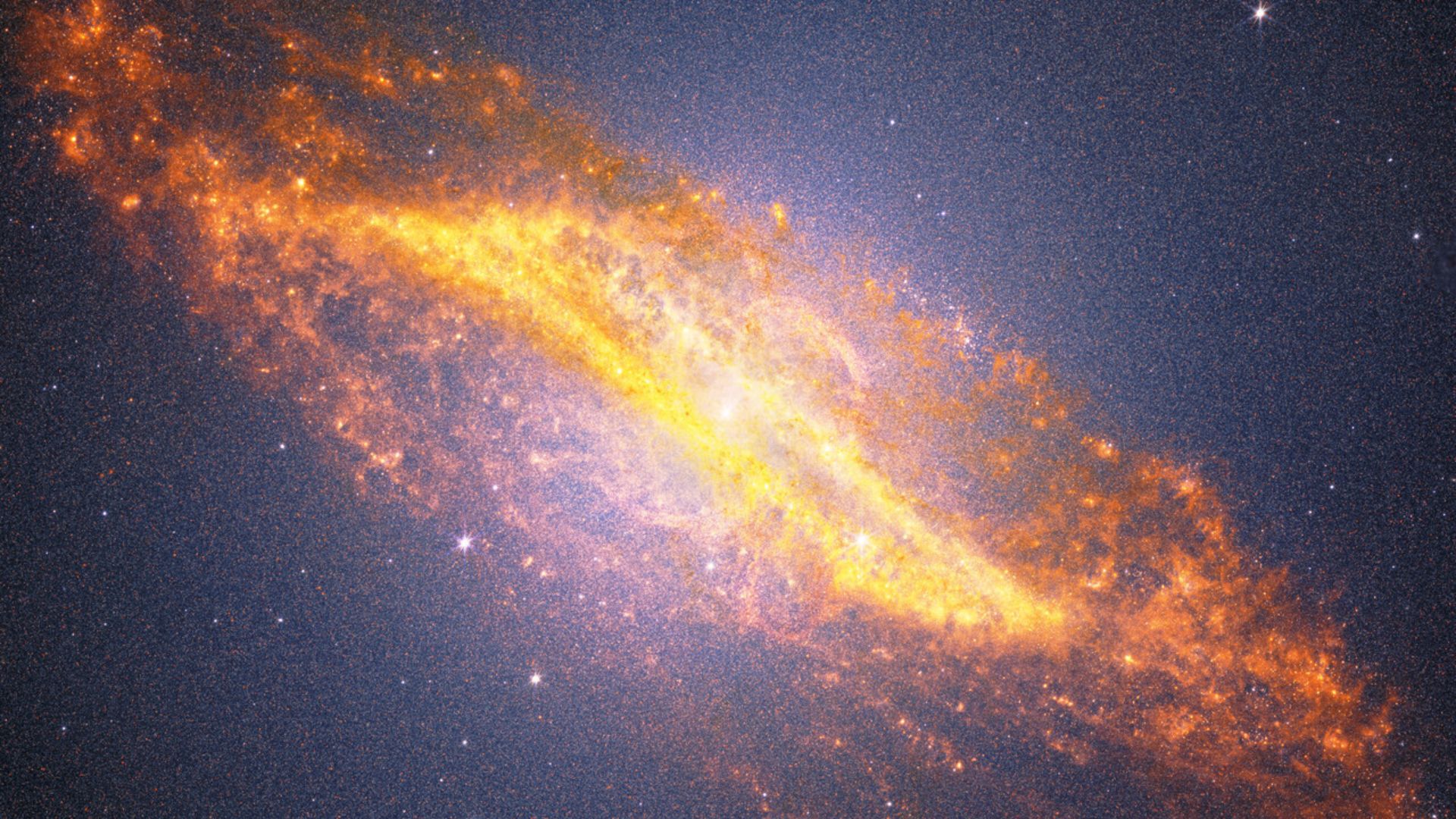
The galaxy the James Webb Space Telescope is observing is called Centaurus A. It is located about 11 million light-years from Earth. Although that distance is often considered incredibly far, the reality is that Centaurus A is actually relatively close to Earth by galactic standards. However, Centaurus A is not a normal galaxy. It is a highly active galaxy that has endured a violent past, but the telescope’s new images finally allow astronomers to see what is happening within it.
Cutting Through The Dust
In older images of Centaurus A, the Hubble Space Telescope captured little of the galaxy’s center. A massive lane of dark dust within that galaxy prevented the Hubble Telescope from being able to get an image of the galaxy’s center.
However, the Webb Telescope can take images of the galaxy in infrared light. Infrared light can cut through the thick dust in the galaxy, revealing new and interesting findings. Additionally, astronomers have spotted two unusual shapes within these galaxies. Each of these shapes contains many stars with substantial dust within their systems. These types of stars are the raw material necessary for the formation of new planets and stars.
Advertisement
A History Written In Stars
Unlike the Hubble Space Telescope, the Webb Telescope can take images of the galaxy in infrared light. As a result, the effects of that impact can still be seen within the galaxy today.
Thanks to the Webb Space Telescope‘s high resolution, astronomers can see individual stars in the galaxy. Each of these older stars can help astronomers understand the galaxy’s history. For instance, by studying each of these individual stars, astronomers can determine periods in the galaxy’s history when stars formed and when the impact with the other galaxy created new stars.
Watching The Black Hole
At the center of Centaurus A is a supermassive black hole that is actively eating away at the gas and dust that surrounds it. Furthermore, astronomers can study the gas surrounding the black hole rather than simply taking pictures of the region. Their observations have revealed fast-moving gas caused by the black hole’s presence. Additionally, warm gas clouds swirl around the black hole in a disk within the galaxy. These observations allow the astronomers to study how the black hole impacts the rest of the galaxy.
 Read Exclusive Stories
 Bookmark & Save Articles For Later