NASA’s Lunar Reconnaissance Orbiter recently discovered a brand-new crater, twice the length of an American football field, on the Moon.
Researchers published their findings in Science Advances. The orbiter science team is led by Dr. Mark Robinson from Intuitive Machines and Dr. Julie Stopar from USRA’s Lunar and Planetary Institute. According to the researchers, they found a crater that measures 222 meters (728 feet) across and drops about 43 meters (141 feet) deep.
Largest Crater Formed and Discovered
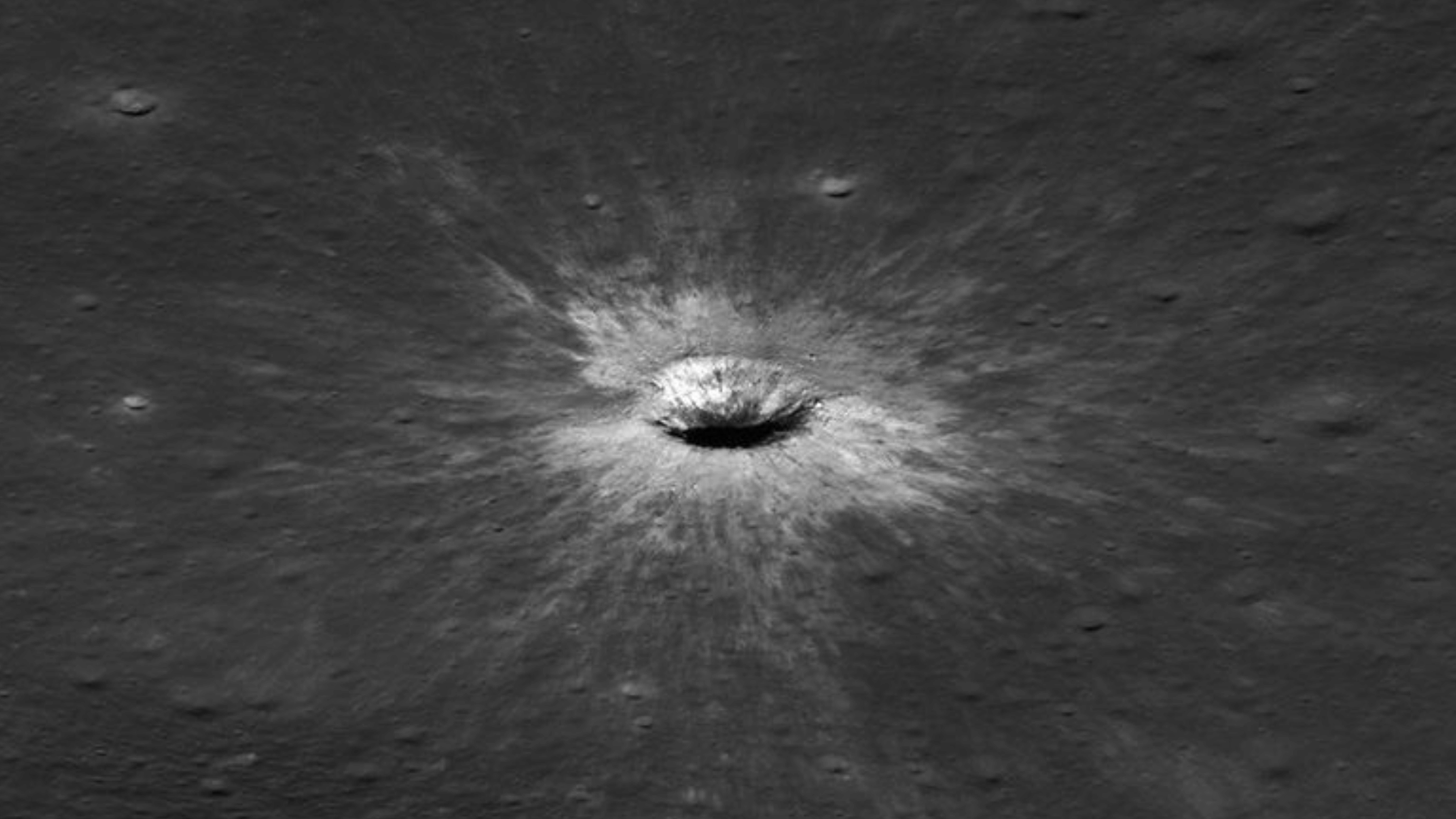
This is significant because it’s the largest crater formed and discovered during the entire time the Lunar Reconnaissance Orbiter has been operating.
Scientists estimate the impact happened recently, sometime between April 11 and May 22, 2024, which makes it about two and a half years old. Finding a crater of this size is rare. In fact, an impact of this size is estimated to happen roughly once every 130 years.
Advertisement
The new crater is located on the boundary between the Moon’s bumpy highlands and a wide, flat area known as a mare.
A Fitting Name
Constant meteorite bombardment and exposure to space typically wear down the Moon’s surface over time. Because this crater is so new, it shows the immediate, fresh effects of a crash before any wear and tear happens.
The lunar pit is surrounded by a bright blanket of ejecta, essentially rock and dust from when the impact hit. This dust blanket extends for hundreds of meters from the crater’s rim, making it incredibly useful for further studies.
The International Astronomical Union officially named it McGetchin crater, honoring the renowned volcanologist and lunar scientist Thomas McGetchin. In 1977, he became the director of the Lunar and Planetary Institute and started its summer internship program.
It is a highly fitting name for the site because in 1973, McGetchin and his colleagues built a model to explain how ejecta spreads around impact craters. Today, scientists still use his framework to interpret those exact patterns. Now, they have a brand new crater named after him to observe it in action.
 Read Exclusive Stories
 Bookmark & Save Articles For Later