Exploring the surface of Mars or the Moon isn’t fast-paced. Right now, rovers move slowly across the dirt because of a massive communication gap. Since it can take anywhere from four to 22 minutes for a signal to travel between Earth and Mars, scientists have to plan every move in advance. This means rovers usually only travel a few hundred meters a day.
Instead of waiting for a human to approve every single step, researchers tested a semi-autonomous robot that can check out multiple rocks on its own.
A Smarter Robot For Space Exploration
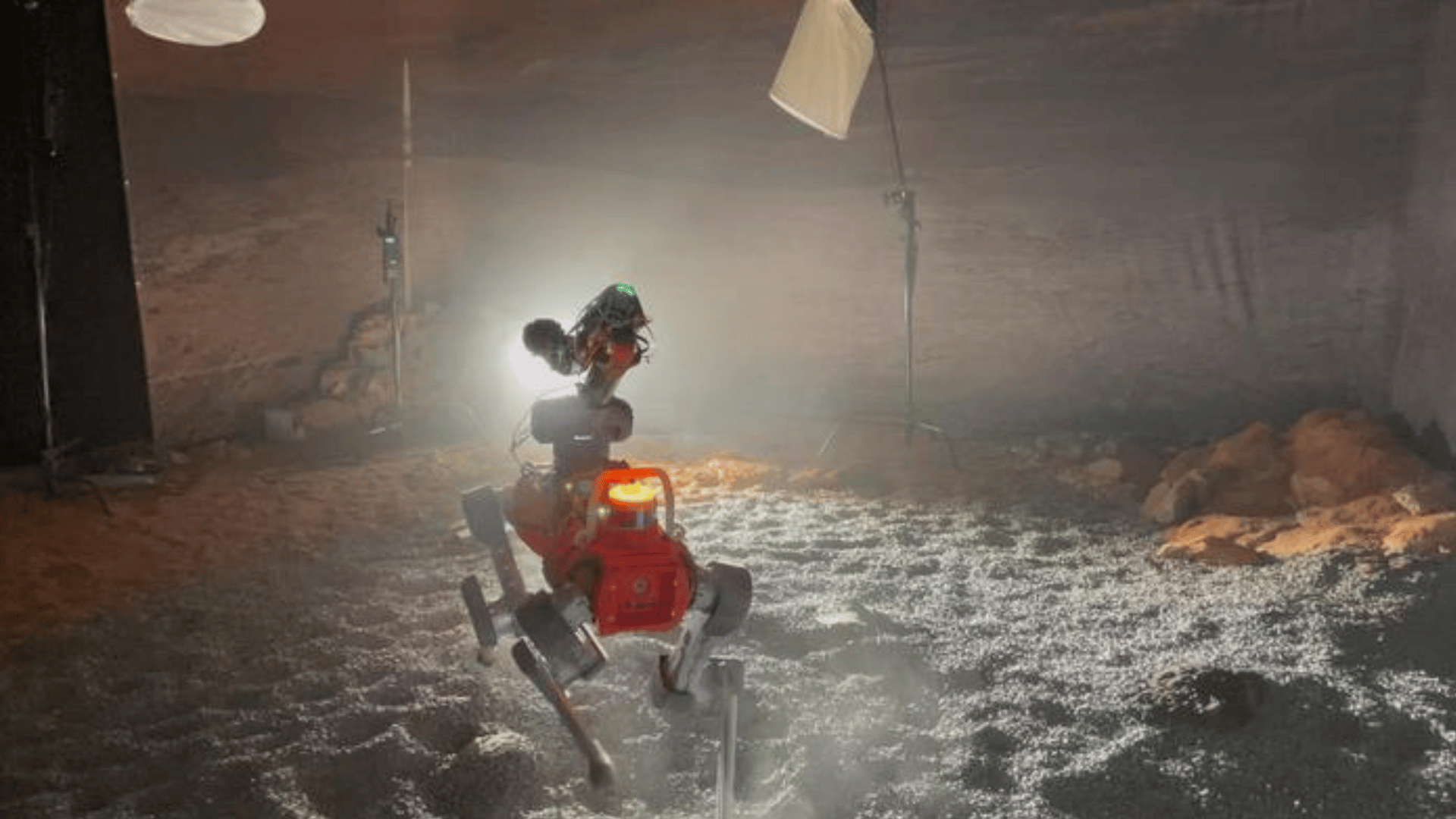
The team used a four-legged robot called “ANYmal.” They equipped it with a robotic arm, a tiny camera, and a laser-based sensor. To see if it could actually handle a mission, they put it in a “Marslabor” facility at the University of Basel. This lab mimics the dusty, rocky terrain and weird lighting you’d find on another planet.
Advertisement
The goal was to see if the robot could find specific types of rocks, like basalt or gypsum, without someone holding its hand the whole time. The robot was able to walk up to targets, deploy its tools, and send back data for analysis. It even found “lunar-analog” rocks that could be useful for future space resources.
Getting Field Results Faster
When the team compared the robot’s independent work to a mission guided step-by-step by humans, the speed difference was huge. The semi-autonomous missions finished in 12 to 23 minutes. In contrast, the human-guided version took 41 minutes to do the same job.
In one test, it identified every single target correctly, suggesting that future missions could cover much more ground and help scientists find the most interesting spots to study without the long wait times.
Instead of relying on one massive, slow machine, the future might belong to agile robots that scan the environment and flag the best samples.