Scientists are changing how medicine is delivered. Instead of using injections, new tiny robots will carry medicine straight to where it is needed in the body.
“The core vision is to transform drug carriers from passive drifters into active, intelligent miniaturized robots that can sense, navigate, and respond on demand,” explained Professor Huaping Wang.
Autonomous Robots Deliver Medicine
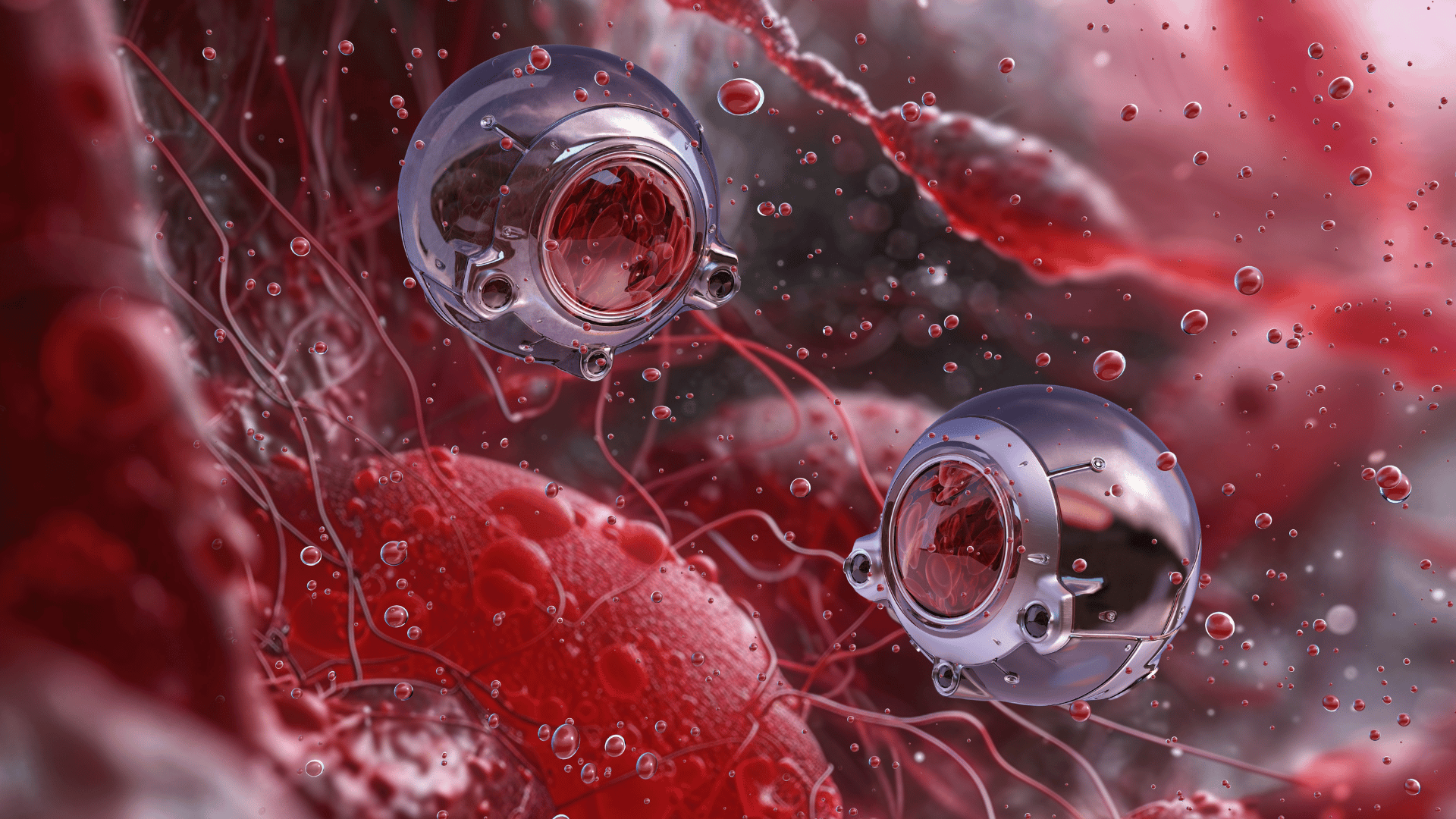
Scientists are trying several ways to move these tiny machines. Some use chemical reactions, such as breaking down hydrogen peroxide to make bubbles for movement. Others use magnetic, sound, or light fields from outside the body to guide the robots. Some even mix artificial parts with living cells, like bacteria or algae, so the robots can move on their own.
“Each propulsion mode has strengths and limitations,” added Professor Henwei Huang. “The key is matching the mechanism to the specific biological barrier – whether it’s the mucus layer, the dense tumor extracellular matrix, or the blood‑brain barrier.”
Advertisement
When the robots arrive at their target, they need to release the medicine. Sometimes, they do this on their own by sensing changes in the body, such as pH levels. Other times, doctors can use ultrasound or light from outside the body to trigger the release.
“The ultimate goal is a theragnostic microrobot that senses, decides, and actuates in real time, truly personalizing therapy,” said Professor Wang.
The Future of Drug Delivery
Although this technology is promising, using metal or artificial parts in the body has real safety risks. The robots might cause long-term side effects, or the immune system could react against them. There are also important questions about how to safely control thousands of these tiny robots working together.
Researchers have described four stages of progress. For now, it is easiest to treat areas that are simple to reach, like the stomach or lungs. Getting to the brain or deep tissues without harming the body is much more difficult. Early tests will focus on the areas that are easiest to access.
“This is not a distant dream,” added Professor Huang. “With the convergence of smart materials, AI, and microrobotics, we are building the foundation for a new era of precision medicine – where therapy is delivered not just to the right organ, but to the right cell, at the right time, with the right dose, and with intelligent feedback.”
 Read Exclusive Stories
 Bookmark & Save Articles For Later