Researchers at Cranfield University have built a robot that doesn’t need a battery to get around. Instead, it uses the wind. The WANDER-bot is a low-cost, 3D-printed machine designed to survive in places where humans and traditional electronics usually struggle.
Most robots lose about 20% of their battery life just by moving. Because WANDER-bot handles its own transportation using a built-in wind turbine, it can stay out in the field much longer. It’s built for windy, harsh spots like polar regions, deserts, or even other planets. By using natural energy, the team avoids the usual headaches of solar panels getting dirty or batteries wearing out over time.
A Simple Robot Design
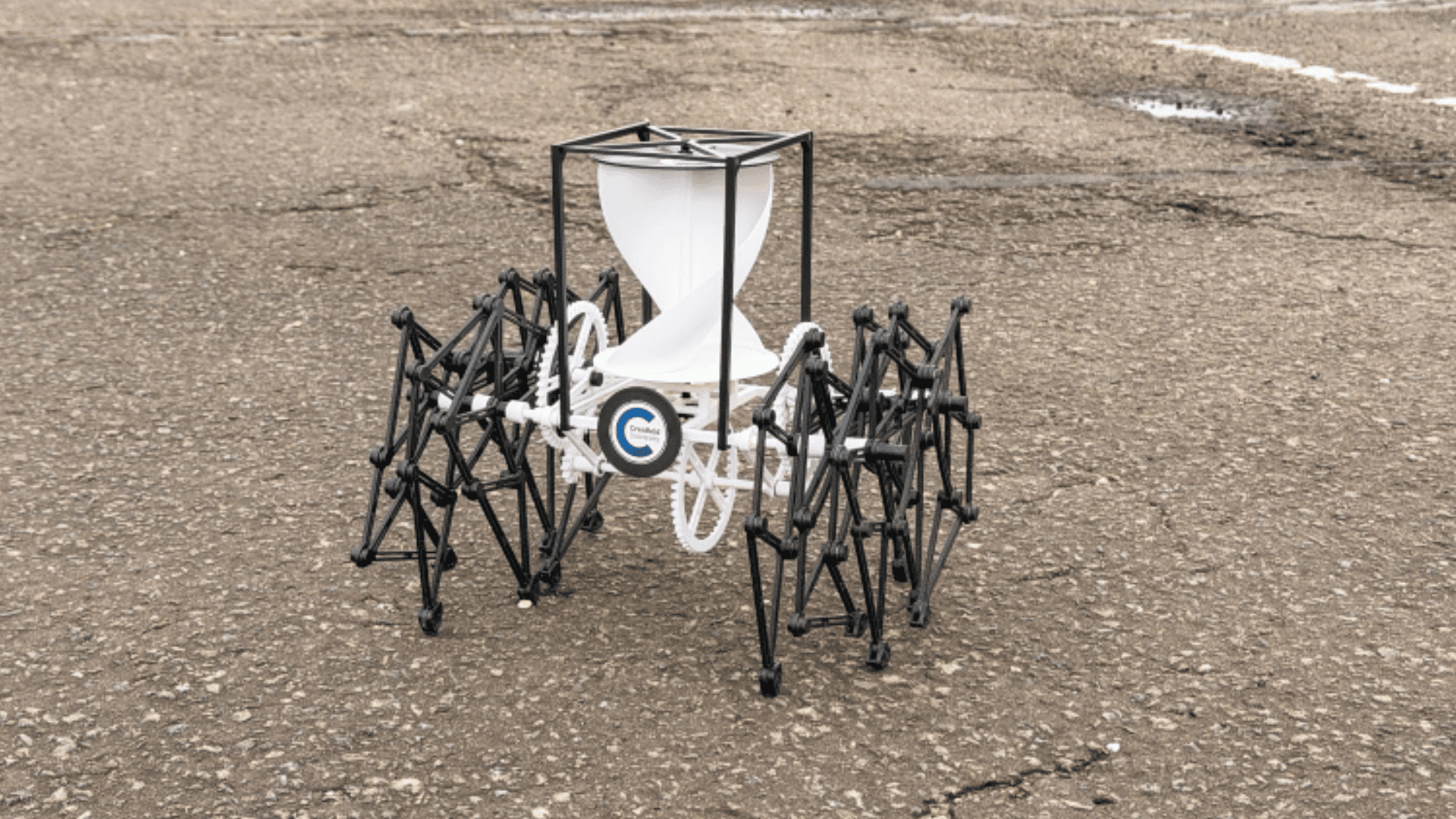
Dr. Saurabh Upadhyay and Sam Kurian, the researchers behind the project, made sure every part could be 3D printed. For example, if a leg breaks while the robot is out in the middle of nowhere, you could just print a new one on-site. This cuts out the need for expensive supply missions.
Advertisement
If you think the robot looks a bit like a walking skeleton, that’s because it was inspired by Theo Jansen’s “Strandbeesten” art pieces. It uses a specific mechanical linkage combined with a Savonius wind turbine to turn a gust of air into a steady walking motion.
“There are many challenges when it comes to robotic exploration,” said Dr. Saurabh Upadhyay, Lecturer in Space Engineering at Cranfield University. “Battery capacity limits things like range, and technological complexity limits the ability to repair in an environment where human occupation would be minimal and their capability for manufacturing or maintenance is limited due to the harsh conditions.”
Making the WANDER-bot Smarter
Right now, the robot is a prototype meant to show that the concept works. It was recently presented at the European Space Agency’s ASTRA Conference 2025. While the current version mostly demonstrates how to harness wind to move forward, the next goal is to make it smarter. The team wants to give it the ability to change directions and handle rougher ground.
“WANDER-bot is a first step towards low-cost, repairable, self-sufficient robots that can explore environments that are currently difficult for humans to reach and work in, such as other planets, or places on Earth where it’s impractical for people to spend long periods of time,” Upadhyay concluded.