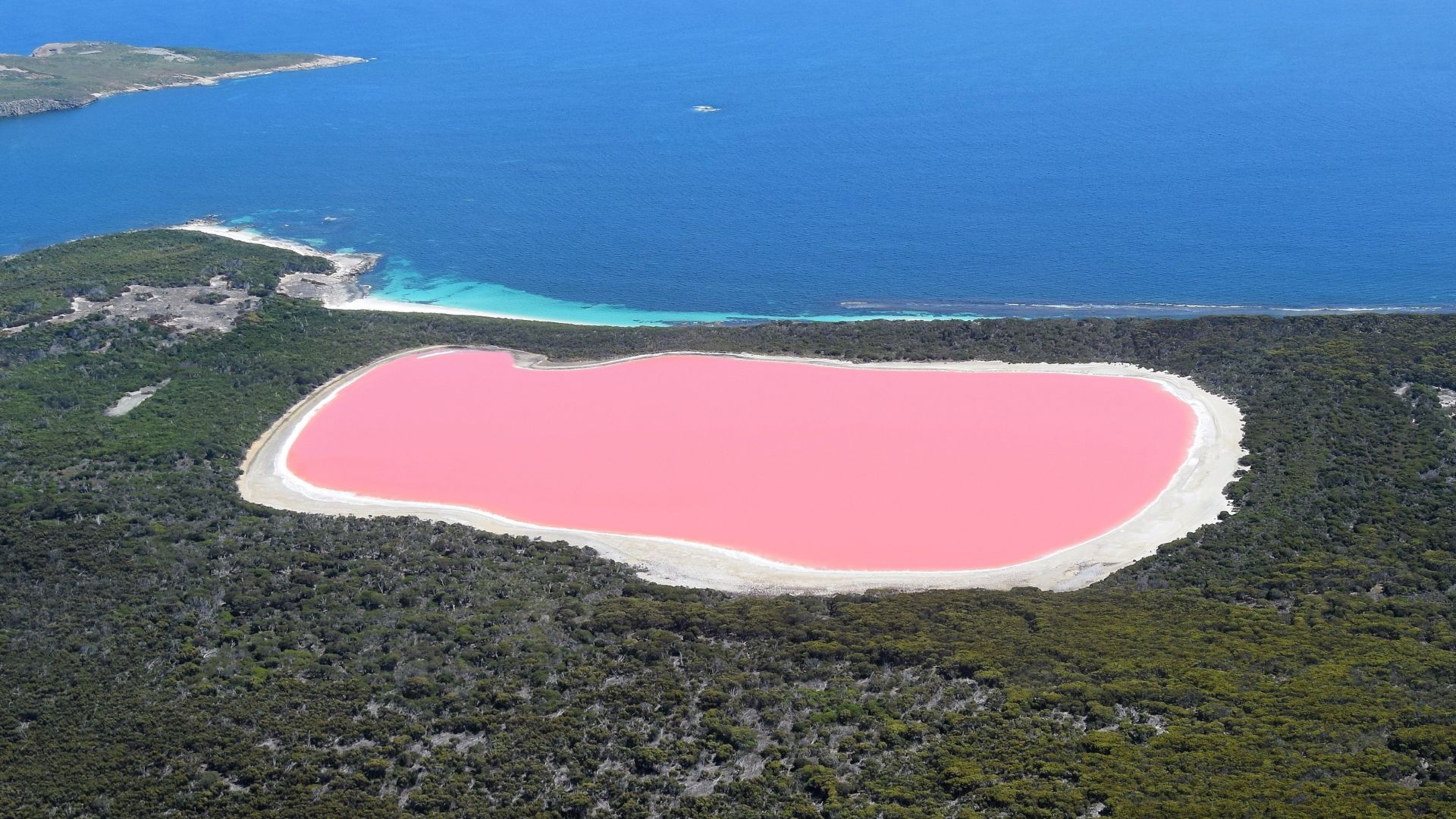
If you fly over Middle Island, off the coast of Western Australia, you will spot something that seems completely out of place. Next to the deep blue ocean and the green eucalyptus trees that line the island is a bright bubblegum pink lake: Lake Hillier. The lake features a bright color due to entirely natural elements.
The Science Behind The Shade
The reason for the lake’s pink color has intrigued people for several years. English explorer Matthew Flinders first documented the unusual natural lake in 1802. However, scientists only recently determined the cause using DNA sequencing.
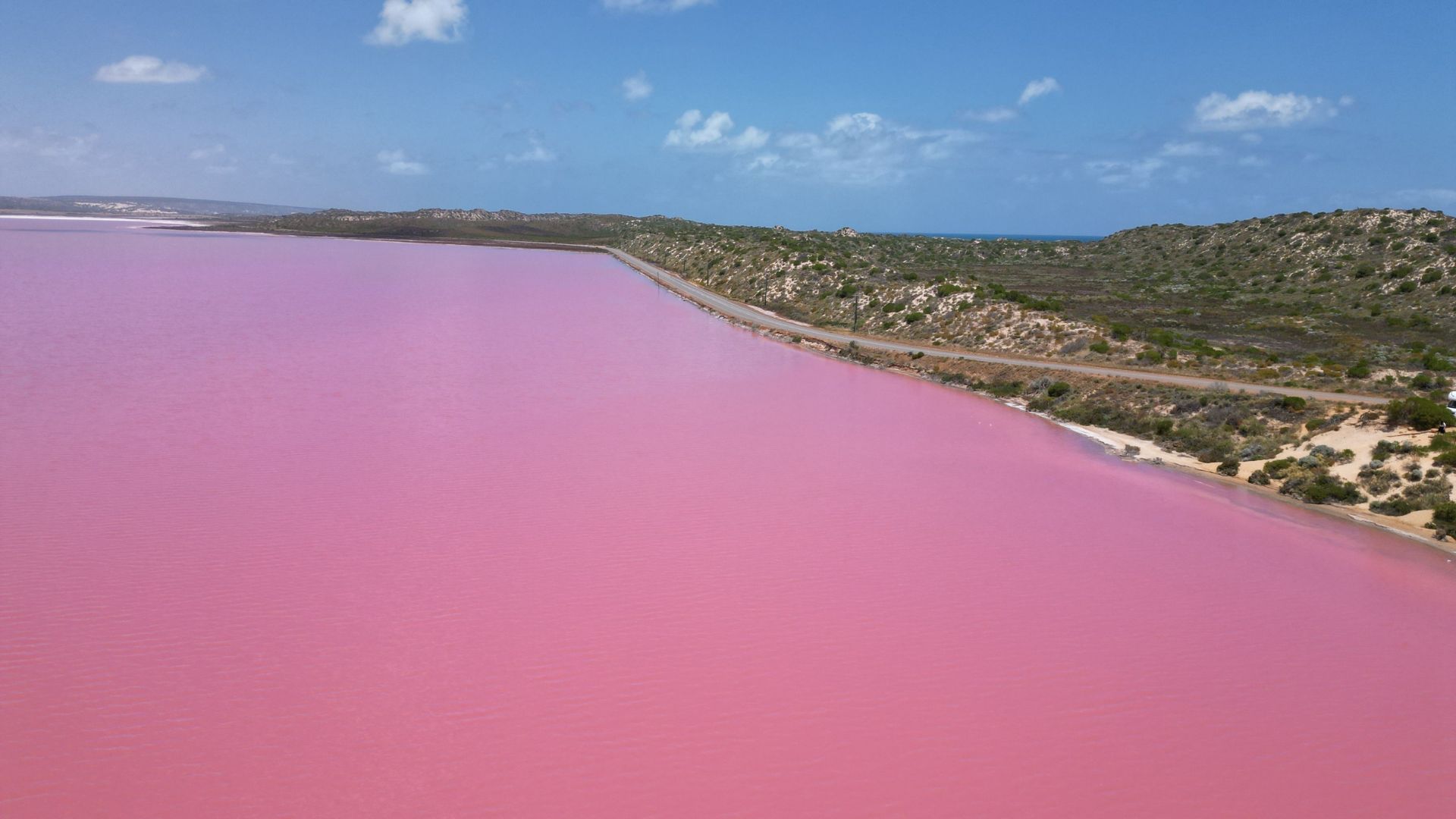
The lake features high salinity levels, similar to the Dead Sea. Most life forms cannot tolerate such high levels of salt. However, microalgae and bacteria thrive in such environments. The types of microalgae that live in the lake are Dunaliella salina, and the salt-loving bacteria Salinibacter ruber live in the lake.
Built-In Sunscreen
These types of microbes produce carotenoids that act as a natural sunscreen to protect themselves from the high levels of sunlight in Australia. The pigment that gives carrots their color is the same carotenoid that protects the microbes in the lake. When multiplied by millions, the pigments give the lake its vibrant pink hue.
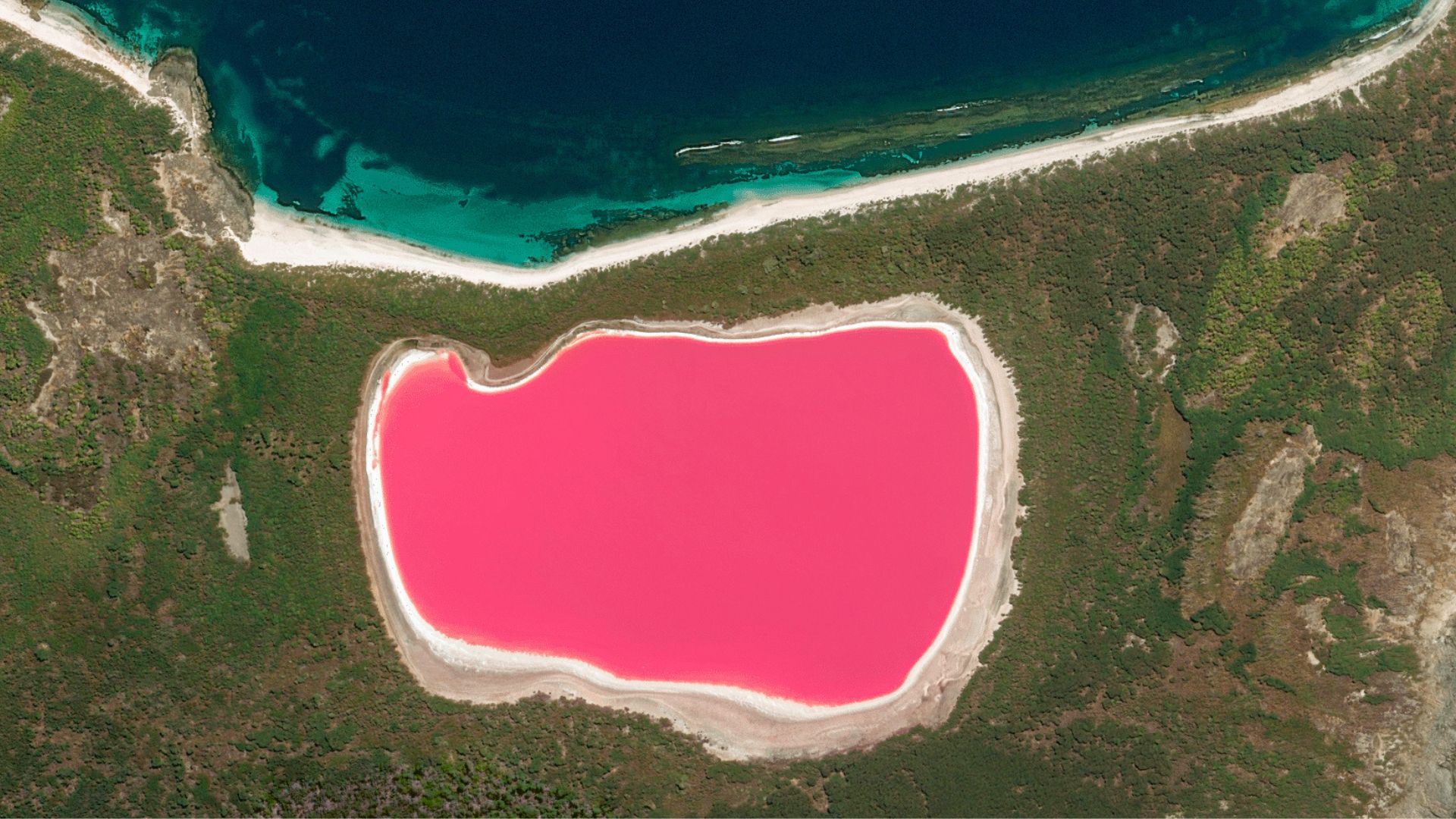
When other pink lakes across the world change colors with the change of the season or alterations in the salinity of the water, Lake Hillier remains pink even in the coldest months of the year. Additionally, if someone fills a glass with lake water, the water retains its pink hue.
A Protected Remote Oasis
People can’t just drive up to the lake and jump in the water. It’s located on Middle Island, which is uninhabited and part of the Recherche Archipelago Nature Reserve. The preserve maintains the ecosystem of the island by limiting people’s access to it.
The best way to see the lake is from above on one of the scenic flights that depart from Esperance. From above, the striking contrast between the ocean, the beach, the surrounding forest, and the pink lake is truly unbelievable. The unique ecosystem of Lake Hillier demonstrates the many ways life has adapted to survive in the often-tough environment of our planet.
 Read Exclusive Stories
 Bookmark & Save Articles For Later