On June 29, 2026, the world’s largest particle accelerator officially went quiet. The Large Hadron Collider (LHC), home to the celebrated Higgs boson discovery, dumped its last beams. But the machine is far from done. In fact, it has officially become the most ambitious construction site beneath the Earth’s surface.
Welcome to Long Shutdown 3 (LS3).
The Silence of the Tunnels
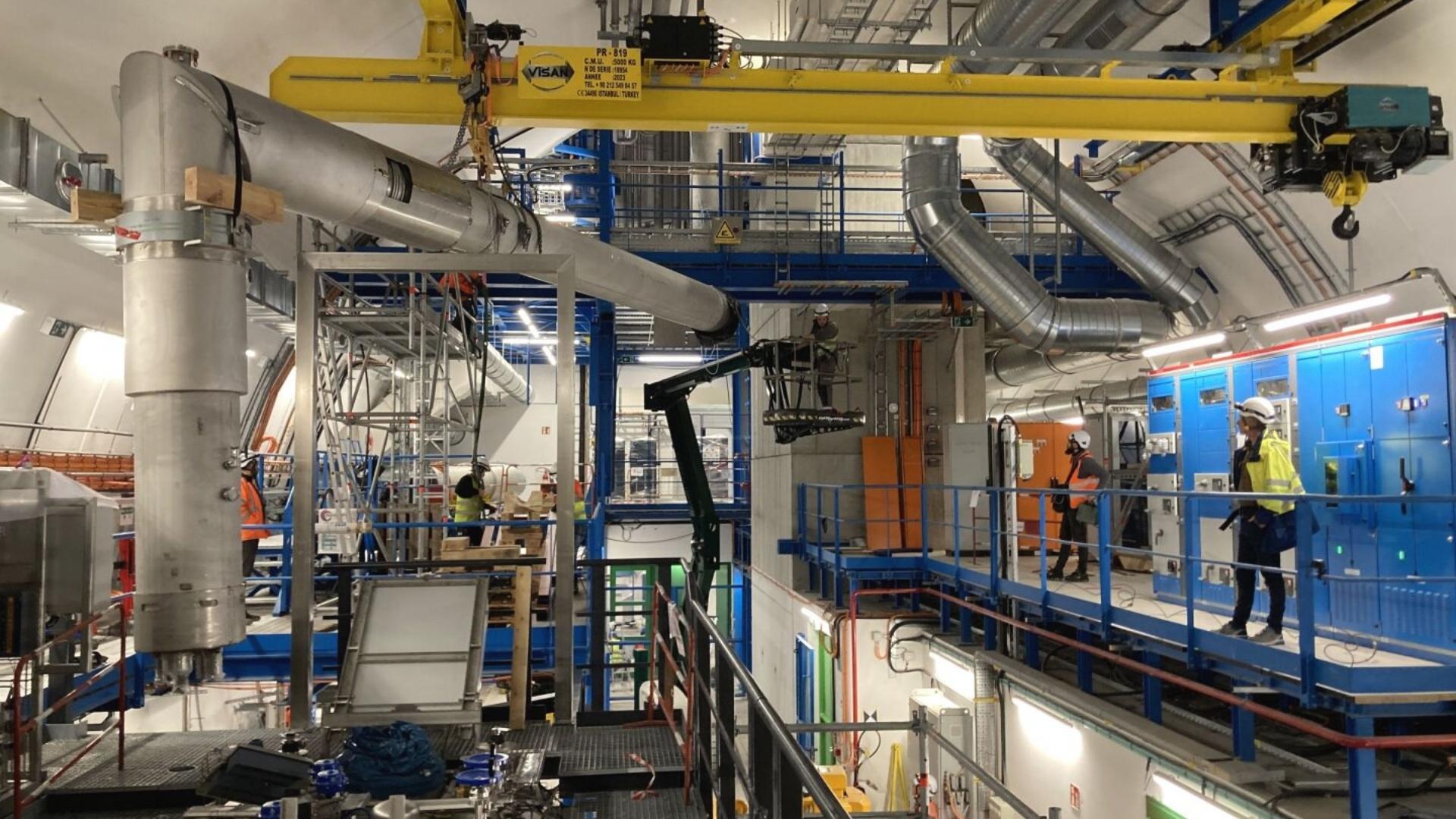
While the high-energy particle collisions have officially ceased, engineers and construction workers are just getting to work on dismantling the LHC. The European Organization for Nuclear Research (CERN) has given four years to tear down and rebuild the accelerator to accommodate the High-Luminosity LHC (HiLumi LHC).
1.2 Kilometers of Challenges
CERN is removing over 1.2 kilometers of massive superconducting magnets from the accelerator. To accommodate the new components, engineers will drill 28 vertical cores to connect the technical galleries for the HiLumi LHC to the existing accelerator tunnel. All components will be transported to the surface and replaced with new, next-generation equipment.
Next-Generation Magnets and Cooling Systems
Advertisement
To increase the LHC’s luminosity, the accelerator will feature a new fleet of powerful superconducting magnets. These magnets must be cooled to 1.9 Kelvin, the temperature of outer space and below, to remain superconducting. In addition to the increased luminosity of the LHC, high-energy detectors like ATLAS will also be upgraded to handle the additional heat generated by the increased performance. The new cooling systems will be environmentally friendly and use CO2.
Building Billion-Pixel Particle Detectors
Aside from the smashing of the particles together, the LHC must also detect the particles created from these collisions. The increased collision rate will overwhelm the current detectors. To combat this, the detectors will install all-silicon tracking systems with over a billion pixels that will detect particles produced by collisions. Additionally, the high-energy detectors will include high-precision timing detectors to measure the particles produced by collisions in picoseconds.
Why Rebuild the World’s Most Advanced Particle Accelerator?
There are a few strong reasons CERN is investing so much time and effort into dismantling the existing accelerator and rebuilding it. Essentially, what they are building will enable the exploration of tomorrow’s mysteries of the universe.
The upgraded LHC will produce 380 million more Higgs bosons per year. This increased production will help researchers probe dark matter, antimatter imbalances, and the biggest unsolved mysteries in physics.
The LHC is powered down for maintenance and construction, but the future of particle physics is currently being built in the subterranean tunnels of CERN.
 Read Exclusive Stories
 Bookmark & Save Articles For Later