Every year, millions of Americans enter hospitals expecting treatment and recovery. But for nearly 680,000 patients annually, their stay leads to something they never anticipated: a hospital-associated infection1. These infections remain one of healthcare’s biggest challenges, contributing to longer hospital stays, increased healthcare costs, and thousands of preventable deaths each year.
One common source of infection risk comes from vascular access catheters, which are used to deliver medications, fluids, and therapies directly into the bloodstream. While essential to patient care, catheters can also become a pathway for harmful microorganisms to attach to the catheter surface and migrate into the bloodstream, leading to infection.
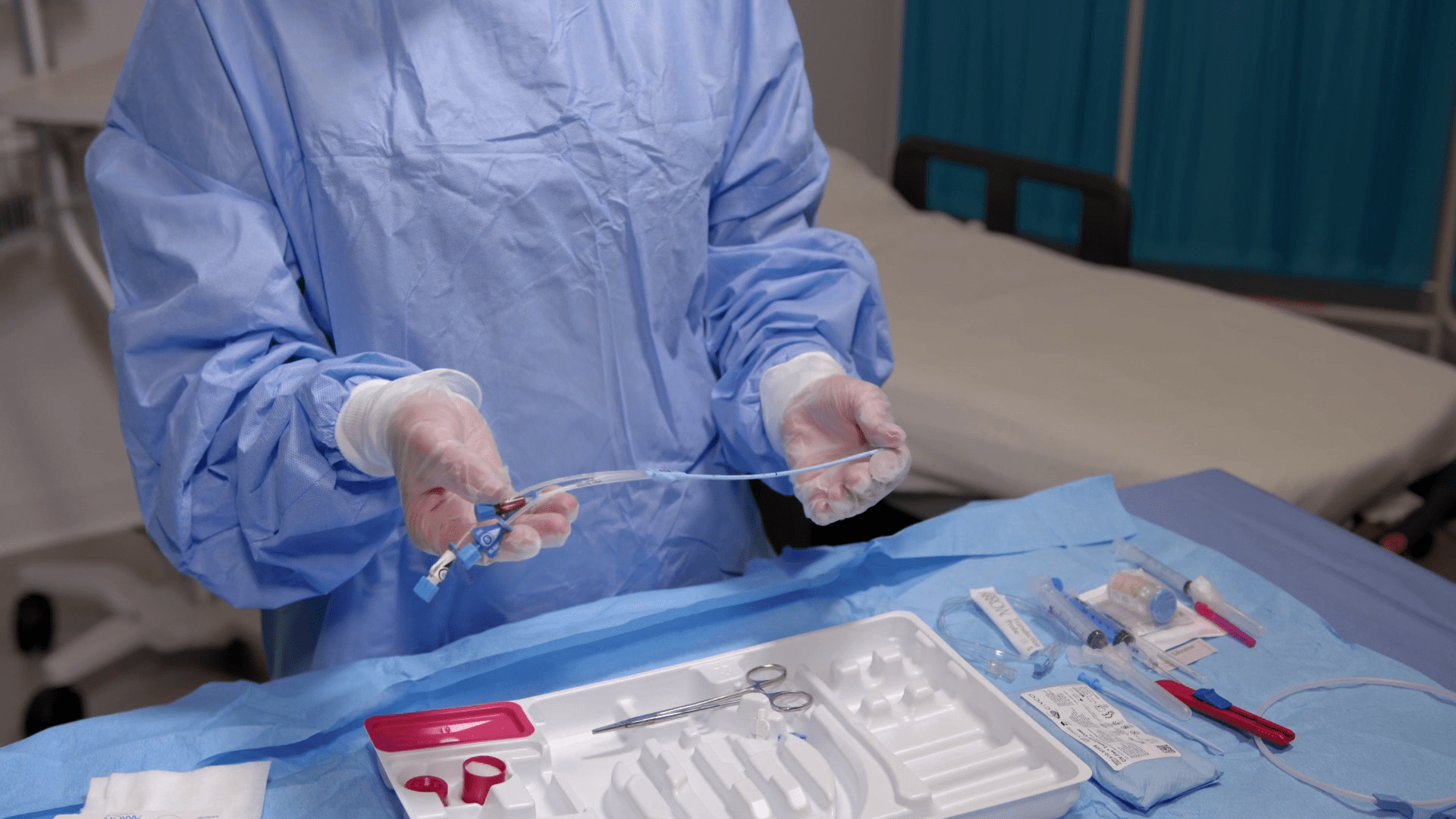
To help address this challenge, Teleflex Incorporated, a medical device company in the vascular access space, developed Arrowg+ard™ Technology, an antimicrobial protection built directly into its vascular access catheters. The technology uses chlorhexidine, a broad-spectrum antimicrobial agent that has been trusted in healthcare for decades in applications such as surgical prep, hand hygiene, and antiseptic cleansing.
Arrowg+ard™ Technology works by targeting microorganisms before they can colonize the catheter surface. The chlorhexidine molecules disrupt the cell walls of pathogens, helping stop microbial growth in as little as 30 seconds. According to Teleflex, the technology has been shown to reduce 99.99% of pathogens on catheter surfaces that are most responsible for healthcare associated infections.
Unlike additional manual infection prevention steps, the protection is built directly into the catheter itself, creating a passive layer of defense that works during patient care. This can be especially important in high-risk settings, such as intensive care units or for immunocompromised patients and those requiring ongoing vascular access.
Healthcare providers say antimicrobial catheters can help reduce catheter colonization, premature line removals, antibiotic usage, and extended hospital stays. They also emphasize that technologies like Arrowg+ard™ Technology do not replace best practices but instead reinforce existing infection prevention protocols already used by clinicians.
As hospitals face increasing pressure to improve patient outcomes and reduce preventable infections, innovations in antimicrobial protection are becoming an important part of modern healthcare. By targeting infection risks at the source, Teleflex continues its mission to help clinicians improve patient care and move healthcare closer toward the goal of zero preventable bloodstream infections.
On the next all-new episode of TWT Report, we will go inside the Teleflex Center for Antimicrobial Protection to learn more about an innovative catheter technology that combats the risk of pathogen growth on these vascular access catheters. The episode will air on the Discovery Channel on Sunday, June 28th at 8:30 am across all time zones.
Advertisement
Content sponsored by Teleflex.
Rx Only.
Refer to package insert for complete warnings, indications, contraindications, precautions, potential complications and instructions for use.
Contraindications:
The Arrowg+ard Blue™ and Arrowg+ard Blue Plus™ Catheters are contraindicated for patients with known hypersensitivity to chlorhexidine, silver sulfadiazine and/or sulfa drugs.
Clinical assessment of the patient must be completed to ensure no contraindications exist. Arrowg+ard Blue Advance™ Catheters are contraindicated in the following areas:
- Patients with known hypersensitivity to chlorhexidine
- In presence of device-related infections
- In presence of previous or current thrombosis in the intended vessel or along the catheterized vessel pathway
No correlation between in vitro/in vivo testing methods and clinical outcomes have currently been ascertained.
 Read Exclusive Stories
 Bookmark & Save Articles For Later