When you pick up a prescription, you probably don’t think about how it ended up in the bottle or blister pack. You just want it to work. But moving medicine from the lab to the pharmacy is a huge logistical challenge.
On an upcoming all-new episode of TWT Report, host Greg Costantino sat down with Adam Rosenthal, Director of Marketing, and Caden Johnston, Vice President of Sales, from ProMach Pharma. They discussed the high-tech machinery that ensures your medicine is safe, accurate, and sustainable.
The Challenge of Variety
Pharmaceutical companies make hundreds of different pills and liquids, not just one type. They want to use the same machines to package all these products to save money.
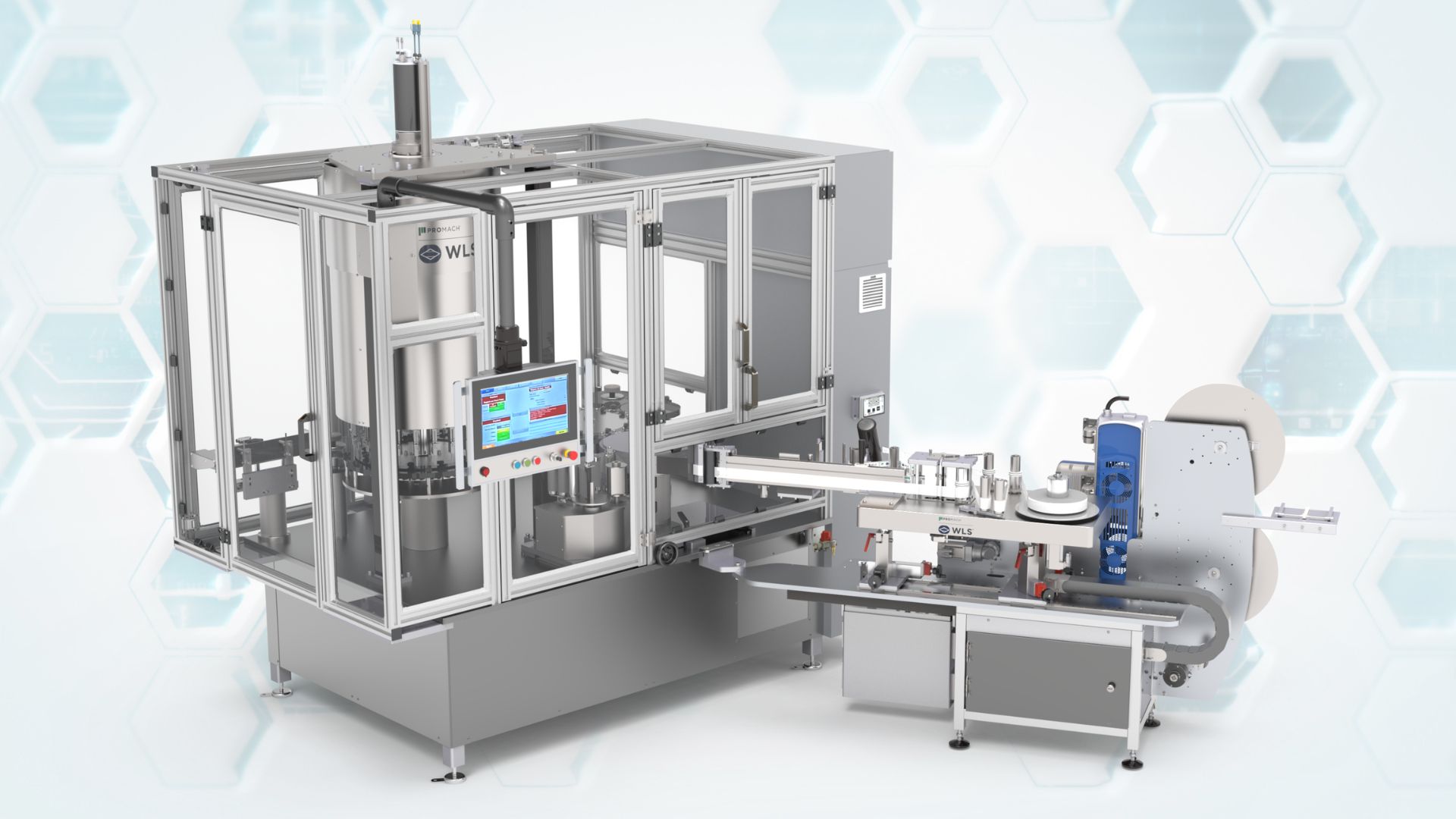
“Ideally, it’d be great if every drug had its own dedicated equipment,” Rosenthal explained. But since that is not realistic, ProMach builds modular machines. Workers can quickly swap out parts to adjust for different bottles, boxes, or syringes. Johnston noted that the goal is to make those adjustments quickly to eliminate downtime, adding, “We want to make that adjustment time as quick as possible to eliminate downtime for them, which is production hours.”
Safety and Accuracy at High Speeds
Humans can package items carefully using our eyes and hands. But automated machines have to do it at a rate of several hundred packages per minute. In the medical world, there is zero room for error. Germs cannot get in, and the dosage must be exact.
“There’s two risks that are unacceptable in what we do,” Rosenthal said. “You cannot package a medication in such a way that a germ can get in. That’s dangerous for the patient. And we also have to package that drug in a way where it’s absolutely certain that the correct dosage will be delivered.”
To handle this, machines use built-in cameras and automatic reject systems. For example, if a tablet counter finds a pill that is too big, it removes it and picks the right one. The system also checks that the instructions inside the box match the label outside before shipping.
Some advanced packaging can even track temperature. Certain medicines need to stay cold, so new smart labels monitor how much heat the package has been exposed to. If it gets too warm for too long, the label changes color to alert the doctor or patient.
Advertisement
Making Packaging Greener
Sustainability is a major focus right now. Blister packs, the plastic sheets where you pop individual pills out, are great for tracking daily doses, but they traditionally create a lot of waste.
ProMach is changing that by designing equipment that can handle new, sustainable materials.
These materials behave differently under heat, so the machinery has to adjust. Johnston’s team also works with companies to redesign cardboard boxes and cases to use less material overall, or to switch to biodegradable options.
For Johnston, this work goes beyond just business. “At the end of the day, you’re helping the earth in the long term,” Johnston shared. “You’re driving forward a more long-lasting, impactful footprint, if you will, so it’s a cool opportunity.”
What’s Next?
The factory of the future is already here. In the next five to ten years, there will be much more automation. Companies are starting to use robots to reload supplies and automated vehicles to move finished pallets to shipping trucks. This speeds up the supply chain and, most importantly, keeps patients safe.
Tune in on June 28th at 8:30 AM on Discovery for “Precision Perfection.”
 Read Exclusive Stories
 Bookmark & Save Articles For Later