The race to commercialize fusion power plants is underway. A new partnership between the Bavarian government, energy giant RWE, Proxima Fusion, and the Max Planck Institute for Plasma Physics (IPP) aims to build the world’s first commercial stellarator power plant.
Commercializing virtually limitless energy is at the top of the list for several private companies. In the U.S., Commonwealth Fusion Systems (CFS) has the most aggressive timeline, aiming to have fusion energy by 2026. Helion Energy is not far behind, promising to deliver fusion energy to Microsoft’s data centers by 2028.
This new partnership adds to the many other firms and governments racing towards the power of the Sun.
The Journey Towards Commercialized Fusion Power
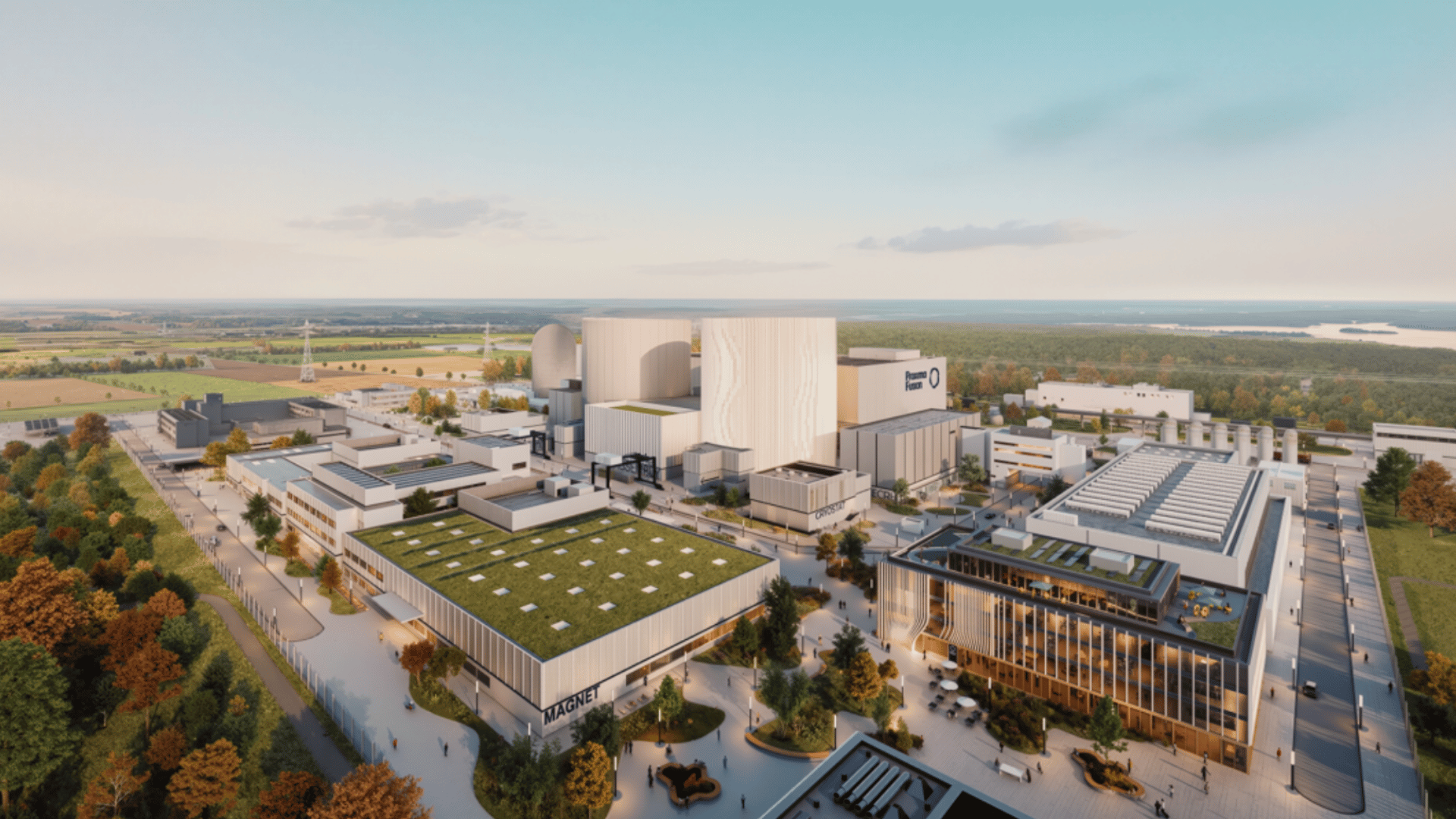
The plan starts with a demonstration project called Alpha. This reactor will be built in Garching and is expected to be running by the 2030s. The goal for Alpha is to prove that a “stellarator,” a specific type of fusion machine, can produce more energy than it takes to run. If that works, it clears the way for a full-scale commercial plant named Stellaris.
Stellaris is planned for a site in Gundremmingen, which used to house a nuclear fission plant. By using an old site, the project can use existing infrastructure, saving time and money.
Advertisement
“The potential of fusion technology for the energy supply of the future is enormous,” Dr. Markus Krebber, CEO of RWE AG, said. “Thanks to an excellent research landscape and the start-ups that have emerged from it, such as Proxima Fusion, Germany can take on a key role.”
Building a New Industry
The project is expected to create thousands of jobs, ranging from high-tech magnet manufacturing to construction. Proxima Fusion is even looking to set up a dedicated factory that could employ up to 1,000 people.
The complex goal is to create a reliable source of clean electricity that can handle the massive power demands of things like AI and electric cars.
“This MoU is a milestone that visibly positions the European fusion industry on the global stage,” Francesco Sciortino, CEO of Proxima Fusion, said. “It marks the starting point of an industrial ecosystem that consolidates existing and new know-how in Europe and anchors value creation here.”
Proxima is handling the engineering, IPP is leading the physics, and RWE is bringing their experience in running power plants. If all goes to plan, this could make Europe much less dependent on energy imports.