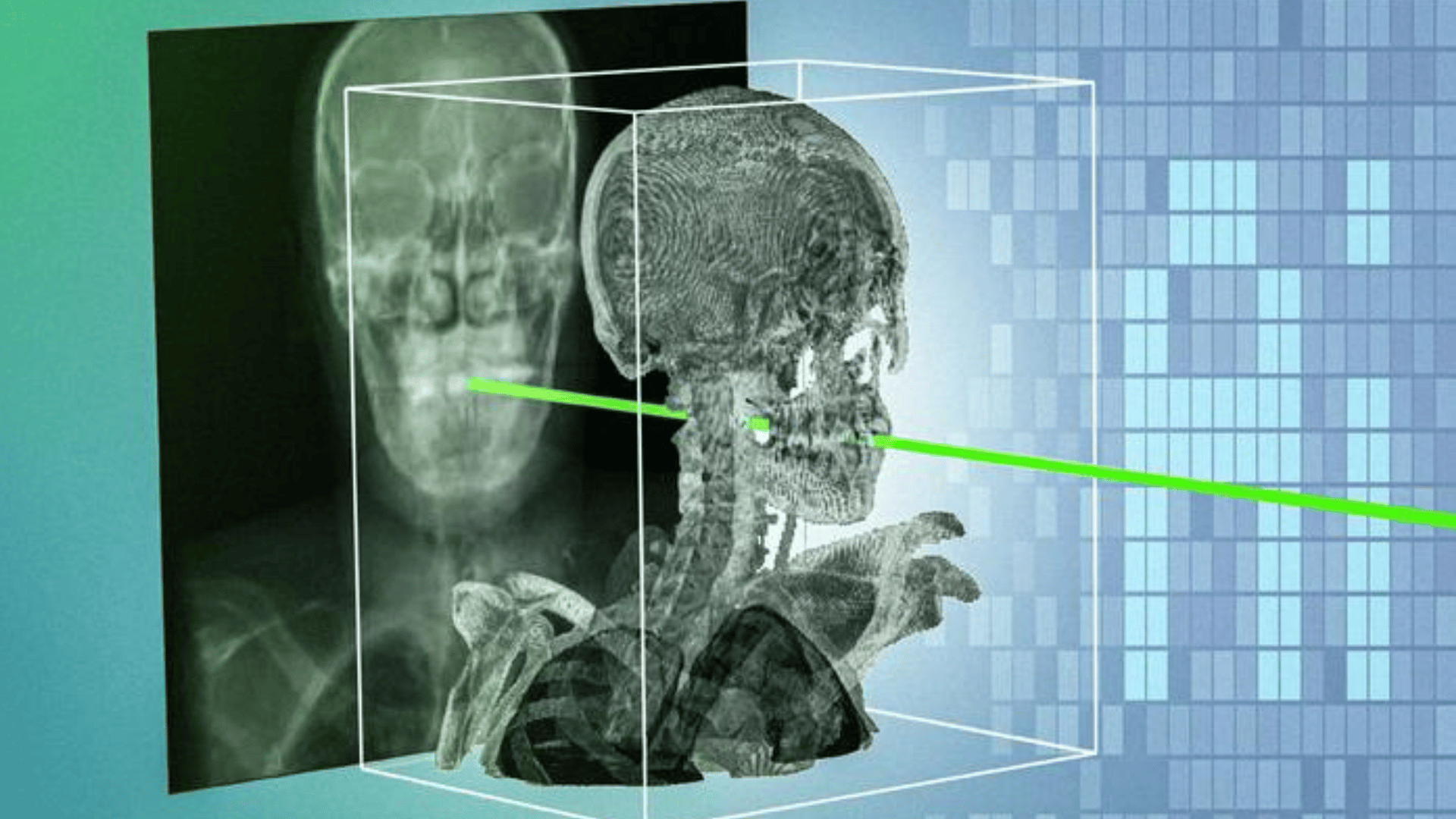
Researchers at Chalmers University of Technology in Sweden found that giving an artificial “super-brain” a basic education in the laws of nature speeds up the design of advanced optical components. These parts could eventually improve everything from camera lenses to quantum computers.
Usually, setting up these computer simulations takes a long time. However, when the team added physics into the mix, they cut their calculation time down to just one-tenth of what it used to be.
“When we fed the super-brain information about the laws of physics, it immediately got much smarter,” said Philippe Tassin, a professor at Chalmers. “Our calculations now take one tenth of the time previously required.”
Skip the Training With Physics

The researchers work in a field called nanophotonics where they use supercomputers to design artificial materials that can control light on a tiny scale. These materials can make eyeglass lenses thinner and lighter, or help transmit information between quantum computers using small, man-made crystals.
To find the best designs, they use neural networks. However, training these networks requires up to 40,000 simulations. Generating that data can take a whole month, and if the researchers need to add new parameters, they have to wait another month.
Advertisement
The team decided to build the laws of electromagnetism directly into the computer’s code. Before this change, the neural network had to figure out the laws of physics from scratch by looking at data. Now, it already knows the rules, so it doesn’t have to reinvent the wheel. What used to take 30 days to calculate now takes only three.
Smarter Thinking With Fewer Errors
“I know electromagnetism’s equations inside out and I teach them, but I still can’t draw all the conclusions that the neural network can,” Tassin said. “The physics is so complex that I don’t understand the properties of a material just by looking at it – but the computer does.”
The researchers originally wanted to make the computer’s predictions easier for humans to understand. But they found that the physics-trained network automatically became much smarter and made fewer obvious mistakes.
“Once we’d trained the network, we could ask it to examine any structure at all and get the optical properties in a millisecond,” said Viktor Lilja, a doctoral student on the team. “With these new networks, we get better estimates and avoid obvious errors.”
For the researchers, the extra speed means they can develop new technology much faster than before.
 Read Exclusive Stories
 Bookmark & Save Articles For Later