Doctors perform countless surgeries through small, precise cuts, using X-rays to steer tools such as catheters. One problem, though, is that X-rays are 2D, making it difficult to determine where a surgical tool is within the body. As a result, mistakes are more likely.
Doctors attempted to match live X-rays with older 3D scans, such as MRIs or CT scans. However, doing this by hand takes a lot of time. Previous AI tools have tried to speed up the process, but human bodies differ too much from one another for a “one-size-fits-all” solution.
Researchers at MIT and Harvard made a new system called xvr, which stands for X-ray volume registration. Instead of making one tool for everyone, xvr builds a specific model for each patient.
A Personalized AI Model
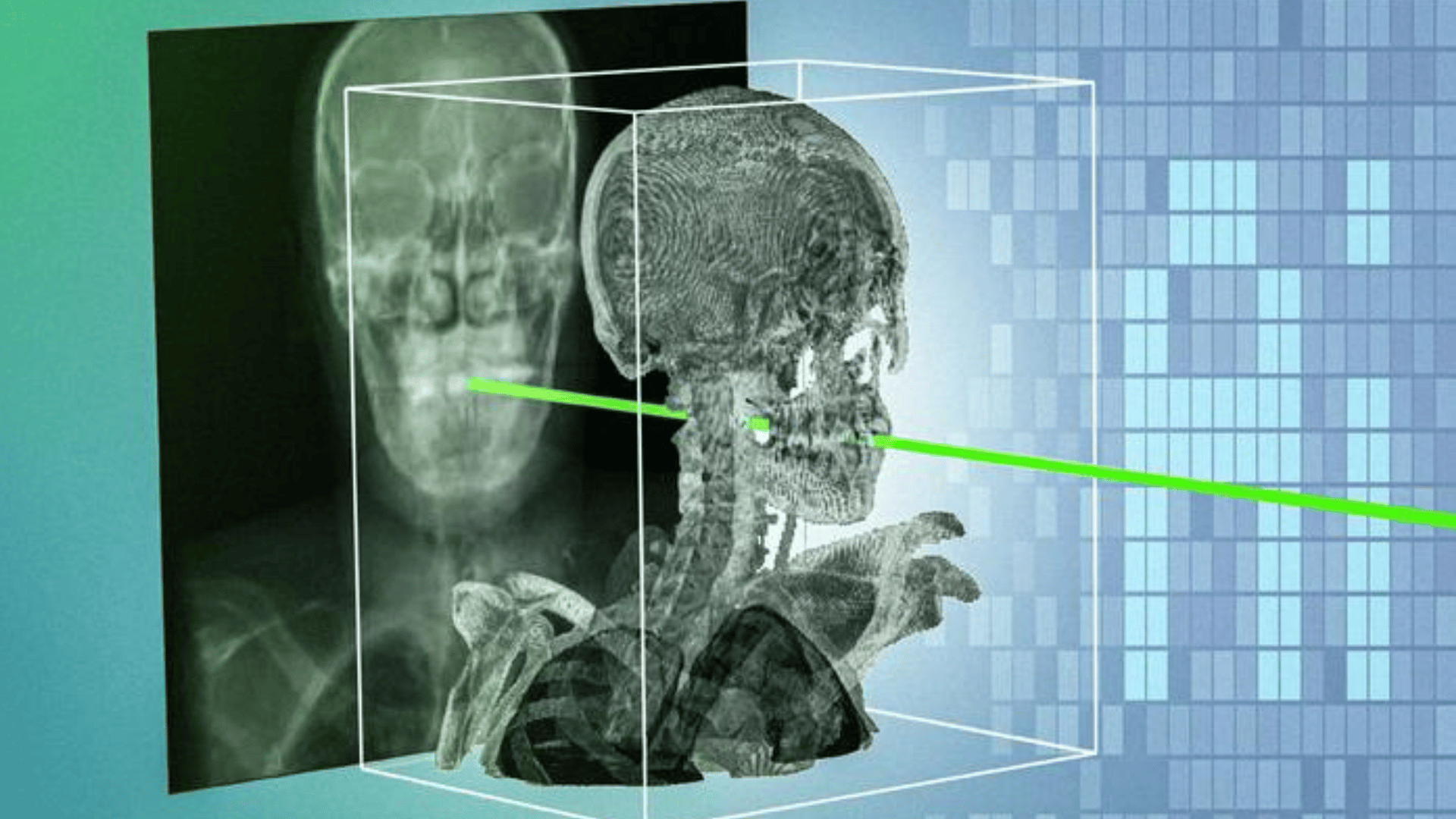
The system takes a patient’s 3D scan and creates thousands of practice X-rays based on actual physics. It uses these images to teach a base model how to read that specific person’s body. The whole training process takes about five minutes. After that, it can match live X-rays to the 3D scan in seconds with sub-millimeter precision.
“We tailor this one specific model for this one specific patient, and it doesn’t matter if it works on other people because there will be different models for those people,” said Vivek Gopalakrishnan, lead author of the paper.
Advertisement
To avoid common AI errors, the system uses real physics from the patient’s own scan.
“Instead of generating data from nothing, like some types of generative AI, this physics simulation is entirely based on the CT scan or MRI from this patient,” Gopalakrishnan explained. “Because xvr creates patient-specific data in a purely physics-based manner, there is no room for hallucinations.”
Faster, Safer Surgeries
Developing faster, safer surgeries could help smaller hospitals handle complex emergencies.
“A majority of Americans live more than an hour away from a center that can perform noninvasive procedures, like emergency stroke interventions. An hour in stroke time is incredibly substantial,” Gopalakrishnan added. “Making these procedures easier by combining 2D and 3D information enables these types of highly specialized life-saving procedures to be more accessible to much broader parts of the population.”
The research team is now working with robotics companies to turn this algorithm into a daily medical tool.
 Read Exclusive Stories
 Bookmark & Save Articles For Later