Candy canes look simple: just a curved top, peppermint taste, and those red-and-white stripes. But making lots of them for the holidays means you have to watch the temperature, use the right equipment, and time everything just right.
Some candy cane producers use extensive automation in their production. Other candy cane producers hand-form some of the canes. Both methods have to deal with the problem of maintaining a soft state for the cooked sugar long enough to form the cane.
Making Candy
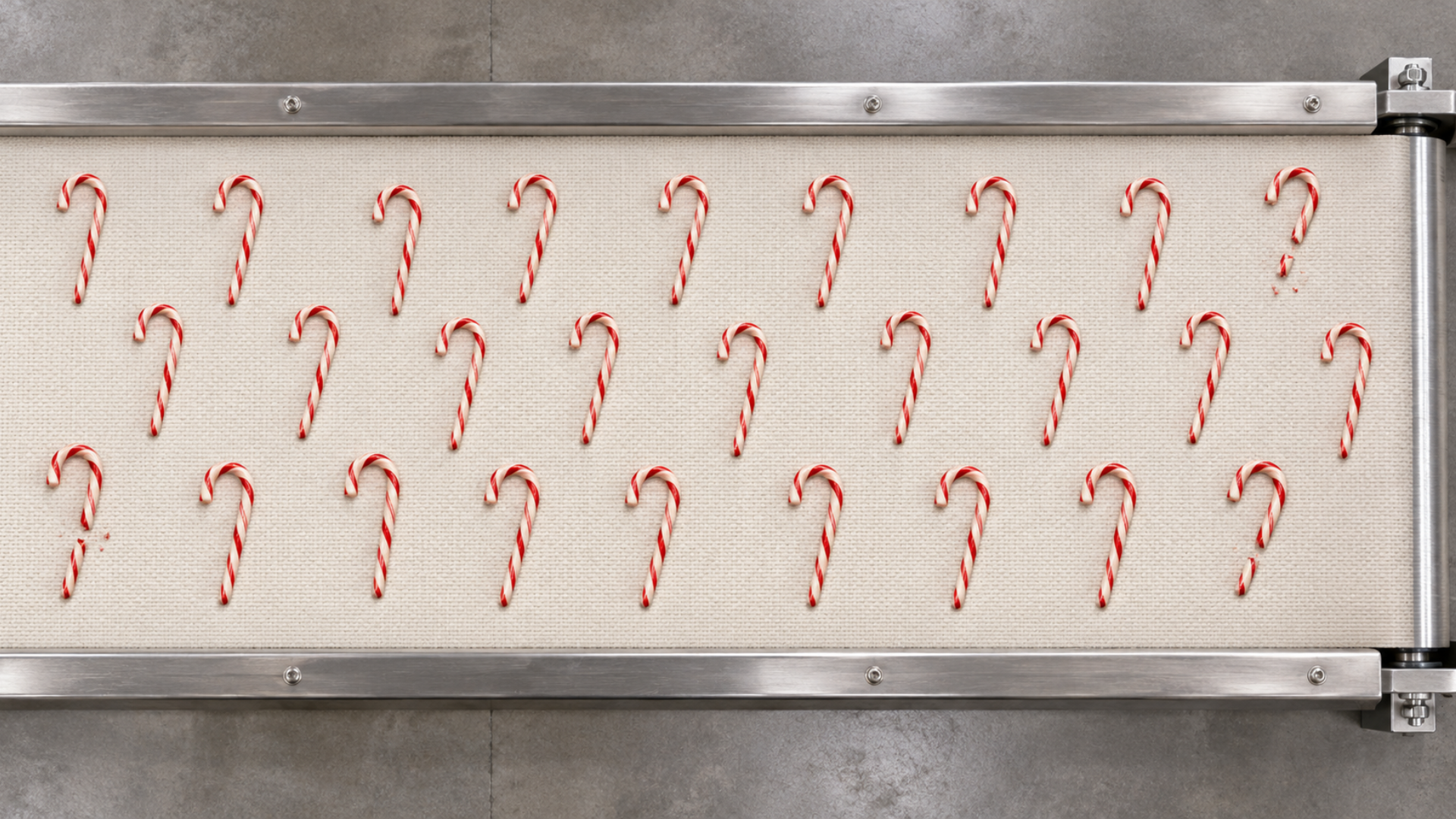
To make candy, a solution of water, corn syrup, and sugar is cooked. This solution must be cooked to the desired temperature to create hard candy. At Hammond’s Candies in Denver, the solution is cooked to 325 degrees Fahrenheit and then transferred to a cooling table.
As the mixture cools, flavorings are mixed in. The candy is then pulled, folded, and stretched repeatedly to work in small air bubbles. This gives the candy a glossy finish and makes shaping easier.
The candy must not cool too far during this process. When the candy solidifies, it becomes difficult to form into a hook because it breaks when bent.
Forming the Red Stripes
The red stripes are not formed on the finished candy cane. Instead, colored stripes form during the candy-making process while the candy is still soft.
Advertisement

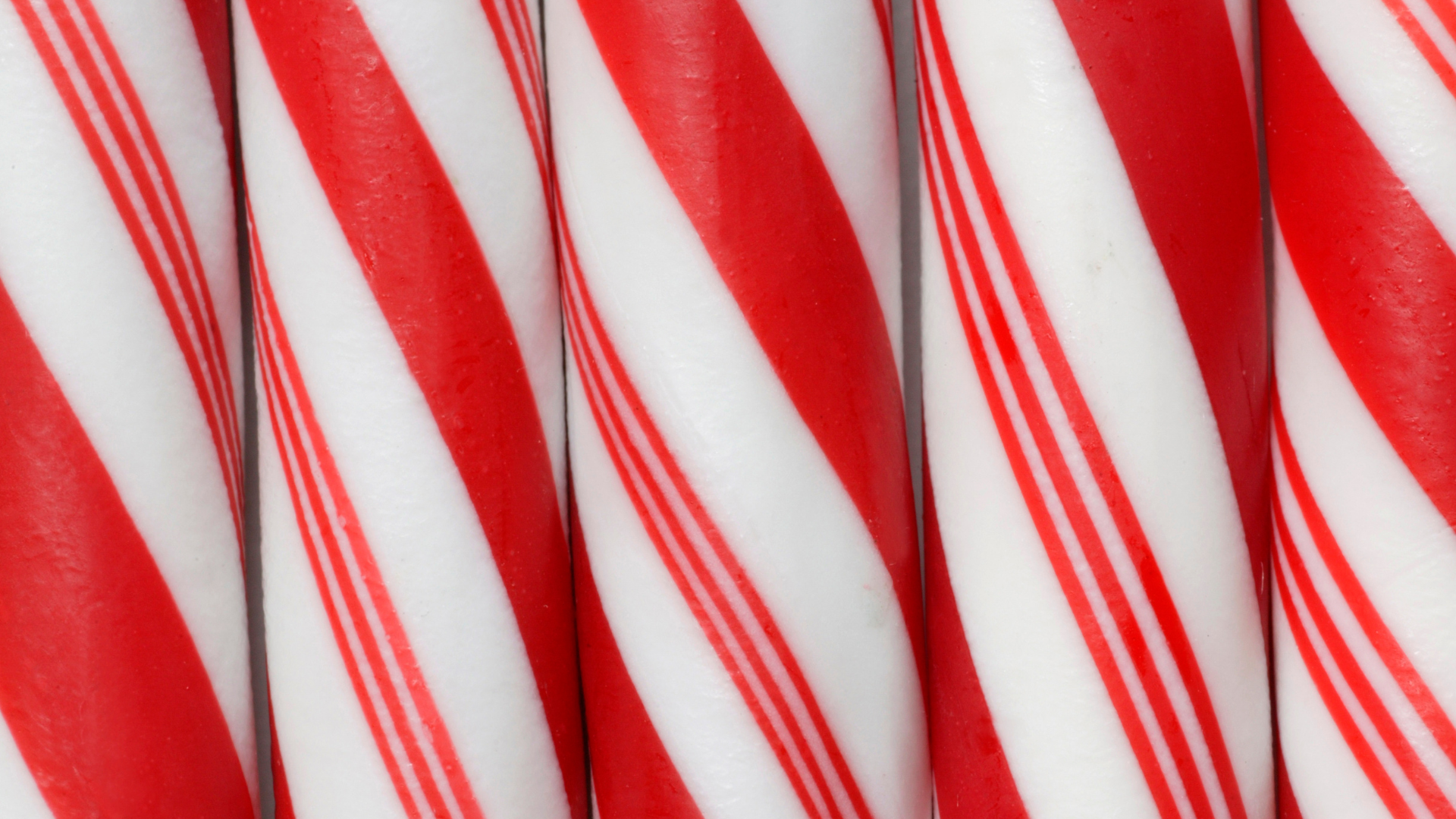
While making candy canes, colored stripes are wrapped around a piece of white candy to create a large, striped log. This log is then rolled into a long, thin rope. As it passes through twisting machines, the colored stripes spiral around the white center, giving the candy its signature look.
This twisted candy is then sized and cut into individual candy canes. It is important for the candy to be cut to a consistent length so that each piece fits well into the final product and matches the appearance of the traditional candy cane.
Forming the Holiday Shaped Candy
The final shaping of the candy cane occurs while the candy is still pliable. Some candy canes are shaped using automated equipment. Other candy canes, like those at Kencraft and Hammond’s, are hand-formed into a hook by workers.
Once shaped, the candy solidifies upon cooling. The candy canes are individually wrapped to aid in storage and shipping. The products are also inspected for quality in appearance, texture, and color before being sent to stores.
The amount produced can be staggering. Spangler Candy Company produces 2.7 million candy canes per day. Each candy cane produced goes through a process of heating, pulling, rolling, and twisting a simple solution of sugar, water, and corn syrup into the holiday candy cane.
 Read Exclusive Stories
 Bookmark & Save Articles For Later