Most modern film studios chase pixels, algorithms, and sleek rendering. Peter Lord took the opposite route. He chose colored clay, wire skeletons, and endless amounts of patience.
Born on November 4, 1953, in Bristol, England, Lord spent his childhood messing around with 16mm film cameras. In 1972, he and school friend David Sproxton founded Aardman Animations. They started out on a kitchen table, working with whatever cheap materials they could find. They had no giant crew and no master plan. They simply wanted to make inanimate things move.
Over the decades, that small experiment grew into an entertainment titan. Aardman gave the world beloved characters like Morph, Wallace & Gromit, and the brave hens of Chicken Run. While Hollywood rushed headlong into slick computer-generated graphics, Lord held tight to tactile, physical craft.
Stop-motion is famously slow. An animator shapes a puppet by hand, snaps a single photo, nudges an arm a fraction of an inch, and snaps another. They repeat that cycle 24 times just to get one second of screen time! A good day on set might only yield three seconds of footage.
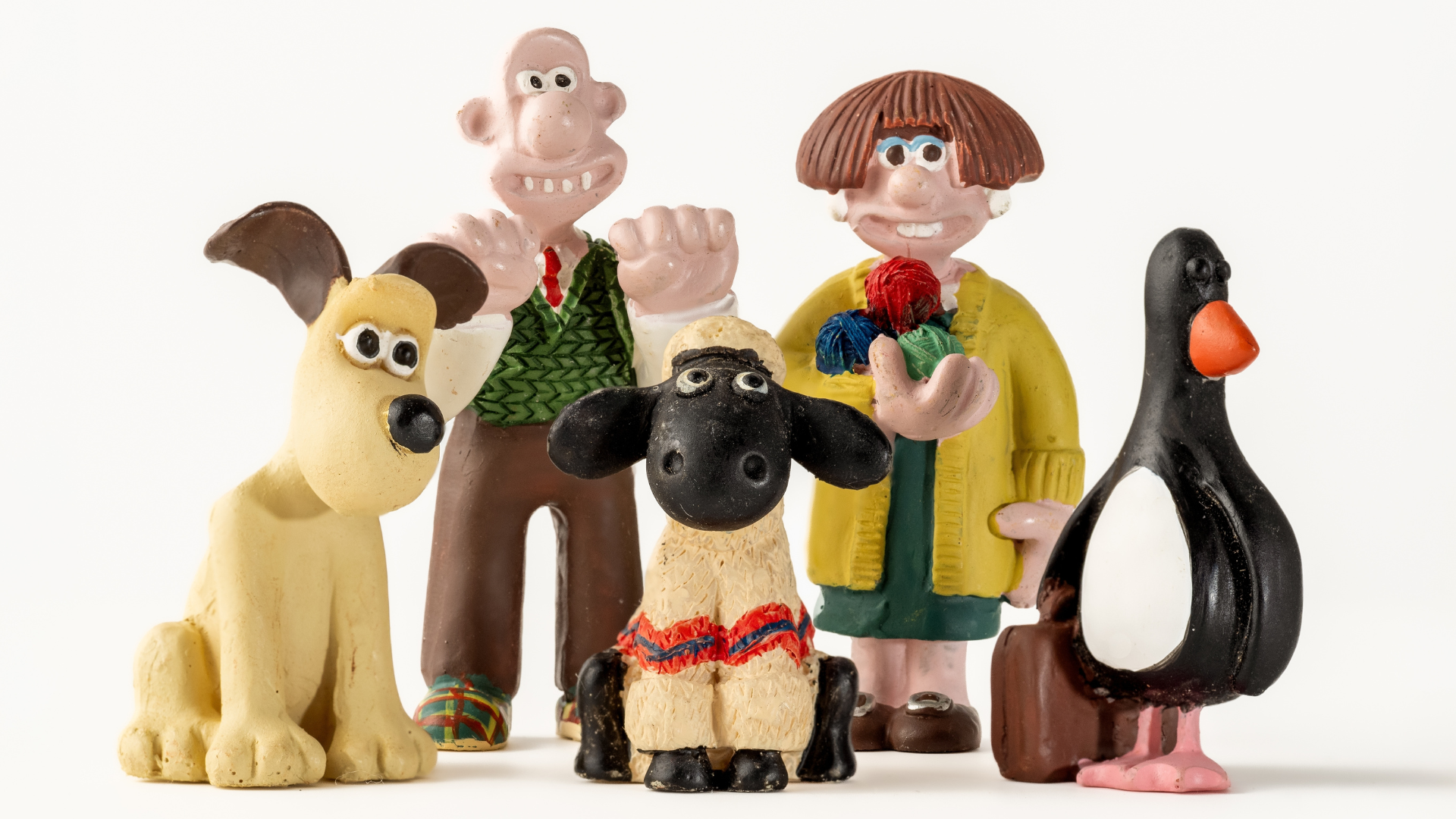
It sounds tedious, but Lord sees it differently. He views the process as acting in extreme slow motion: “There is a fundamental difference between working with your hands and your arms and your fingertips, and working on the keyboard.”
Stop-Motion As An Art Form
Computers let an artist undo mistakes with a single keystroke. Stop-motion does not offer a safety net. Every scene is an unrehearsed sculpture moving through real space. You push the clay, fire the shutter, and live with the outcome.
Advertisement
Because animators touch the models constantly, you can often spot tiny thumbprints in the clay on screen. Most directors would try to scrub those marks out. Lord and his team leave them in. Those subtle textures prove a real person shaped every eyebrow twitch and nervous smile. Lord continues, “I believe that the humanity in what we’re doing, the process, all comes through in the final film.”
That human touch explains why Aardman films age so well. CGI from twenty years ago often looks outdated and flat today, but physical light hitting real clay retains its warmth forever. When Wallace sits down for tea and crackers, the room feels tangible, because it actually exists on a studio floor in Bristol.
Aardman still builds tiny armatures, paints miniature teacups, and molds faces from scratch. Digital tools help clear out rigs or tidy up backgrounds, but hands remain the primary engine of production.
Peter Lord proved that great innovation does not always mean abandoning the past. Sometimes real creativity is about sticking with an old technique and pushing it to perfection. In a digital world, nothing beats the raw charm of a story sculpted by hand.
The video below demonstrates how Aardman animators sculpt and pose characters frame by frame (Source: CBS Sunday Morning):
 Read Exclusive Stories
 Bookmark & Save Articles For Later