Nic Fischer, a Bozeman, Montana–based painter, describes himself as a “narrative landscape painter,” or someone who sees every landscape as a story waiting to be told. His work is deeply rooted in the American West, often inspired by the physical and emotional experience of exploring it. As Fischer explains, “The best paintings are almost always done by those painting what they enjoy exploring the most.”
In this exclusive interview with Tomorrow’s World Today, Fischer explains how his childhood, time spent in national parks, and passion for plein air painting have shaped his artistic process and evolving style.
Tomorrow’s World Today (TWT): Tell us about yourself and what inspired you to begin creating art.
Nic Fischer (NF): I live in Bozeman, Montana, with my wife and two daughters. We’re a very close family and love where we live for its natural beauty. My parents were both educators. My dad had a particular love of art. At a young age, I spent hours with him at the kitchen table learning to draw and see critically. He understood how valuable and yet underutilized art is as an educational tool, especially in developing dynamic problem-solving skills. Throughout my education, art was always encouraged, and at some point, it probably became a bit of an identity. After High School, I worked seasonally in Yellowstone, Death Valley, and Grand Canyon National Park. I went to the Savannah College of Art and Design and focused on painting and illustration. Years later, I was having coffee with Linda Williams, the director of the Bozeman Art Museum, and she suggested I get outside to paint more often. This conversation sent me on what is now a decade-long obsession with plein air.
TWT: How would you describe your style as an artist?
NF: I’ve described myself as a Narrative Landscape painter for years. As I paint a landscape, I find myself telling a story of how I got there, or describing a place I’d like to get to know better. This running dialogue in my head informs a lot of the early decision-making beyond just the principles of what makes a good picture. I consider myself a narrative landscape painter because landscapes always contain a story, at least for somebody.
I think I can be defined as Contemporary Western Realism, as I live in the West, and paint its landscape as truthfully as I can. Many people do. The cocktail of historical art one synthesises, mannerisms, and interests, allows an individual to stand out. I think the impressionists had some great ideas, which informed abstract expressionists like Rothko and Pollock. I consider these artists when applying paint. Yet, I have had an obsession with mountains since I was a kid, so they are usually my subject. I look to more traditional schools of art when I’m designing a composition, drawing, or describing light. My always evolving “style” is derived primarily from these major influences.
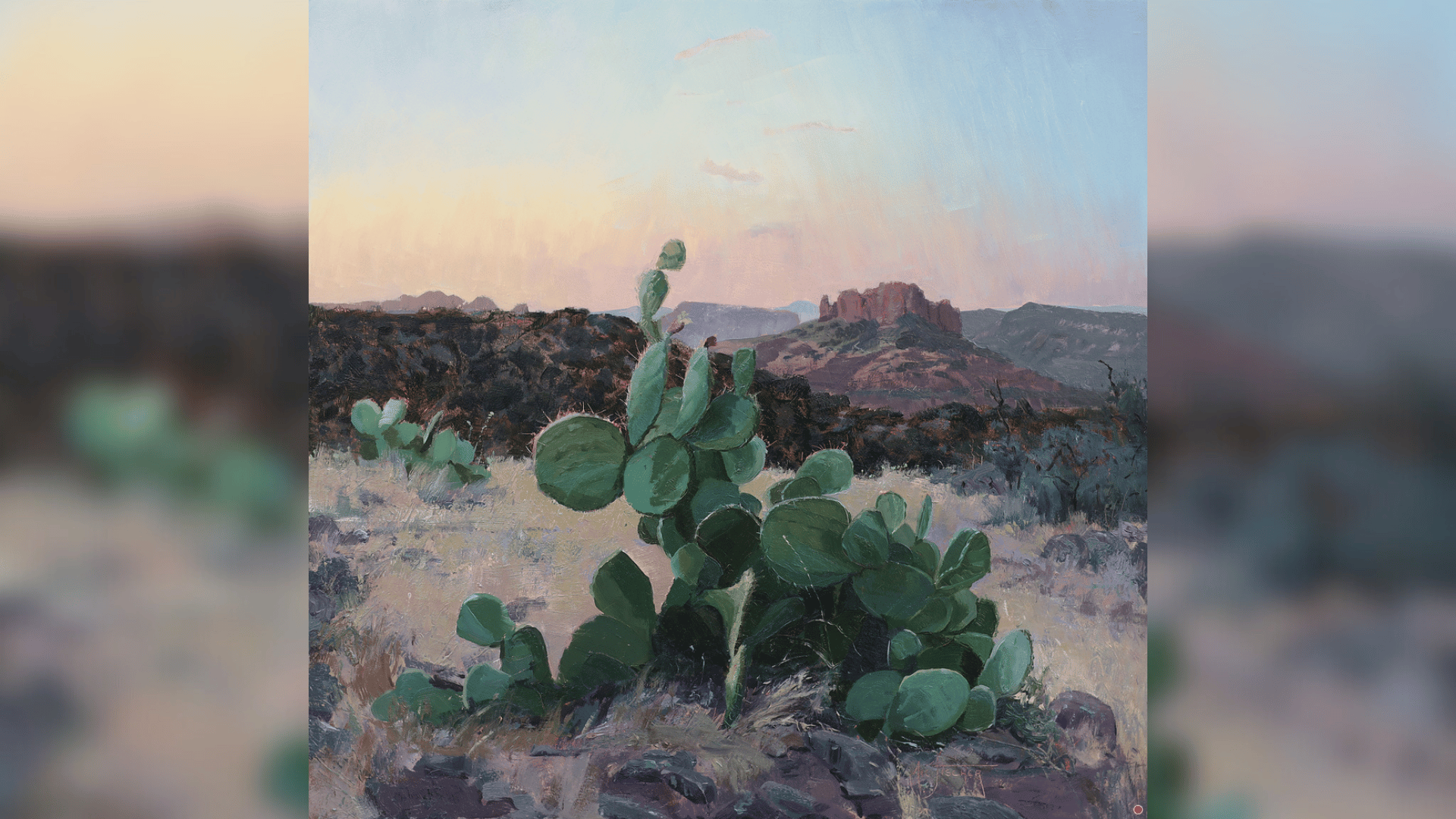
TWT: Many of your paintings depict nature or landscape settings. Does nature inspire your art? If so, how?
NF: Absolutely, for the reasons I just described, and additionally because I am a high-energy person. For me, the physical strain of summiting a mountain with a heavy pack puts me in the best mood. I am more optimistic and more alert, this heavily impacts the start of any painting I do outdoors. The best paintings are almost always done by those painting what they enjoy exploring the most.
TWT: Your pieces “combine field studies with satellite imagery”. Tell us more about your use of satellite imagery and how that influences your pieces.
NF: Satellite imagery has been an evolving influence for me over approximately 15 years. It used to be very important. I would patch maps and pictures together after a hike or camping trip to cram as much information in a painting as possible. The result was a bit of an adventure for the eye, allowing the viewer to stand a foot from the canvas and explore. Over time, though, I’ve been relying more on my plein air paintings and focusing on a single view. Both approaches can put you in a place, but I think my current work grounds the viewer in a moment rather than a lengthy experience.
TWT: What do you find most challenging and rewarding about the mediums you work within?
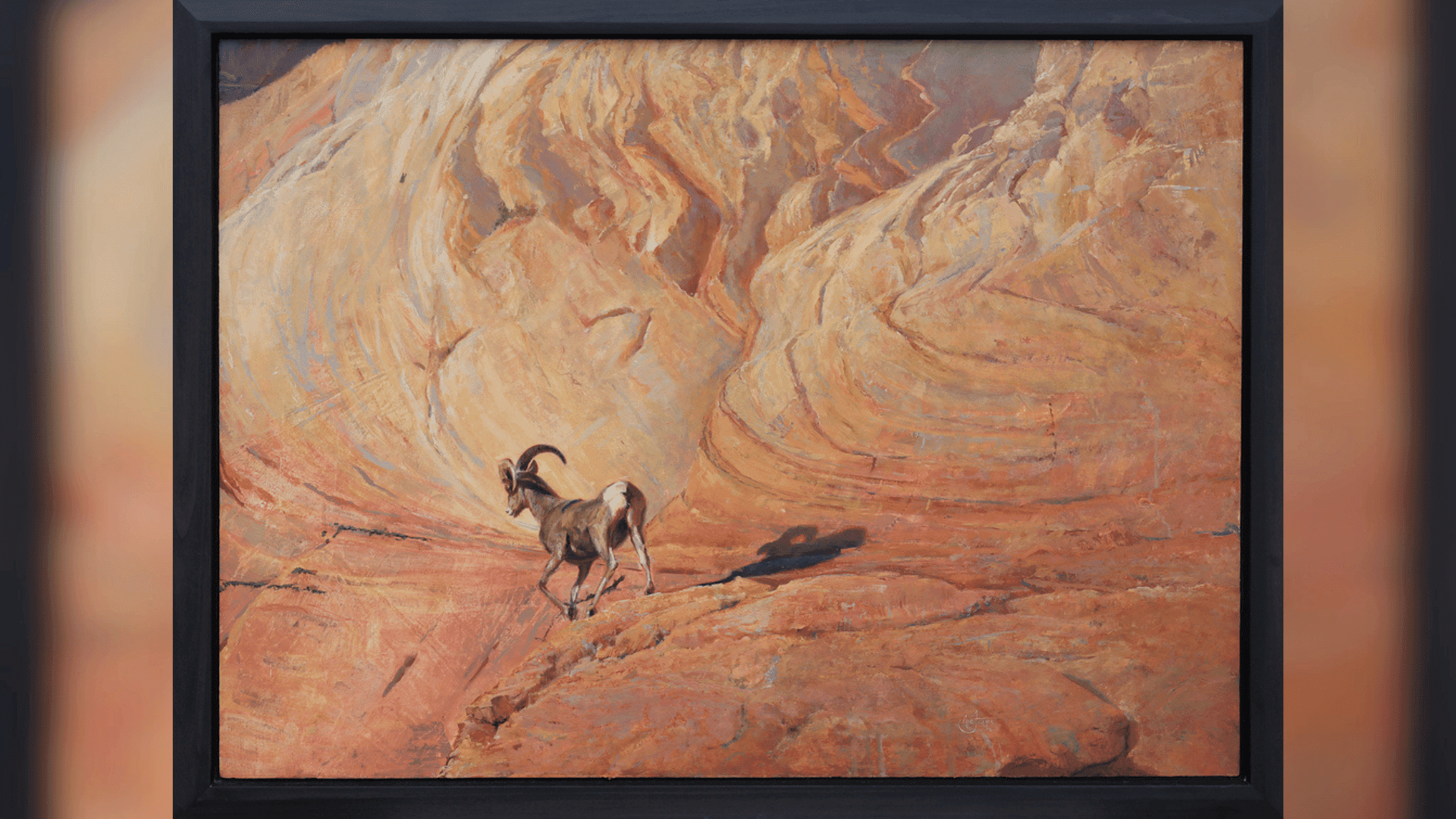
NF: I wouldn’t say there is anything challenging about any medium that is the medium’s shortcoming. I’m most comfortable with oil paint because I’ve been using it for 20 years. My art has developed with my knowledge of my chosen medium. I suppose if I had locked in on watercolor a long time ago, I’d paint very differently. I enjoy the long working time of oil paint, and the variety of consistency it allows, from very thin to peanut butter.
Advertisement
TWT: Can you walk us through the process of how you select a site, location, or subject to paint?
NF: Selection of a subject for me, a landscape painter, is very seasonally oriented. Summer days are long and warm, I want to be outside and can access more difficult terrain, but I often don’t find the colors quite as intriguing as the other seasons. Fall colors are phenomenally warm and rich, as are the greens of spring in the mountains, coupled with melting snow and wet mud. The snow of winter provides a great opportunity to paint the ground lighter than the sky. Whatever the season, I love getting outside. I explore what interests me.
Once in a while, when I’m very lucky, a scene just hits me, it’s rarely where or when I’d hoped. When this happens, if I can, I paint it. Usually, though, a great scene happens in a flash. I do my best to remember what I found most inspiring and get a quick study down, then I obsess for weeks or months, finding pieces of it everywhere I go.
TWT: Tell us about a few of your favorite pieces you’ve created. Why are they your favorites?
NF: My favorite piece is usually the unstarted one in my head. My favorite finished pieces always have two things in common: they have something I’ve never done before, and they are technically the best I’ve been able to do up to that point.
“After the Fire” (2021) comes to mind, as it was my most ambitious painting, and a hard-fought battle to complete. I did a one-month residency at Glacier National Park, where I hiked to the summit of Edwards Mountain numerous times to get the necessary reference. Once I returned to the studio, I worked on the final 7’ painting for over a year.
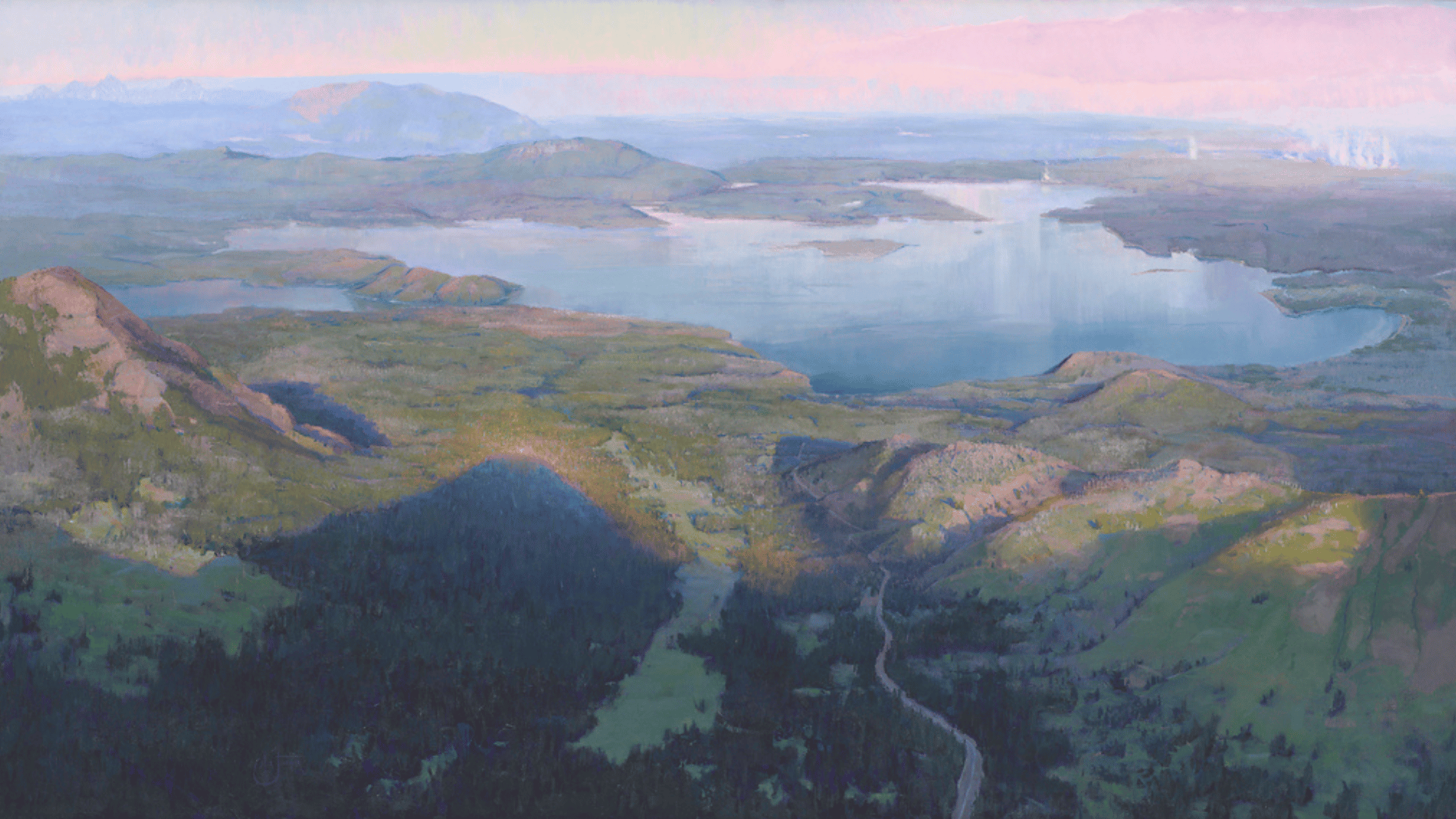
Of a similar size and scale of view, “Reservoir” (2025) stands out. I executed this piece far more confidently, but still experimented along the way.
I will also mention “Self Portraits” (2024), which is really just a painting of a cloud rushing up over a ridge line; 2/3 of the image is dark brown. I love this piece because it is polarizing; plenty of people don’t like it. If you give the dark brown some time, though, you’ll see a few trails and four hikers finding their way through a mess of subtle color shifts and textures. Conceptually, I love it. The sky is airy and was painted in a single session. The mountain was developed through experimenting with different paint applications, which built up and were carved out over a few months.
TWT: What brings you the most joy when people see your work?
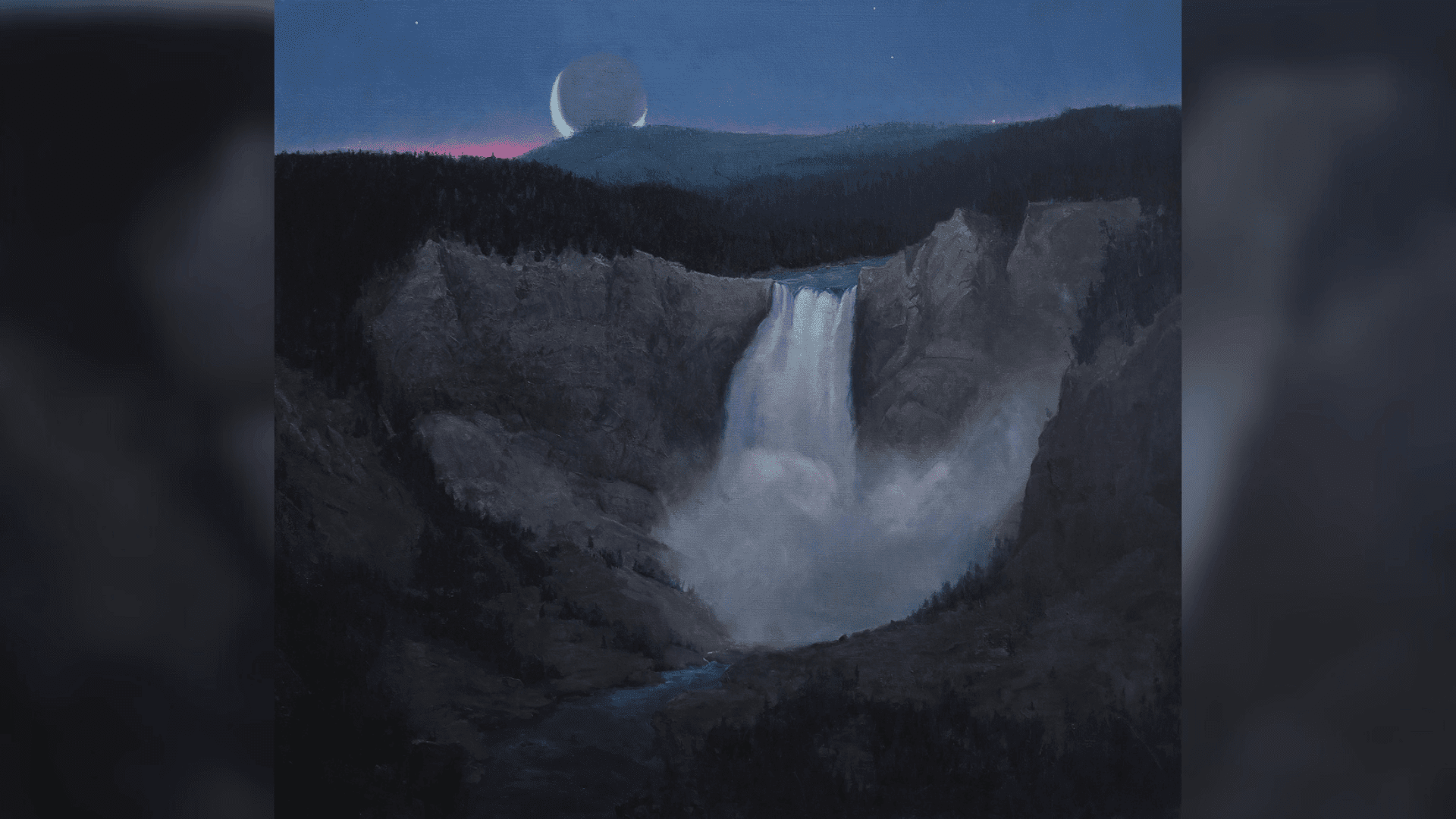
NF: When I put an elaborate, large-scale painting of a place I know well on a wall, and a group walks up to it and begins pointing out places and adventures they’ve had.
TWT: How has your work evolved over time? How have you grown as an artist?
NF: When I first started painting, I was a kid; I now have two kids. Nothing has pushed me to be better like they have. As I’ve matured, I have a better understanding of why I like the art I like, and am therefore more capable of bringing those qualities out in my own work. With every year that goes by, I get a little better at seeing the world around me, knowing what I can paint well, what I need to work on, and how. The only thing about my paintings that I hope never changes is they intrigue me. I paint what visually and conceptually excites me to the best of my ability, and that remains a moving target.
TWT: What advice would you give to aspiring artists?
NF: Learn something with every painting, and be truthful.
For more information about Nic Fischer and his projects, follow him on nicwfischer.com.