Deep in the Sonoran Desert, Slab City is a place where people live entirely off the grid. Built on an abandoned WWII military base, the area offers free camping and no-rent living for roughly 150 permanent residents, over 2,000 in winter, with no electricity, water, or sewage infrastructure.
Slab City
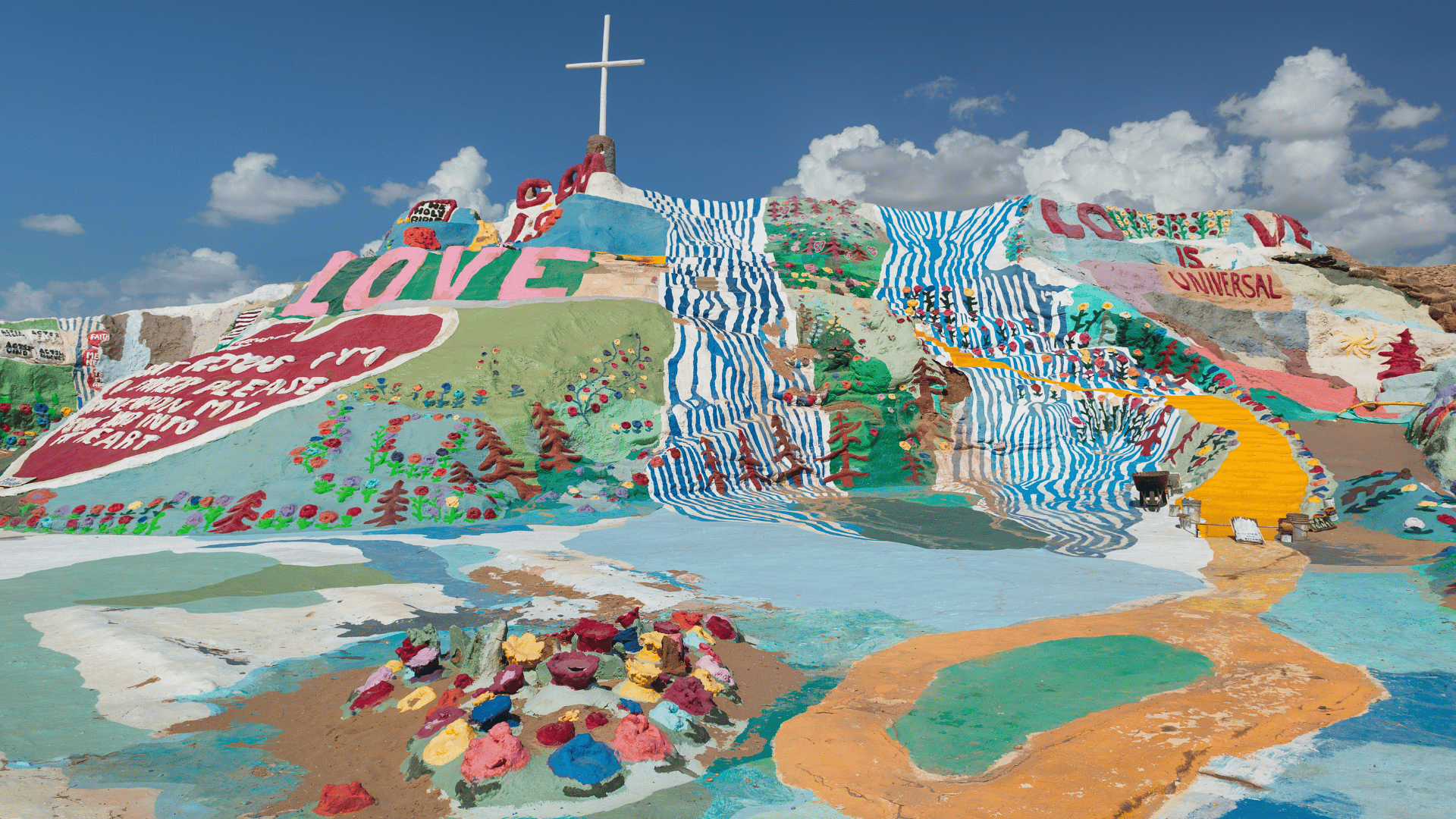
Without a city hall or a park department, the community has created its own landmarks and social hubs. Residents live in RVs, trailers, or shacks.
The most famous spot is Salvation Mountain, a massive, bright art installation made of adobe clay and thousands of gallons of paint. The artist behind the monument, Leonard Knight, spent years building it as a gateway to the Slabs. Visitors flock from all over the world to take photos of its colorful peaks and hand-painted verses.
The people who actually live there rely on the city’s community hubs. There isn’t a traditional “downtown,” so things are spread out across the desert floor. There’s a DIY skate park and a communal library where you can grab a free book. For chores and daily needs, people head to the Slab Mart, a spot where residents swap recycled goods and manage their rubbish together.
Advertisement
Most residents and visitors rely on the local hot springs to bathe or just soak in the heat. The watering hole acts as a social gathering spot when the desert sun starts to go down.
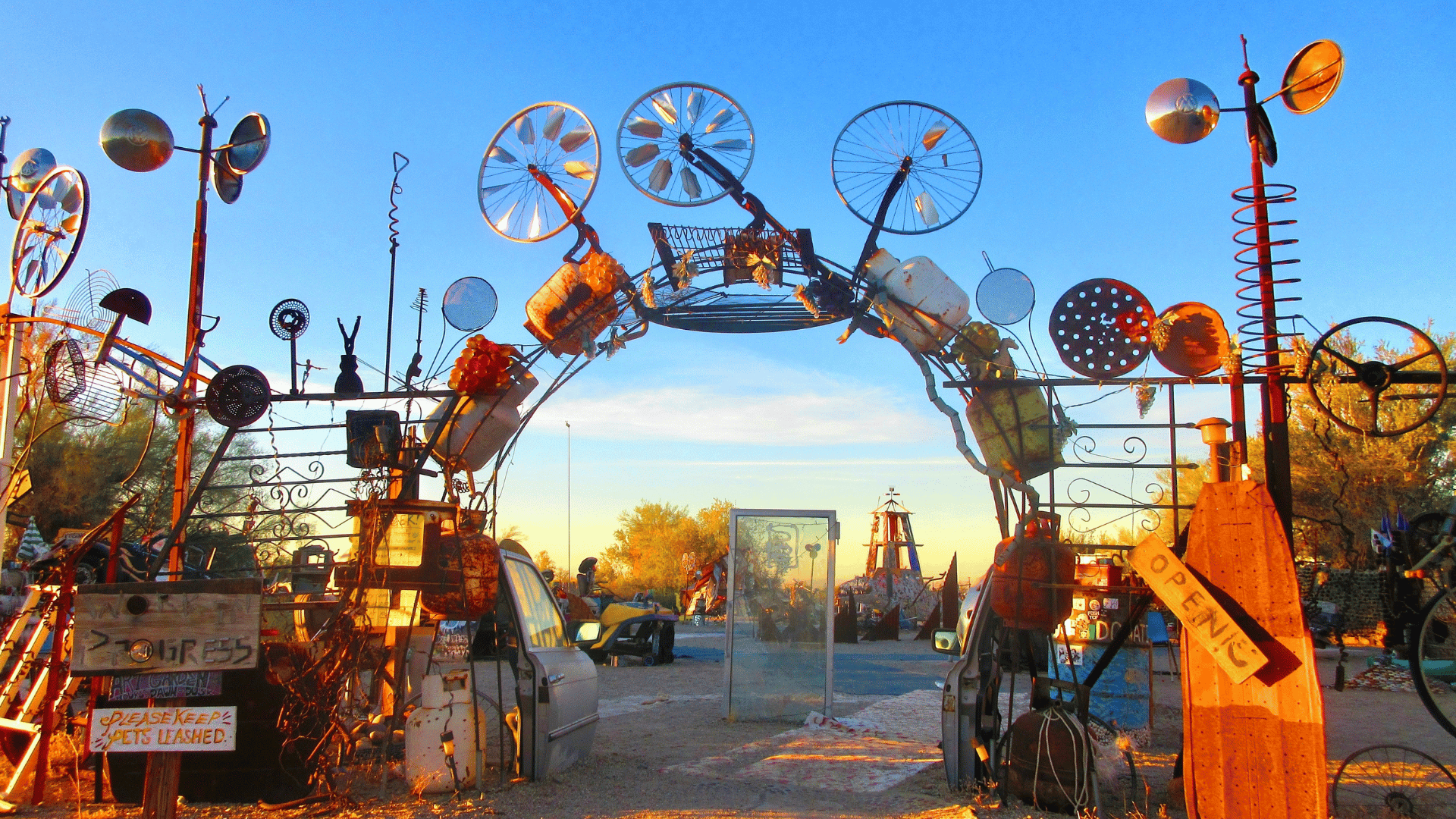
The heart of the Slabs’ social life is an outdoor theater called The Range. It’s a makeshift stage surrounded by mismatched couches and old bus seats. Every Saturday night, it turns into a venue for karaoke and talent shows.
There’s no professional lighting or high-tech sound system, but it’s the main event for the community. Residents and “snowbirds”—the travelers who visit for the winter—bring their own drinks and sit under the stars to watch local musicians perform.
Though living here means giving up modern comforts, the trade-off is a very specific kind of creative freedom. The Slabs show how people can turn a patch of abandoned concrete into a functioning society using nothing but what they find in the sand.
 Read Exclusive Stories
 Bookmark & Save Articles For Later