We produce about 4 billion tons of cement every year, but the process emits immense amounts of greenhouse gases. Right now, cement production is responsible for five to eight percent of global CO2 emissions. Heating limestone to make the cement is the main reason for this.
Researchers from ETH Zurich believe we can combine cement production with a technology called Direct Air Capture, or DAC.
“From a climate perspective, the combination of DAC and cement production is very promising,” Vittoria Bolongaro, a PhD student and lead author of the study, explained.
Catching Carbon in the Air
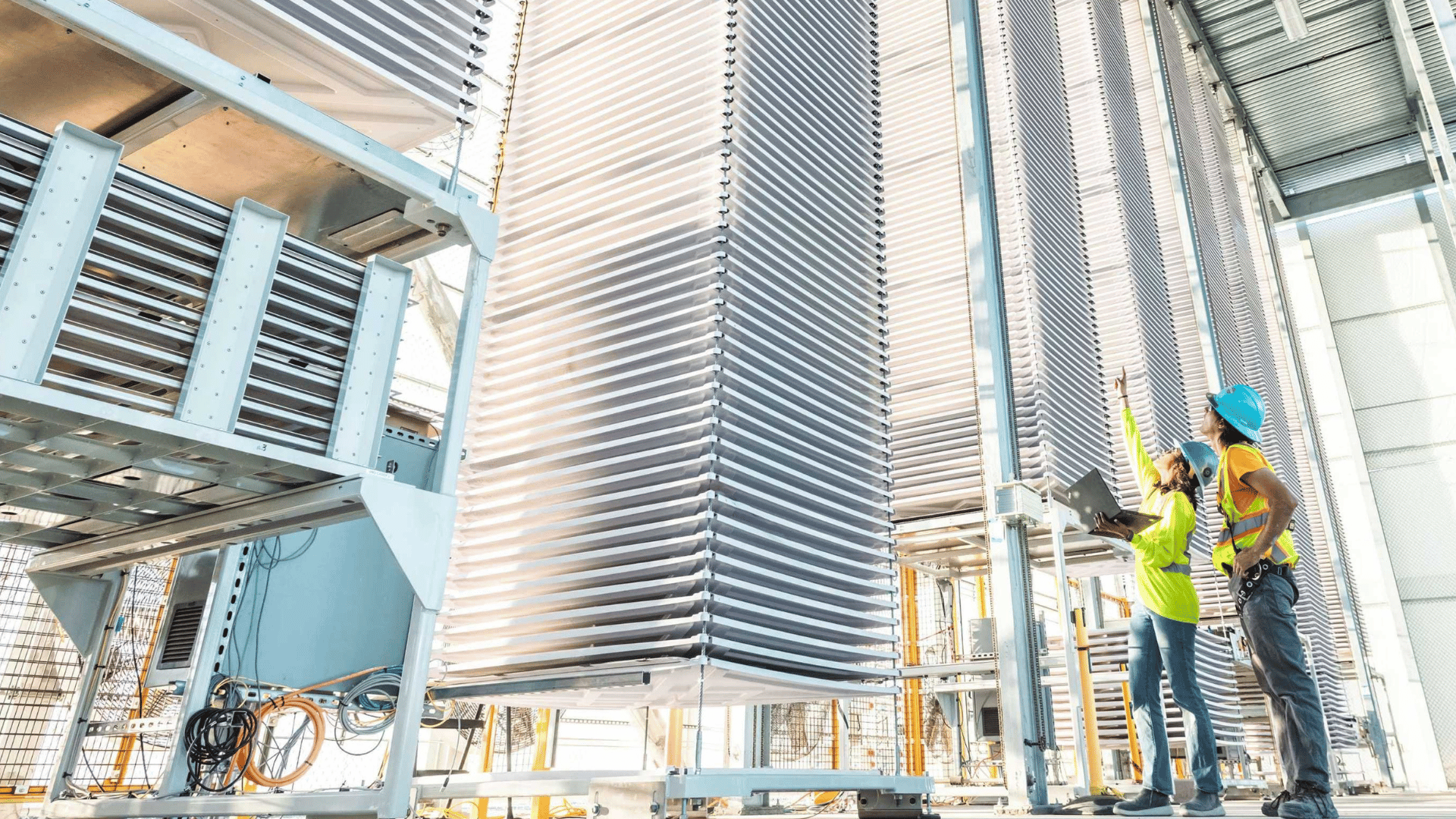
The research team worked with Heirloom Carbon Technologies to test the idea. “Heirloom was an ideal partner for us because the company is already operating the first calcium looping DAC systems on a commercial scale,” Bolongaro said.
Instead of using coal or gas, they use an electric kiln to heat the limestone. The CO2 created during this step gets captured right away. Then, water is added to the leftover material. This mixture actually pulls extra CO2 directly out of the air before it turns back into limestone. That captured CO2 gets compressed and safely stored underground, while the limestone goes on to become cement.
Advertisement
“We were able to show that the technology has a net-negative carbon footprint; in other words, commercial calcium looping DAC plants with CO2 storage remove more CO2 than they generate over their entire lifecycle,” Bolongaro added.
Electrifying the kiln and capturing the gas like this could cut the climate impact of making cement by 78% by 2050.
A Good Step Forward
To get the cleanest results, these plants need to run on renewable power like wind or solar.
“The major advantage of DAC plants using calcium looping is that this technology can be integrated into a well-established cement production process,” Bolongaro explained.
The large electric kilns needed for this process aren’t used on an industrial scale yet. The researchers also haven’t studied how much this entire setup will cost. So, we have to wait and see if it makes financial sense for companies to adopt.
 Read Exclusive Stories
 Bookmark & Save Articles For Later