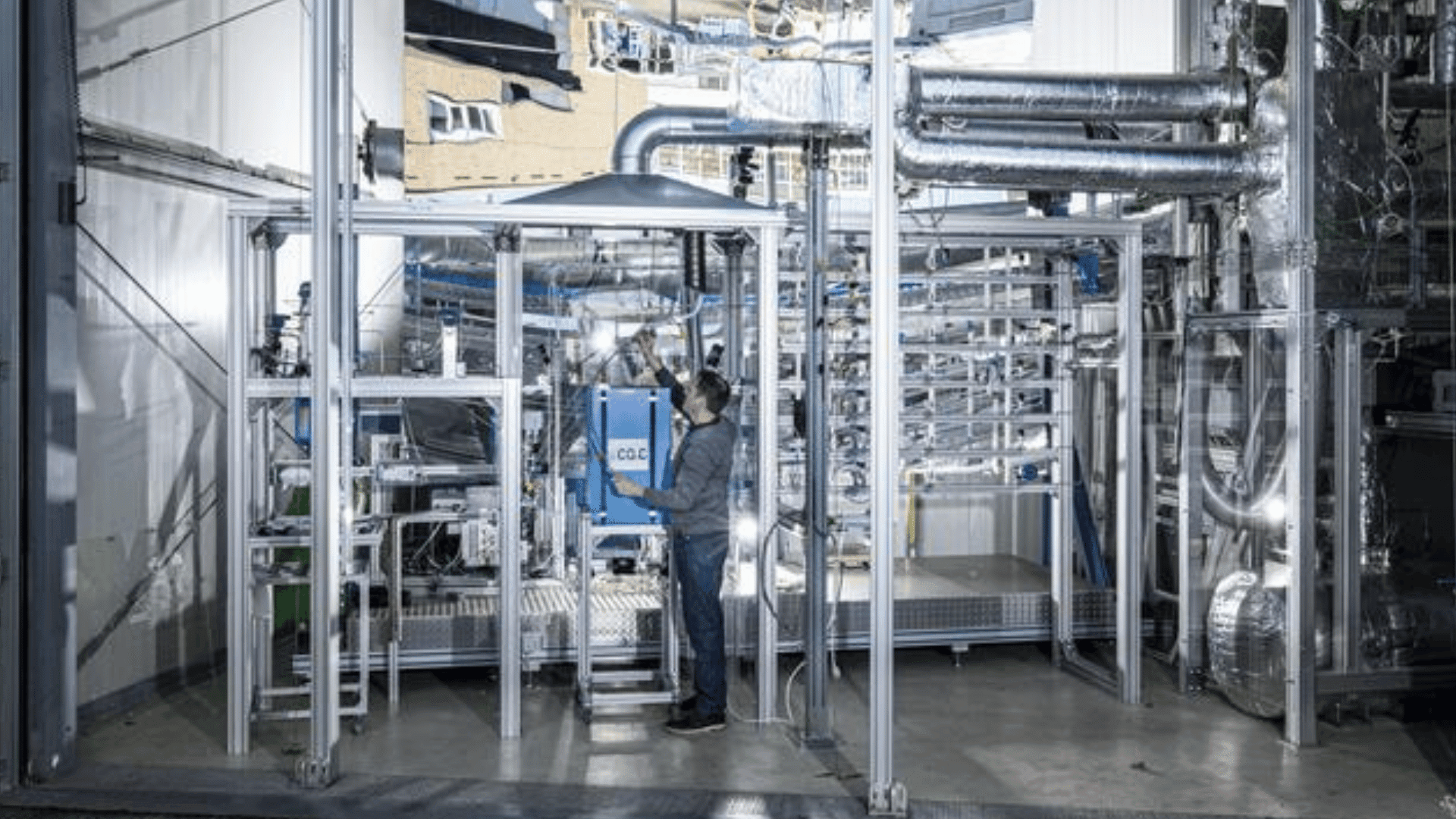
Back in 2020, researchers at the Karlsruhe Institute of Technology (KIT) came up with the idea of pulling CO2 out of the air and turning it into a solid. They called the project NECOC, and they’ve already proven it works in a test facility. Now, they are moving that technology into a practical setting.
The technology’s purpose is to help industries that produce a lot of emissions, like iron casting, become much cleaner. By capturing CO2 from the air can turn a greenhouse gas into a useful material.
“We produce a high-purity carbon powder that can be stored safely or used as a raw material,” said Dr. Benjamin Dietrich from KIT. “We’re refining the NECOC process so that CO₂ from industrial emissions can be used. That will give us a powerful new tool for closing carbon cycles on-site at industrial plants.”
Turning CO2 Into Industrial Material
Advertisement
In places like the automotive part factory in Singen, Germany, making iron requires coke (a type of coal). This process naturally releases a lot of CO2. The NECOC system handles this by concentrating the exhaust and mixing it with hydrogen to create methane. That methane is then bubbled through molten tin.
Inside the hot liquid metal, a reaction happens. The methane splits into hydrogen and solid carbon. Then the hydrogen gets recycled back into the process, and the solid carbon can actually go back into the furnace to replace the coal-based coke.
The facility in Singen plans to use biogas or natural gas to keep things running without adding more emissions. Beyond iron, this solid carbon could be used for battery parts or to make construction materials stronger.
“We’re closing carbon cycles,” Dietrich says. “Step by step, the climate-damaging emissions of today are becoming part of a circular industry.”
Professor Thomas Hirth, Vice President at KIT, believes this shows that protecting the environment and keeping the industry strong can go hand in hand. “This technology gives us a chance to make processes climate-friendly in spite of their unavoidable CO2 emissions while also safeguarding long-term value creation and employment in Germany,” he said.
 Read Exclusive Stories
 Bookmark & Save Articles For Later