When you think of a mural, you probably think of spray paint or oil pigments on a brick wall. But a new group of creators is ditching the hardware store for the biology lab. They aren’t using paint at all. Instead, they’re working with living cultures like glowing fungi and bioluminescent bacteria. It’s called the Alchemy of Bioluminescence, and it’s a weird, beautiful mix of gardening and fine art.
Painting with Life
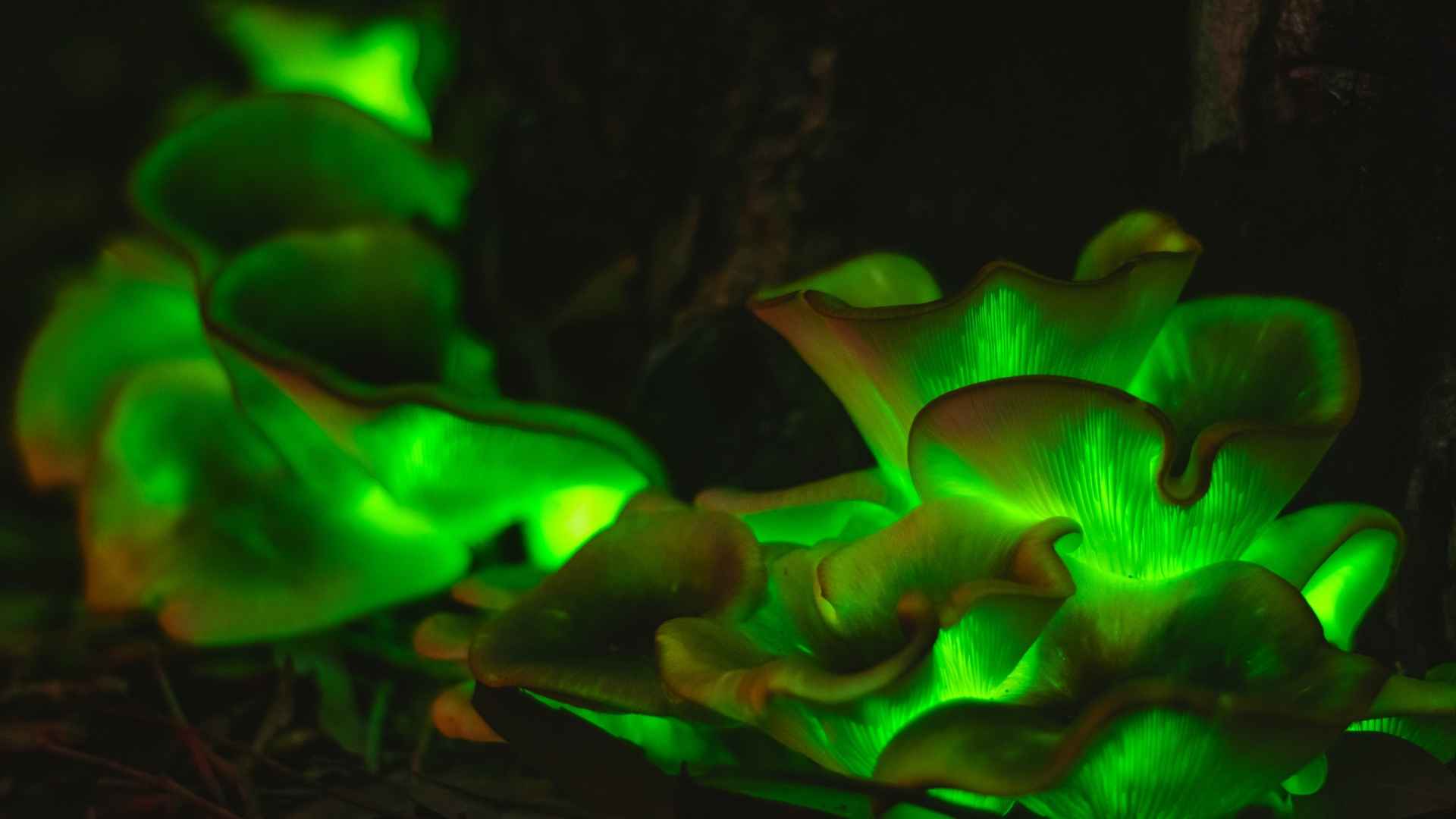
Here’s how it works. Artists take specific strains of mushrooms or bacteria that naturally glow in the dark. They don’t just slap them on a wall, though. They have to “breed” these cultures to react to their environment. By adjusting the nutrients in the growth medium, an artist can control where the light is brightest. The result is a living mural. These pieces aren’t static. Because the organisms are alive, the art changes constantly. If the room gets warmer, the bacteria might glow a deep blue. If someone opens a window and the oxygen levels rise, the fungi might shift to a bright neon green. It’s art that actually reacts to the people standing in the room.
The Living Palette
Advertisement
The real innovation here is what these artists call a “living palette.” Most art is designed to last forever, or at least as long as possible. But bioluminescent art is different. It has a lifespan. It grows, peaks, and eventually decays. This forces the artist to understand the cycle of life. You can’t just walk away from a living mural. You have to feed it and monitor the temperature. It turns the act of creation into a relationship. The artist has to learn the chemistry of light—specifically how enzymes like luciferase create a glow without generating heat. It’s a masterclass in biology and physics disguised as a hobby.
Why Temporary Art Matters
You might wonder why anyone would make art that eventually disappears. But that’s actually the point. In a world full of plastic and digital files that last forever, there’s something special about a piece of work that breathes and dies. It’s sustainable because it’s entirely organic. When the mural reaches the end of its life, it just becomes compost. This blend of STEAM principles shows us a different way to think about production. We don’t always need LEDs and lithium batteries to light up a space. Sometimes, we just need to give nature a canvas and some food.
The Future of Creation
Right now, this is mostly happening in galleries and high-end labs. It’s not exactly easy to keep a wall of bacteria happy in a standard living room. But the tech behind it is teaching us a lot about biosensors. Imagine a future where the wallpaper in your house glows red if there’s carbon monoxide, or soft yellow when it’s time to wake up. It’s a reminder that the best innovations don’t always come from a factory. Sometimes, they’re grown in a petri dish by someone who just wanted to see the light.
 Read Exclusive Stories
 Bookmark & Save Articles For Later