Sculpture and installation artist Olafur Eliasson recently presented a multimedia installation project on a luminous sphere in Memory Grove Park, a public green space in one of Salt Lake City’s seven canyons.
A symphony of disappearing sounds for the Great Salt Lake
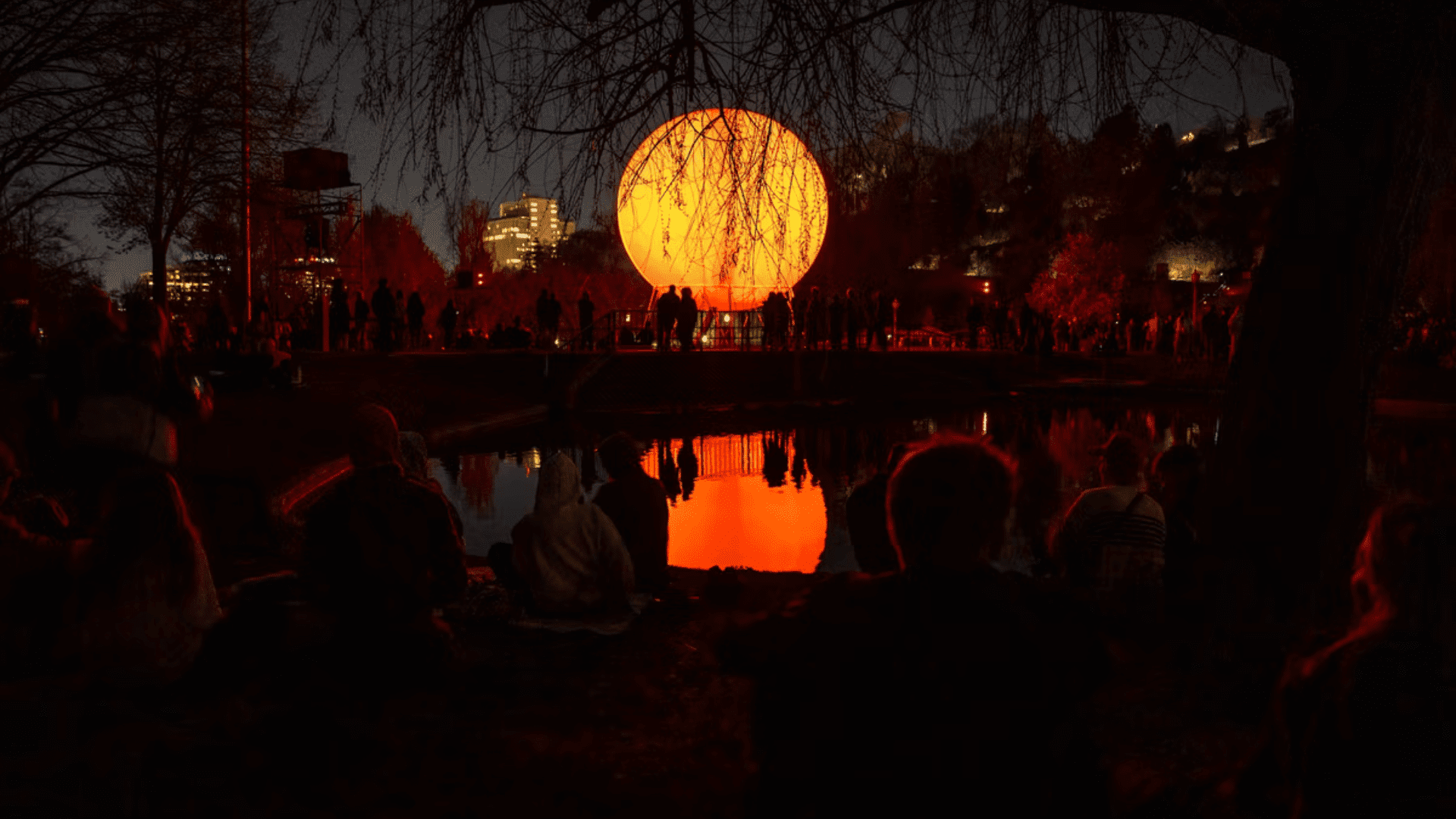
The Icelandic-Danish artist’s first public work in Utah, titled A symphony of disappearing sounds for the Great Salt Lake, was commissioned as part of Wake the Great Salt Lake, a multi-year initiative headed by the Salt Lake City Arts Council alongside the mayor’s office and Bloomberg Philanthropies. The goal of the initiative is to raise public awareness of the lake’s rapid decline.
One of 13 installations across the city, the artist describes this work as “a symphony the animals are performing for us.” The piece unfolds across the surface of a three-story-tall elevated sphere with four projectors beaming from sites around the park. At times appearing fully three-dimensional, the sphere first showed a flickering field of light before shifting into light streaks of wind currents rippling across the surface.
Advertisement
To illustrate the Great Salt Lake’s climate crisis, Eliasson used numerous field recordings from the Western Soundscape Archive, an audio resource that documents the changing soundscapes of the US West, and worked with the Welsh producer Koreless to assemble a layered 30-minute composition of nonhuman lake life.
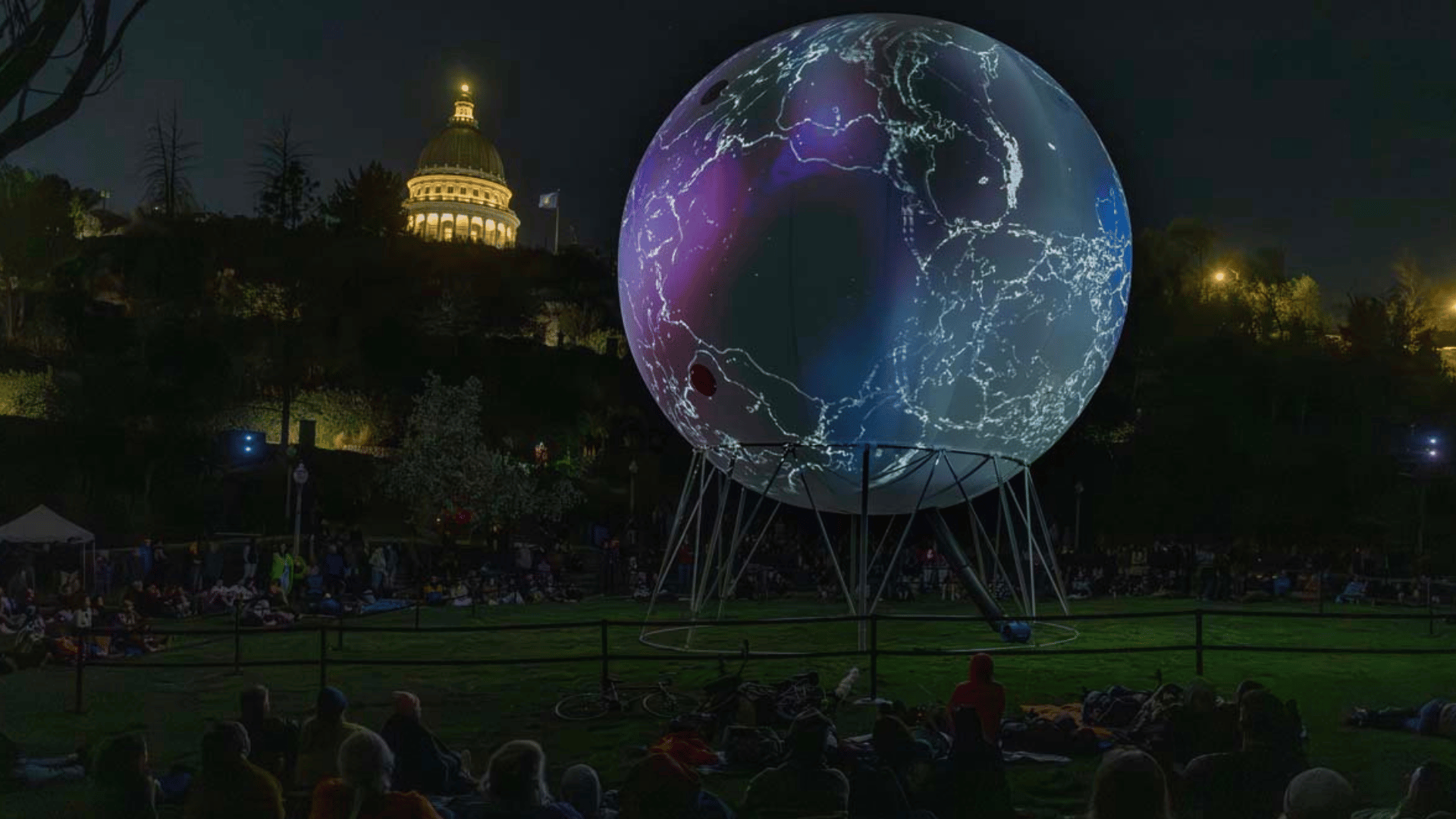
As the sound of birds played in the background of the red and orange streaks, the soundscape and abstract visuals also continued to shift. Psychedelic rainbow shapes, resembling geothermal light or the aurora borealis, morphed and changed as viewers listened to a chorus of chirping frogs.
Felicia Baca, the director of the arts council, told The Art Newspaper that a focus on hopeful futures for the lake and city was important to both Eliasson and the council.
“We wanted to serve local artists but also bring in renowned international artists with the same value sets,” Baca says. “We know environmental issues aren’t in a vacuum. They’re global, and we wanted to connect local artists to someone who may not know the area but understands the issues.”
 Read Exclusive Stories
 Bookmark & Save Articles For Later