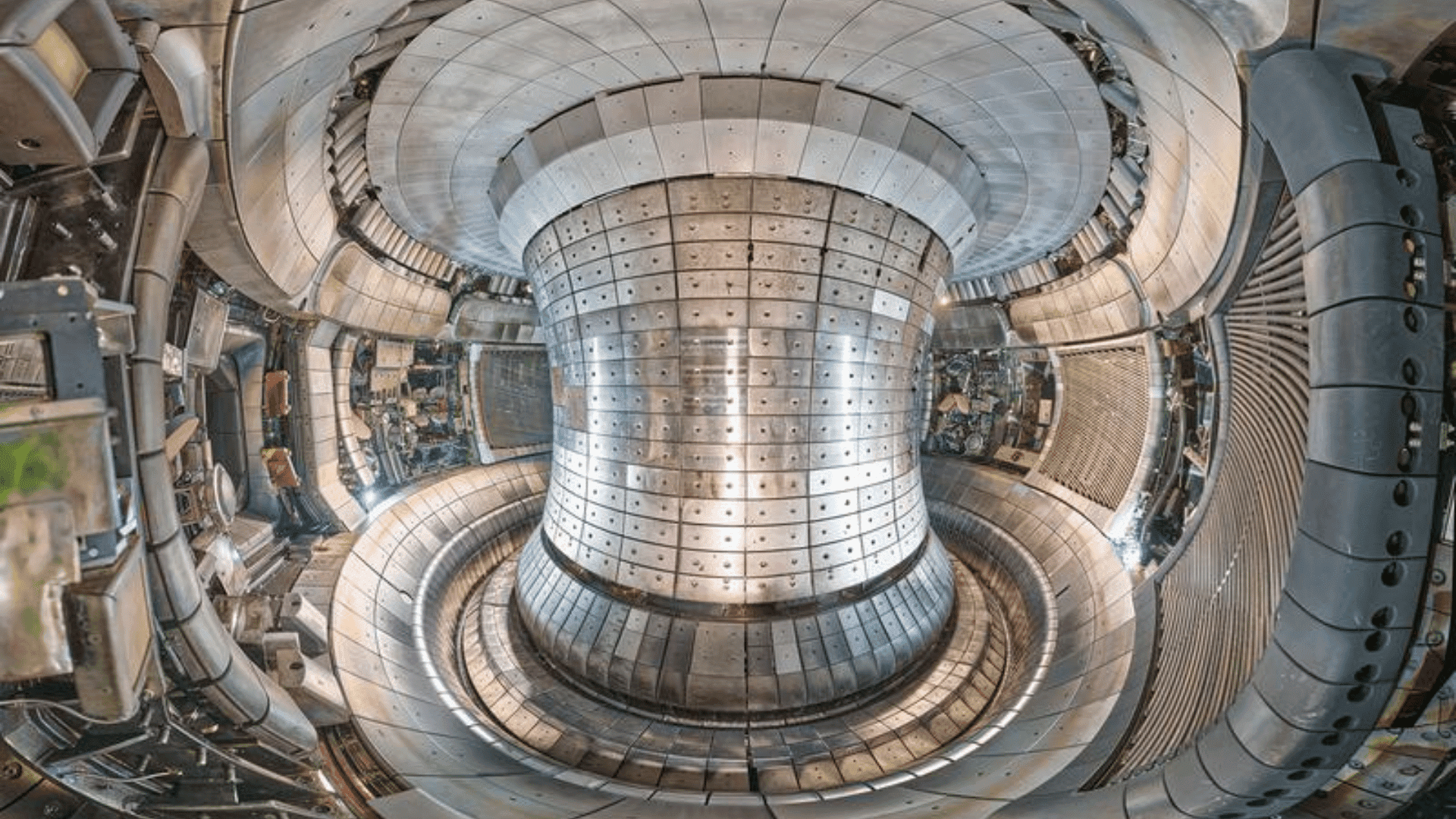
A team from the Fraunhofer Institute for Manufacturing Engineering and Automation IPA, the Max Planck Institute for Plasma Physics, and a company called IoLiTec is trying to figure out how to coat nuclear reactor walls with tungsten. This metal is one of the toughest materials, and scientists believe it’s the best for the job.
Scientists want to protect the “first wall” of future fusion reactors with tungsten. These machines get incredibly hot, and the surfaces inside have to survive loads of up to 10 megawatts per square meter. Tungsten is perfect for this because it doesn’t melt until it hits 3000 degrees Celsius.
However, tungsten is rare, expensive, and very hard to shape into parts. Instead of making the whole wall out of it, the team wants to apply a thin layer of tungsten onto a cheaper, easier-to-use material.
Using Tungsten to Solve a Problem
Advertisement
The big issue is that you can’t plate tungsten using normal methods. Usually, industrial plating uses water-based liquids, but when you try that with tungsten, you just get hydrogen gas instead of a metal coating. To fix this, the researchers are ditching water entirely. They are experimenting with “ionic liquids” and organic solvents that don’t contain any water.
This has never been done successfully before. Project manager Andreas Waibel from the Fraunhofer IPA said, “There is no existing method worldwide for the electrochemical deposition of pure tungsten – neither industrially nor in the laboratory.”
The Max Planck Institute is testing how the coatings hold up in fusion conditions, IoLiTec is making the special liquids, and Fraunhofer IPA is building the actual coating process. They want to make sure this can eventually be done on a large scale for factories.
The project, called GalvanoFusion, is funded by the German government and will run through the end of 2028.
 Read Exclusive Stories
 Bookmark & Save Articles For Later