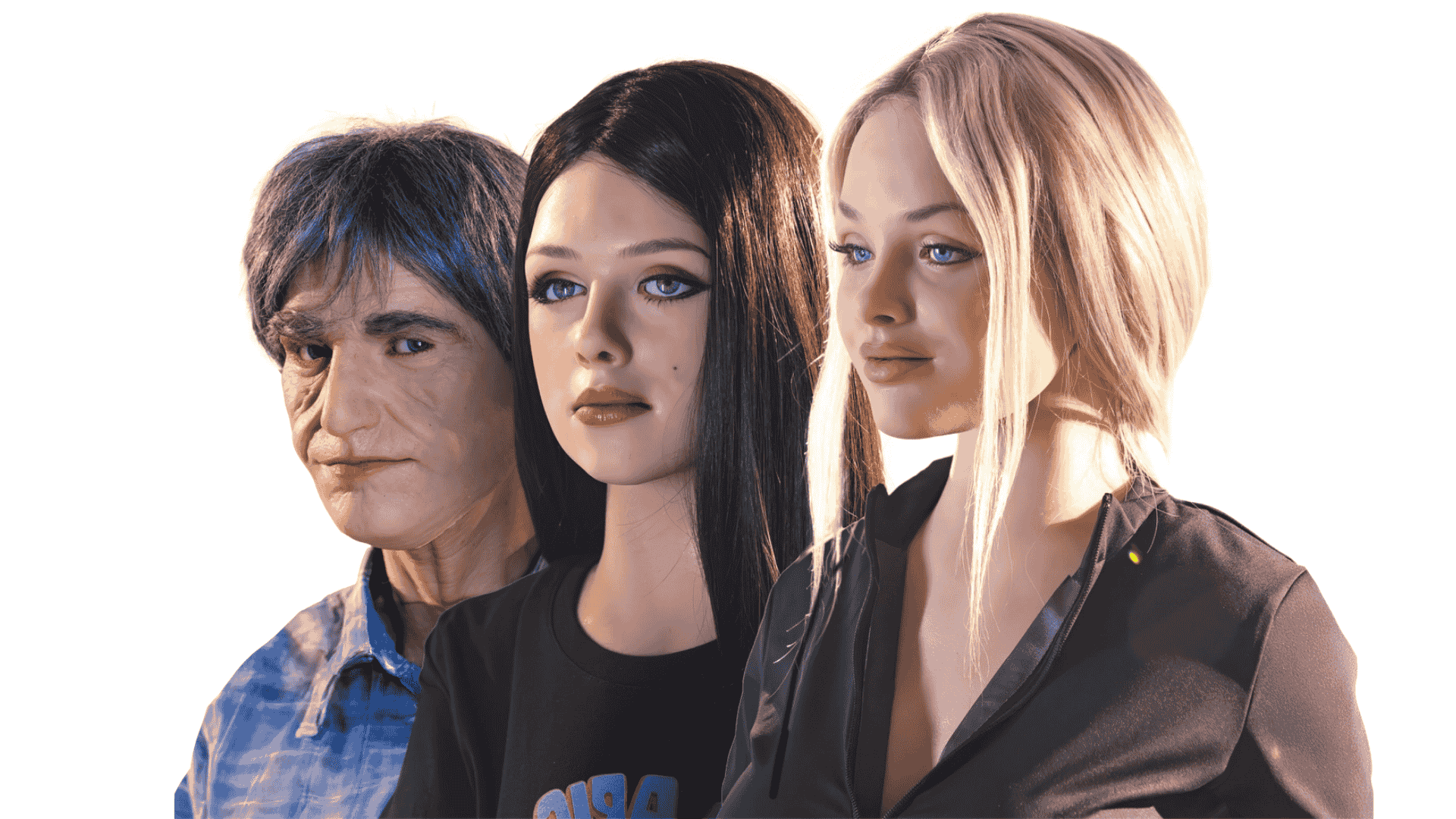
Humanoid robots are beginning to interact with the world around them in ways that go beyond mere demonstrations of their capabilities. Realbotix exhibited a lifelike robot at CES that stood at their booth for the entire fair, interacting with passersby. While the company likely had other goals for the robot besides creating a spectacle for attendees, for companies interested in service robotics, AI customer service, and interactive kiosks in particular, this example demonstrates the importance of creating robots that are useful for their designated tasks.
Realbotix created its robot with an emphasis on human characteristics from the start. Rather than first creating the robot’s physical structure, the company began with human proportions, facial features, and realistically appearing materials. The physical structure was then created to accommodate these features. In this way, the robot was created with consideration for the environments in which it would operate, as well as the ways in which humans would interact with those environments.
Advertisement
Furthermore, the technology that powers the robot is focused on allowing it to interact with its surroundings. Realbotix has created humanoid robots that can observe their surroundings, process those observations, and respond accordingly. Such capabilities may be used in a variety of applications for the robots.
In the future, then, humanoid robotics may not be focused upon creating robots that perform feats of strength or agility. Instead, the focus may be upon creating humanoid robots that can communicate with humans and operate within human environments.
 Read Exclusive Stories
 Bookmark & Save Articles For Later