Most of us think of geothermal energy as steam rising from a natural hot spring. But there is a much hotter, more powerful version of this energy buried miles beneath our feet. Quaise Energy, an MIT startup, wants to tap into it. To help make that happen, the company recently gave $750,000 to Oregon State University (OSU) to study how rock behaves when exposed to extreme heat.
The goal is to reach “superhot rock” (SHR). According to scientists, if we can tap into just 1% of the world’s SHR resources, we could generate eight times more electricity than the entire world uses today. However, the conditions miles down are so intense that our current tools and math models don’t aren’t reliable.
Tapping Into Geothermal
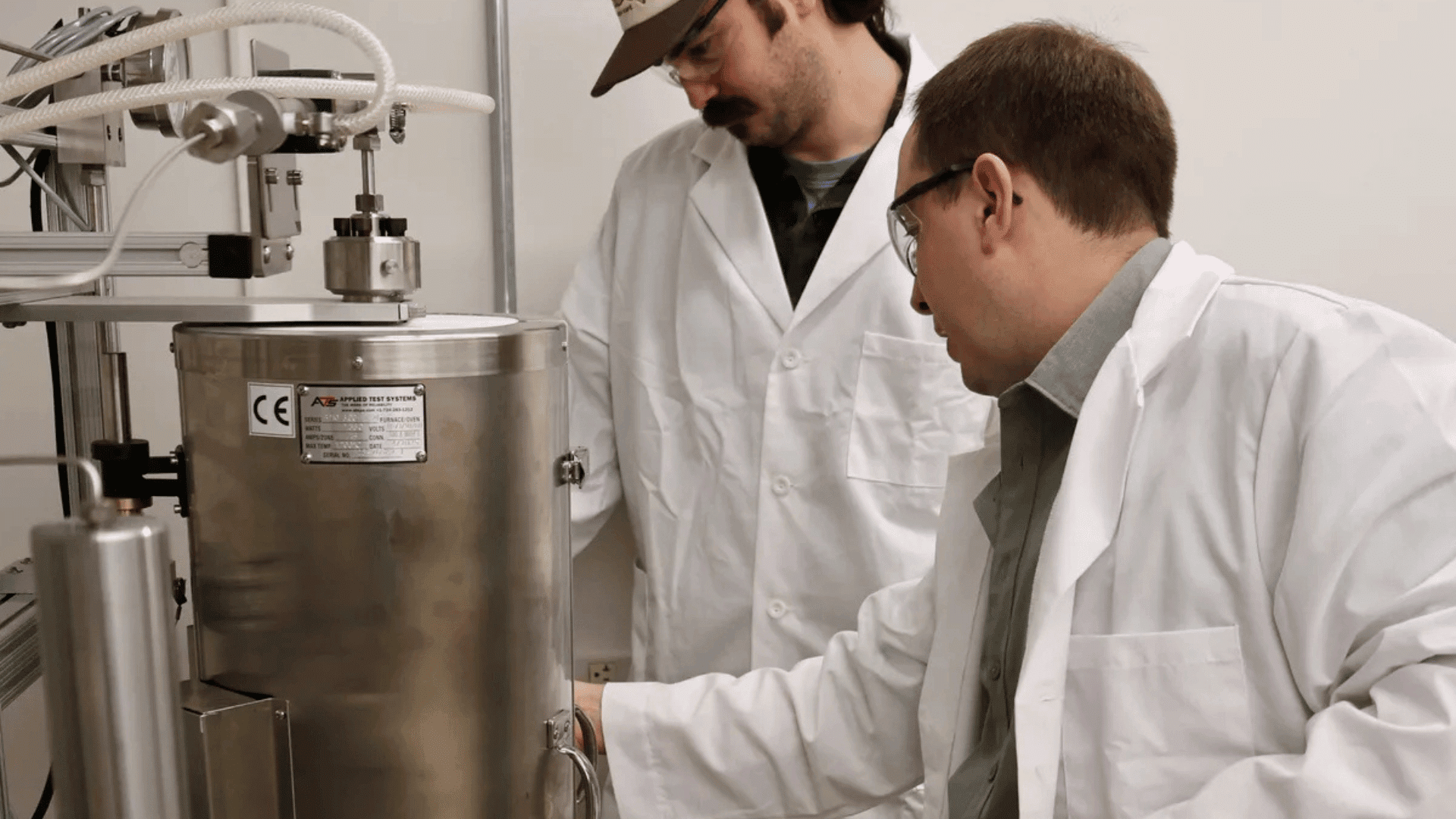
At OSU, Assistant Professor Brian Tattitch is leading the Experimental Deep Geothermal Energy (EDGE) lab. His team is building a custom reactor that can handle temperatures of 500°C and pressure 500 times stronger than what we feel at the surface.
“We’re developing a flow-through reactor that allows us to move fluid through the same kinds of rock under superhot conditions while letting us look at how the systems change in real time,” said Tattitch.
Advertisement
This is important because when water hits about 374°C, it enters a “supercritical” phase. It isn’t quite a liquid and isn’t quite a gas. It’s a dense, steam-like state that can carry five times more energy than regular hot water. The lab needs to figure out if this water will cause minerals like quartz to grow and clog up the pipes, or if the heat will cause the wells to collapse.
Reducing the Risk
Ultimately, Quaise wants to make sure their future power plants work.
“This research is critical because SHR geothermal operates in a regime where existing models fail, and only controlled flow-through experiments can generate reliable data on fluid behavior, scaling, and rock–fluid interactions needed to design durable wells and reservoirs,” explained Geoffrey Garrison, Vice President of Operations for Quaise.
“Quaise is supporting this research because early access to these data will materially reduce the technical and financial risk of developing our SHR geothermal power projects.”
By testing these materials in a controlled lab, the team can find out which ones fail at 400°C before they spend millions of dollars drilling in the real world.
 Read Exclusive Stories
 Bookmark & Save Articles For Later