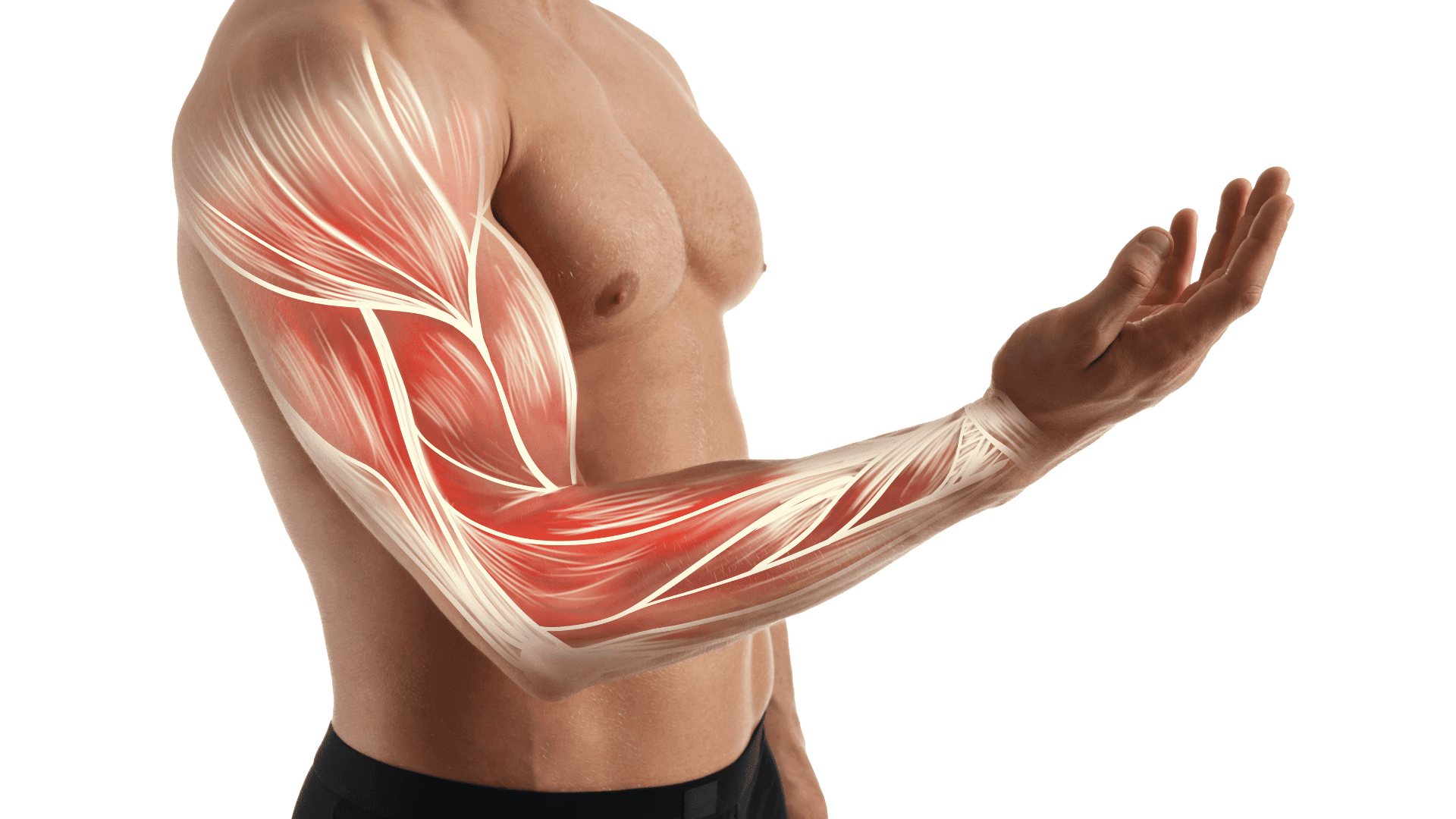
Scientists have long struggled to grow human muscle in a lab because the fibers do not align as perfectly as human muscle fibers. Without that internal order, the tissue is weak and doesn’t work correctly.
A research team from Xi’an Jiaotong University recently found a way to fix this with electric forces during the 3D printing process. As a result, they’ve created living tissue where cells naturally line up just like they do in your own body. Their work, published in the International Journal of Extreme Manufacturing, shows how electricity can “talk” to cells and tell them where to go.
A Microscopic Road System to Make the Muscle Work
The team used a technique called electrohydrodynamic (EHD) bioprinting. This process uses a strong electric field to pull fine jets of liquid through a nozzle. To make it work for muscle, they created a special “bioink” by mixing a common gel called alginate with fibrin, a protein that helps with blood clotting.
When they hit the ink with 3,000 volts of electricity, the electric field pulled the fibrin into long, straight nanofibers. These fibers acted like tiny tracks for the muscle cells.
Advertisement
“As the material aligns, the cells follow,” said Ayiguli Kasimu, a doctoral researcher and the study’s first author. “The electric field is effectively building a road system at the nanoscale, and the cells naturally grow along it.”
Better Performance in the Body
This method can print straight bundles for leg muscles or curved patterns for other parts of the body. To make the tissue even more realistic, they added conductive materials so the muscle could carry electrical signals.
“Muscle tissue relies on electrical signals to coordinate contraction, and the conductive additives allowed the printed constructs to transmit these signals,” Assistant Prof. Zijie Meng explained.
The team tested the printed muscle in animals with muscle injuries. According to the researchers, the new tissue helped the animals recover and actually restored lost function. While there is still more work to do to understand exactly how the protein reacts to the electricity, the researchers are optimistic.
“You can print the muscle-like shape, but the cells don’t know which way to pull,” explained Prof. Jiankang He.
 Read Exclusive Stories
 Bookmark & Save Articles For Later