Approximately 300 miles north of Vancouver, a video was captured showing a wild wolf swimming to a buoy, reeling it in, pulling an underwater trap to shore, and eating the bait. Scientists argue that this qualifies as tool use, a behavior that has never been previously documented in wolves.
Wild Wolf Tool Use
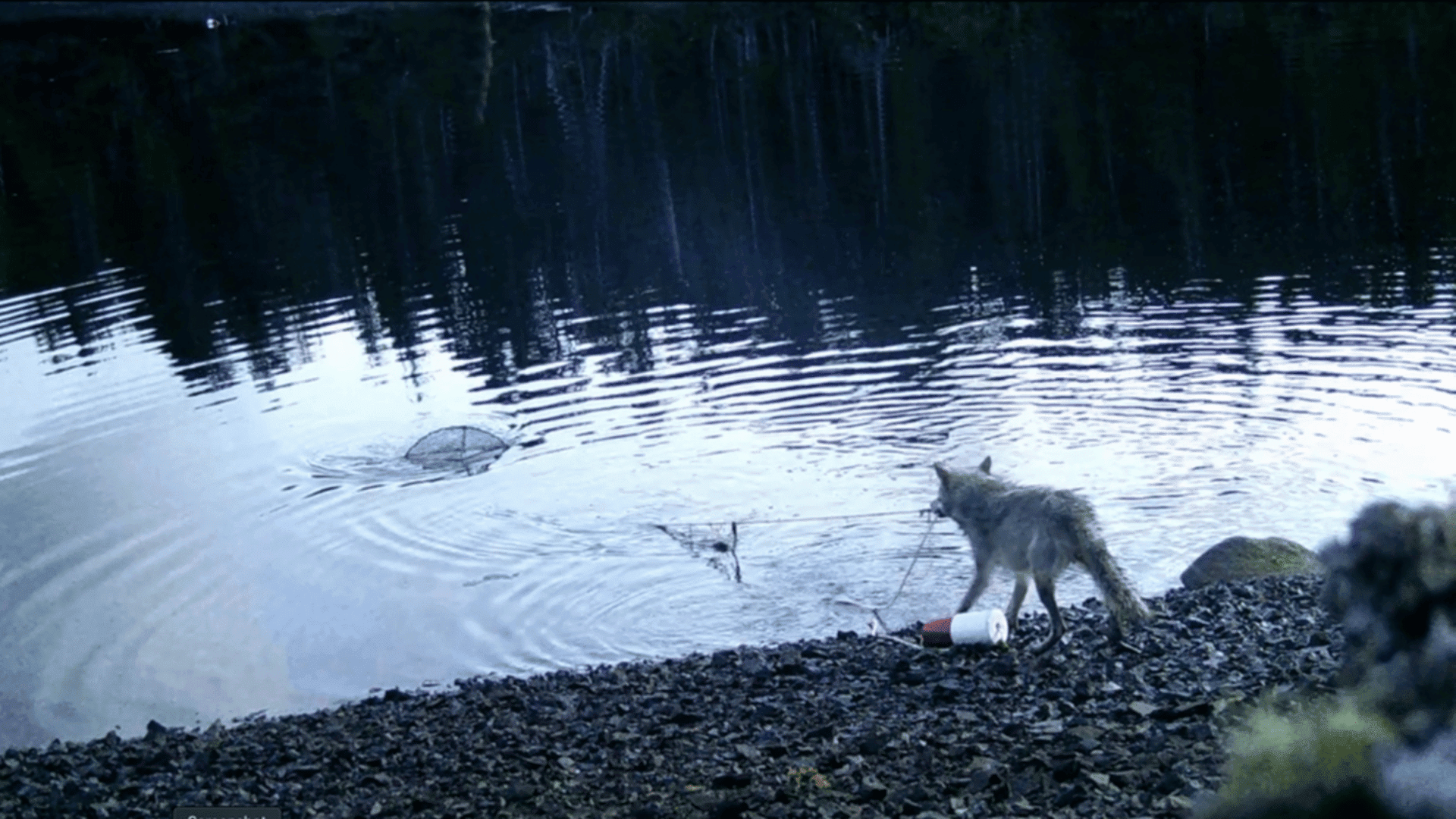
The video was released alongside a study that was recently published in the journal Ecology and Evolution. The authors of the study are debating whether the behavior qualifies as tool use, which they say comes down to how one defines the concept.
The traps were originally set up by members of the Haíɫzaqv Nation to catch invasive European green crabs that have disrupted the local ecosystem. Instead, they discovered that the traps were being dragged to shore, broken, and left empty.
They set up cameras around the traps to catch the thief, only to capture film of a gray wolf swimming out to the buoy, carrying it to shore, and pulling on the buoy’s rope to reel in the trap and steal the bait.
Advertisement
However, which actions by animals count as tool use remains an ongoing debate among scientists. Whether this wolf’s behavior is considered tool use ultimately depends on the definition of tool use.
In their study, authors Kyle Artelle, an environmental biologist at SUNY College of Environmental Science and Forestry, and Paul Paquet, a biologist and wolf expert, write, “tool use is typically understood as using an external object to achieve a specific goal with intent—a definition argued to include even stick chewing by dogs.”
By this definition, the wolf’s recent behavior would fall within the realm of tool use. Other scientists, however, may say this isn’t tool use because the animal isn’t the one procuring or manipulating the rope. So if, for example, the wolf had tied and pulled the rope itself, then that would fall into this definition of tool use.
Artelle and Paquet stated that, “the sophistication of this particular sequence might suggest an exception to the rope pulling exclusion—as might the fact that pulling the rope is the key mechanism for retrieving crab traps even by humans.”
 Read Exclusive Stories
 Bookmark & Save Articles For Later