Building a great violin takes a mix of art, physics, and serious patience. Long before modern speakers existed, 16th-century Italian craftspeople in Cremona worked out how to make a wooden box project sound across a crowded concert hall.
Makers like Andrea Amati and Antonio Stradivari perfected a design that barely changed over four hundred years. But making one is not just about carving a pretty shape. It comes down to material science.
Picking the Right Wood
A violin looks simple, but it relies on very specific woods working together.
Makers craft the top plate out of spruce. Spruce is lightweight and stiff, which lets it vibrate easily when a string moves. For the back and sides, they use dense maple. Maple acts like a reflective wall, bouncing those sound waves forward.
Before a luthier even touches a chisel, the wood air-dries for years. Dry wood holds its shape better and resists cracking under pressure.
The Physics Inside the Box
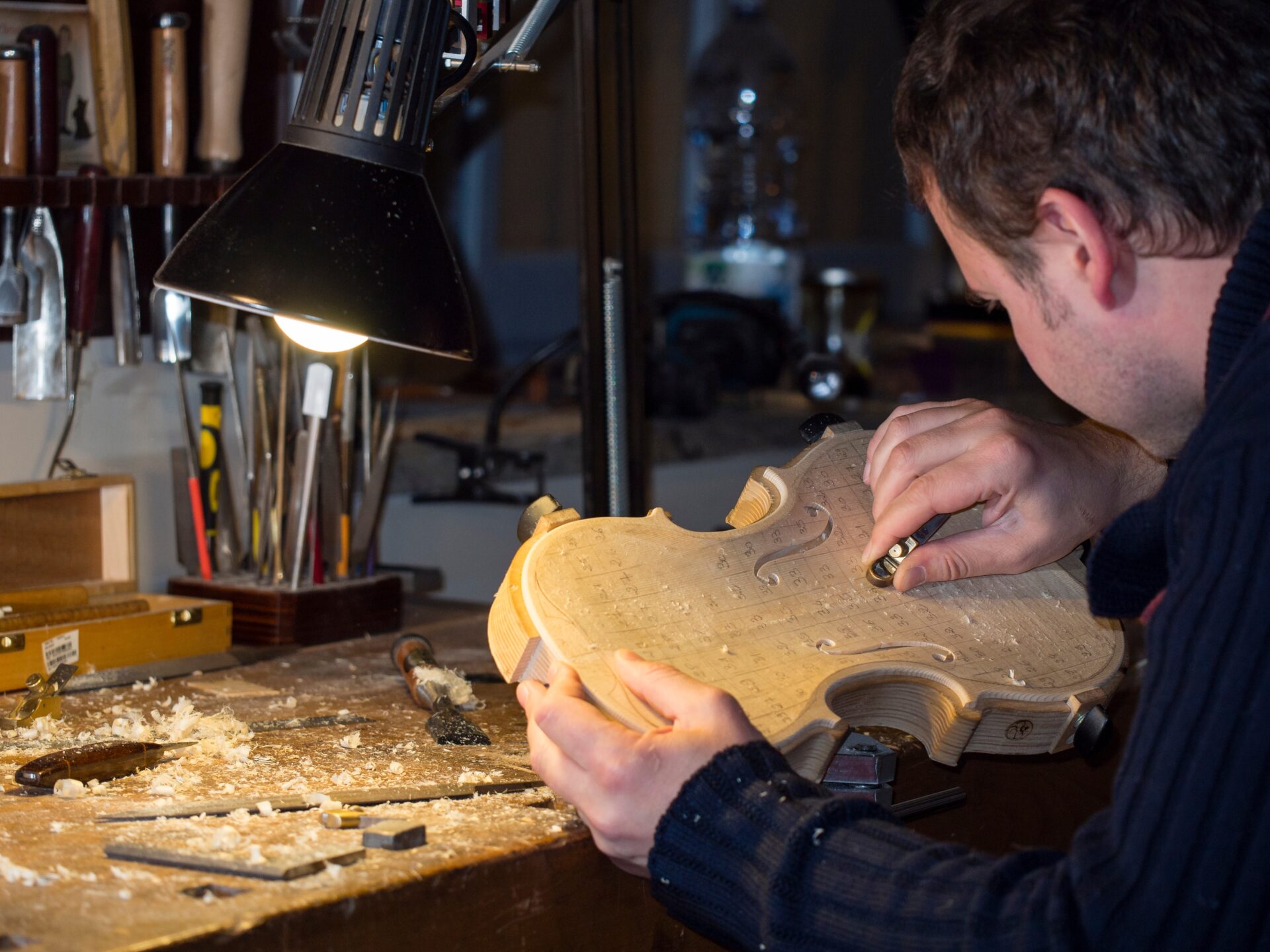
Carving the plates takes hours of careful hand labor. Luthiers shave down spruce and maple blocks, making the wood thinner in some spots and thicker in others. They tap the wood constantly as they work, listening to the pitch of the sound to gauge its flexibility.
Inside the hollow body, two small hidden parts do most of the heavy lifting:
Advertisement
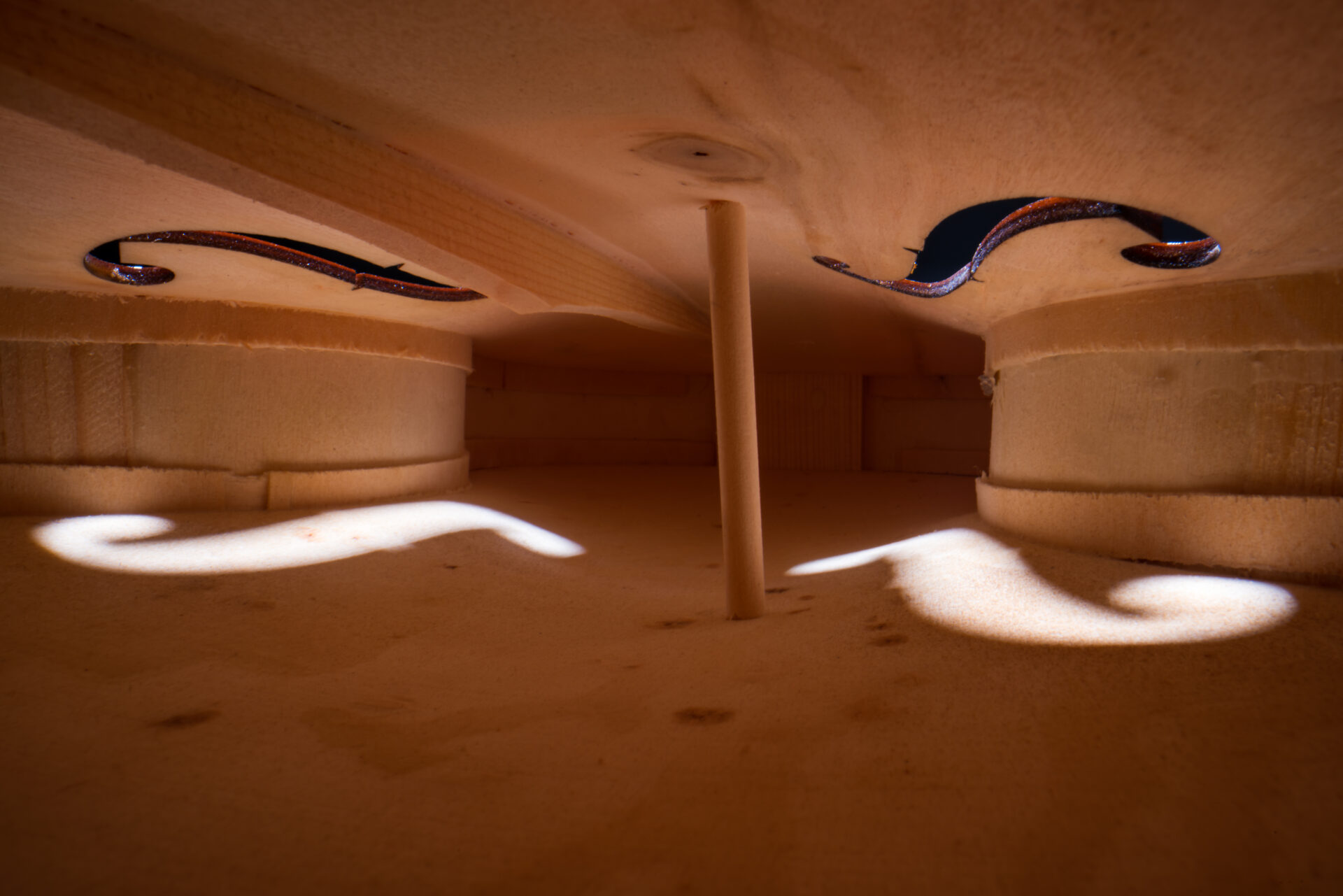
- The soundpost: A tiny wooden dowel wedged vertically under the bridge. It transfers vibrations directly from the top plate to the back plate.
- The bass bar: A long strip of spruce glued inside under the top plate. It transmits low-frequency vibrations along the length of the body and prevents the wood from collapsing under string tension.
When you draw a bow across a string, the string moves the bridge. The bridge shakes the top plate, and the soundpost passes those shakes to the back. Air enters and exits through the f-holes, turning those tiny vibrations into full music.
Old Instruments Meet New Science
You might think traditional violin-making is stuck in the past, but modern engineers use high-tech tools to study these classic instruments.
Acoustic researchers use CT scans and 3D laser scanners on 300-year-old Stradivarius violins. The scans map out micro-thicknesses in the wood without damaging the original instrument. Scientists also use laser vibration testing to observe how the wood moves in real time when it is played.
Modern luthiers use that data to select wood with matching density, helping them craft high-quality instruments faster.
By combining material physics with careful handcrafting, violin making shows how basic physical principles turn raw wood into incredible sound. It is a classic example of how creative ideas become physical reality.
 Read Exclusive Stories
 Bookmark & Save Articles For Later