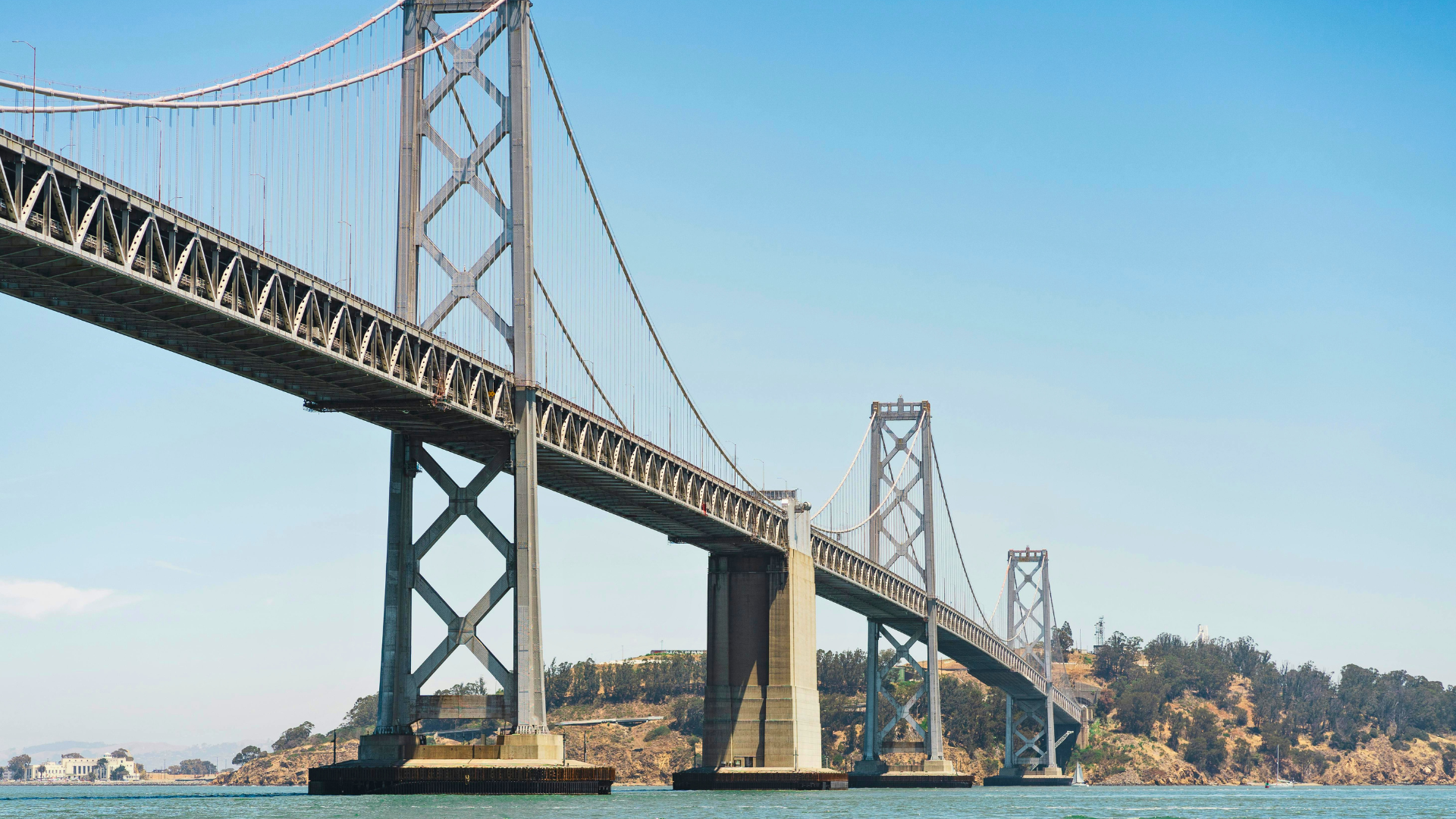
Here’s something a lot of people miss about the Bay Bridge. It’s really two crossings that meet in the middle of the bay at Yerba Buena Island.
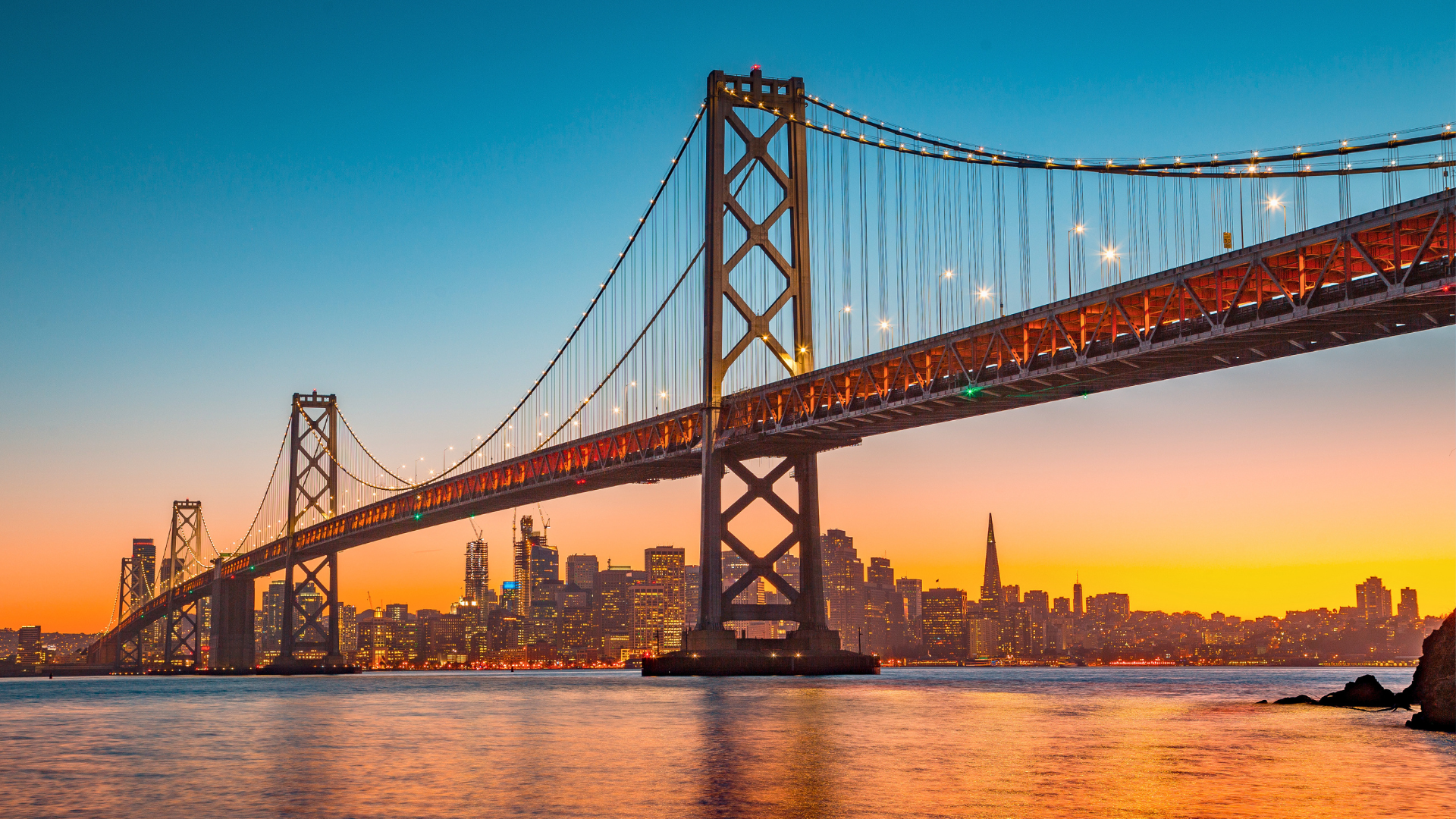
The west side, toward San Francisco, uses suspension spans. Its two main spans each stretch 2,310 feet. The east side, toward Oakland, originally used a 1,400-foot cantilever span, a heavy steel design that balances out from its supports. A tunnel through the island connects the two halves.
The bridge opened on November 12, 1936. It turns 90 this week.
Two Decks, Lots of Jobs
The original design stacked two decks. Cars got six lanes on top. The lower deck carried trucks, buses, and commuter trains. Those trains ran until 1958. Then crews rebuilt the lower deck for cars.
In 1963, the layout changed again. Westbound traffic took the top deck. Eastbound took the bottom. That’s still how it works today.
A New Look for a New Century
Advertisement
The biggest design change came in 2013. A new East Span replaced the old cantilever. It’s a single-tower, self-anchored suspension bridge. In plain terms, the cables hold the road deck and anchor into the deck itself, not into big blocks on shore.
That one white tower gave the bridge a new face. Next to the old gray steel of the west side, it looks like a different era. And it is.
Art on the Cables
The bridge has become a canvas too. Artist Leo Villareal strung LED lights along the west span’s cables for The Bay Lights. The patterns shift all night. It turned a commuter route into something people drive across just to watch.
Good design can do that. It moves traffic and still gives you something to look at. Check out a livestream of the bridge:
 Read Exclusive Stories
 Bookmark & Save Articles For Later