Solar panels offer reliable and clean power. Popularity has grown over the years, and more homes have them on their roofs. However, installing them is a somewhat invasive process. Installation usually requires drilling into your roof, and backup batteries are typically mounted in your garage.
Instead of attaching gear to your house, the OS1 is a standalone outdoor pavilion. Solar panels are attached to the pavilion’s roof and an electrical wall holds the inverter. Additionally, clunky batteries are replaced by slim batteries that slide right under the deck floor.
As a result, the entire deck surface is open for patio furniture, grills, or an open lounge area.
The First Solar Pavilion
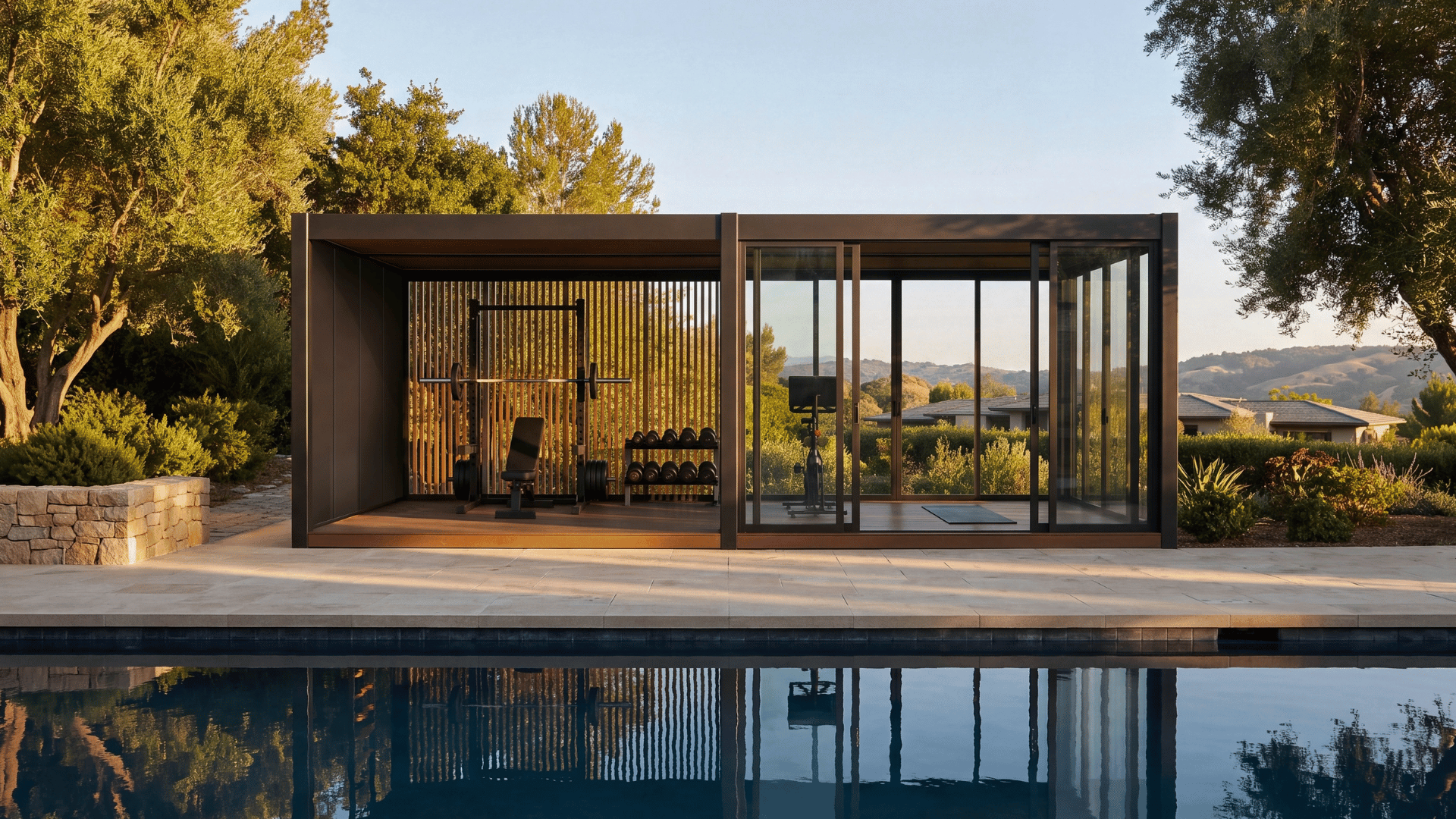
The OS1 comes in two sizes. One is 12×12 feet with about 2.5 kW of solar. The other is 12×24 feet with about 5 kW. Storage is modular, using battery packs that hold 7.83 kWh each. Homeowners can start with one pack or stack up to eight, reaching up to 62.64 kWh of total capacity.
“Most home batteries are bolted to a garage wall or sitting on a concrete pad beside the house. We built a new option that can generate and store energy, while also expanding livable space and improving the atmosphere of a home,” said Jiake Liu, Co-Founder and CEO of Outer Spaces. “We designed OS1 around the battery from day one, so the cooling, waterproofing, and wiring live inside the frame. It’s modular and easy to assemble on-site.”
Liu added, “We have worked hard to get this right, and it’s the part we most want RE+ attendees to view for a closer look.”
Additional Energy for Everyday Homes
The system delivers up to 11.4 kVA of rated power output, enough juice to handle heavy motor loads like central air conditioners and heat pumps during an outage. Through an app or browser, owners can switch between Self-Power, Time of Use, and Backup Standby modes. It also supports virtual power plant programs where local utilities run them.
Outer Spaces raised $8 million in pre-seed funding to bring the concept to life. The parts go together on-site, and a licensed electrician connects the unit to the home. The company plans to roll out the OS1 in Southern California and select U.S. markets in 2027, with pricing details coming early that year.
Advertisement
 Read Exclusive Stories
 Bookmark & Save Articles For Later