Producing plastic from natural sources is an environmentalist and scientist’s dream. However, implementing it comes with more challenges than they can count. Many bioplastics break down too easily for real-world use. Biomaterials engineers believe they have overcome the issue of easy breakdown with a “superstructure” hydrogel.
According to researchers and engineers from the University of Queensland, the new gel could serve as an eco-friendly tool in medical devices and help patients recover from surgery.
“Crucially, the hydrogel is derived from a bio-derived and biodegradable polymer that – while promising itself – is too brittle to be commercially viable,” said Cole Walchle, a PhD student and researcher with UQ’s School of Chemical Engineering. “There’s huge potential for naturally-derived plastics to be useful at an industrial scale, but with many of them we just aren’t there yet. Our work demonstrates that there is scope to tweak them to create new, sustainable products that work for us now.”
Radiation Turns Fragile Plastic into a Useful Hydrogel
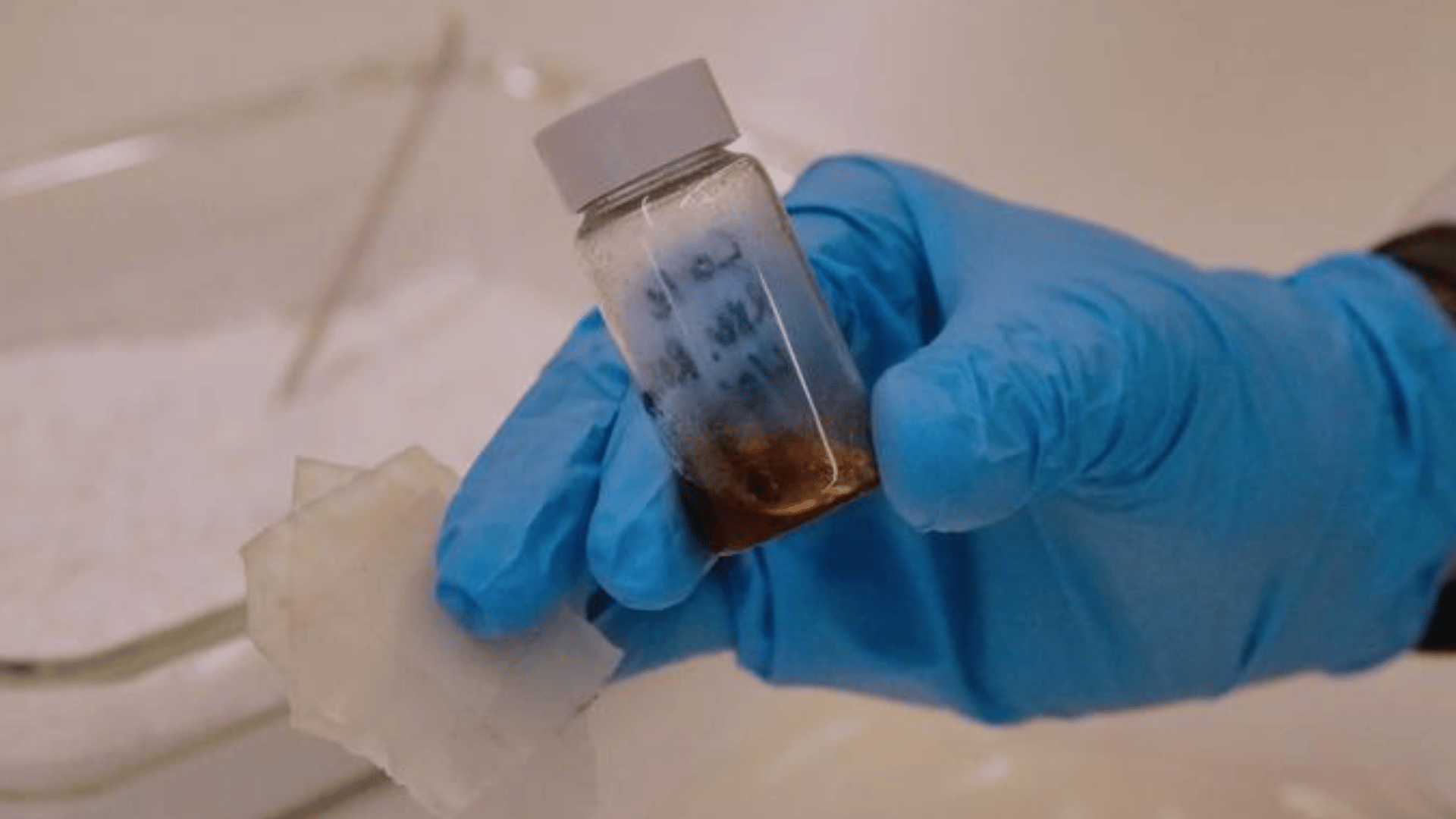
Walchle started his work with a plant-based plastic called poly(3-hydroxybutyrate), or PHB. On its own, PHB breaks easily. To fix this, he used gamma radiation to graft another polymer onto it called N-Hydroxyethyl acrylamide, which is a common hydrogel ingredient.
Researchers say that the resulting material, known as P3HB-HEAA, holds an exceptional amount of water while staying sturdy.
Advertisement
“We’ve basically created something that is simultaneously tougher than the materials we had to begin with, yet also particularly good at absorbing water,” Mr. Walchle said. “It’s a new material with the sustainable origins of a bioplastic, with a greatly expanded potential field of use.”
Not Hitting Hospitals… Yet
The team believes the new gel could work well for tissue engineering, wound healing, hygiene products, specialty coatings, lubricants, and slow-release drug delivery.
Still, however, there is a long road ahead before the hydrogel makes its way into hospitals.
“Further investigation is needed to fully understand the behavior of this material, in particular its ability to biodegrade,” Mr. Walchle said. “If the biodegradability is carried over from the original material, it would further confirm our method as a viable approach to generate new hydrogel-like superstructures.”
 Read Exclusive Stories
 Bookmark & Save Articles For Later