Building things underwater has always been a massive headache. Between the cost of dry docking and the sheer difficulty of getting concrete to stay put in the ocean, it’s a logistical nightmare. Researchers at the University of Wollongong (UOW) and the team at LUYTEN 3D successfully built and tested Australia’s first underwater 3D concrete printing system.
Breaking the Rules of Concrete
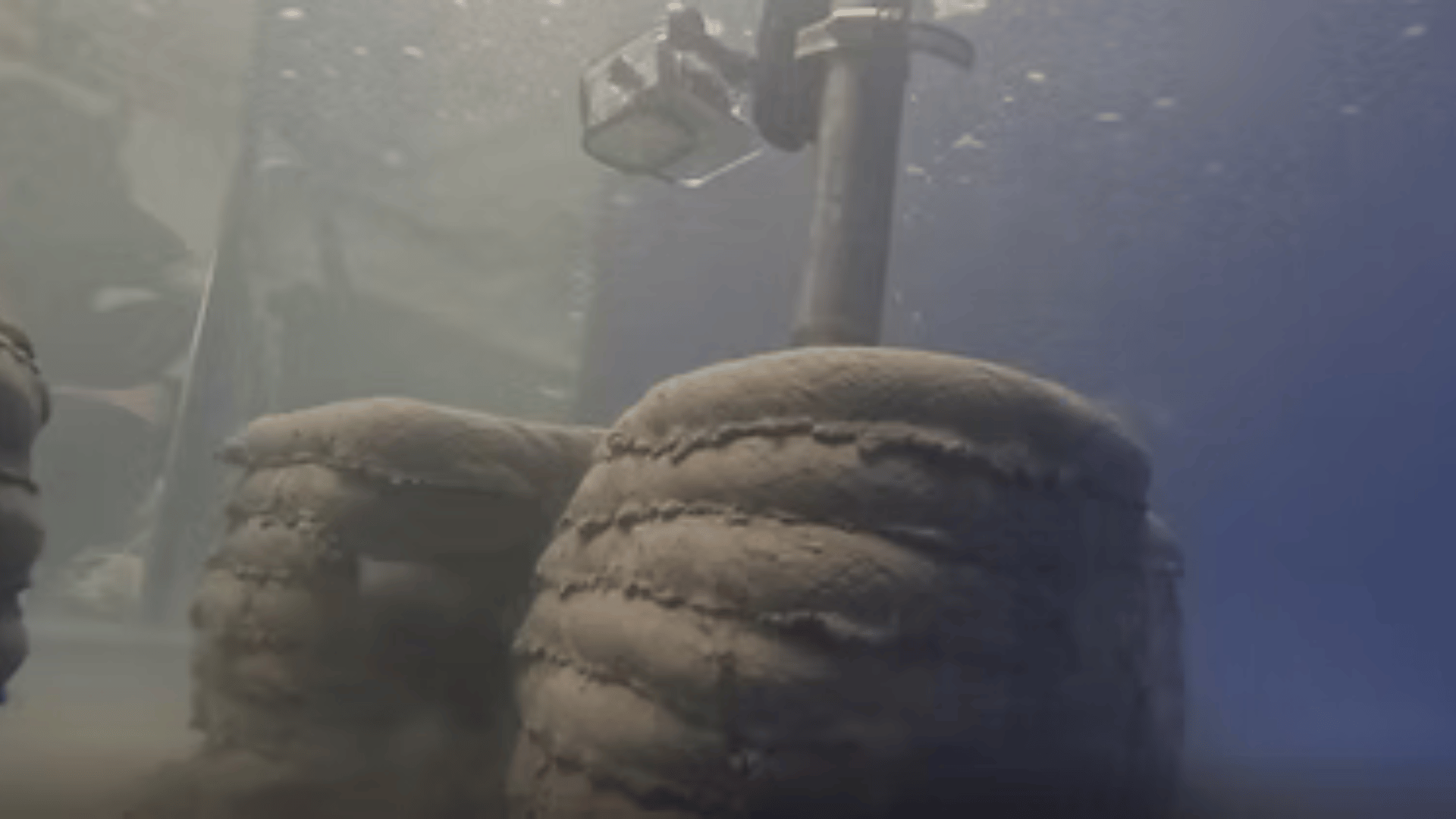
The remarkable part of this news is how researchers are printing the concrete below the ocean. Most people thought you’d need a mixture of heavy chemicals to stop concrete from washing away before it sets. This team figured out a “single-mix” formula that stays stable all on its own.
Senior Professor Gursel Alici from UOW said his team “solved a complex material science problem, eliminating chemical accelerators without sacrificing stability.”
Advertisement
“To the best of our knowledge, this is the first underwater 3D concrete printing system developed and demonstrated in Australia,” Dr. Aziz Ahmed, the project lead, added. “Our recent trials confirm that our single-mix solution is not just theoretically sound, but practically viable. It offers the structural integrity needed for real-world application while simplifying the logistics of underwater deployment.”
From the Ocean Floor to the Moon
The tech has a lot of potential in different industries. For example, it could help repair old ports, build anchors for floating wind farms, or support the AUKUS submarine program. Additionally, the automation makes it much safer than sending divers down for every fix.
“This is a completely new chapter for construction and manufacturing,” Ahmed Mahil, CEO of LUYTEN 3D, said. “Printing underwater fundamentally changes how we think about building, repairing, and strengthening critical infrastructure in marine environments.”
Mahil believes that learning to build in these harsh environments will help us eventually build on the Moon using local lunar dust.
So, while the tech is currently helping us fix wharves and protect our coastlines, it might eventually be the reason we have a place to stay in space.