Texas A&M aerospace engineers are currently working on a new aircraft that could change how disasters are handled. Led by Dr. Moble Benedict, a small group called Team Harmony is competing in the international GoAERO competition to build a full-scale, autonomous rescue flyer.
The project, named QUEST, is a quadrotor biplane. It looks a bit like a drone but can tilt its wings 90 degrees to fly fast like an airplane. This design aims to solve a specific problem in emergency response.
“There is a gap in emergency response vehicles,” Benedict said. “On one hand, you have helicopters, which are limited in number and expensive to operate. On the other, there are drones that are capable of search, but not rescue.
“GoAERO is trying to address this gap. You need something with serious payload-carrying capabilities that’s not as expensive or complex as a helicopter, “Benedict added. “It needs to be able to carry significant loads, such as critical supplies or even a person.”
Scaling the Aircraft
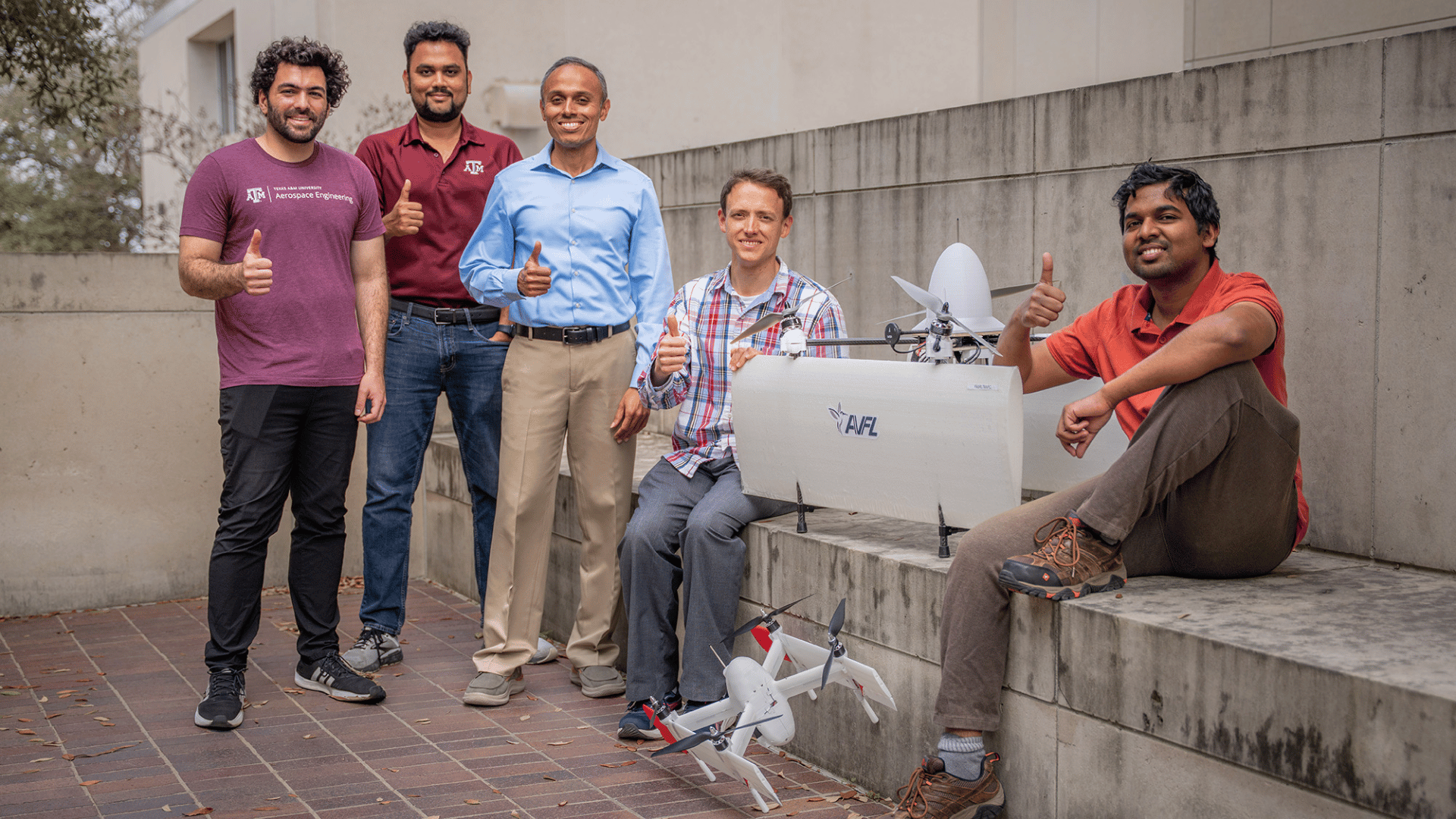
The team has already seen success, winning a $10,000 prize for their blueprint and another $40,000 after testing smaller models. But moving from a small prototype to a full-sized aircraft is a big jump.
Advertisement
Dr. David Coleman, the project’s chief engineer, noted that while simple prototypes are a start, they aren’t ready for the real world. “To get it off the ground, you need a minimum TRL (technology readiness level) of five or six, but that’s not going to work in a real-world situation,” Coleman said. “You really need a TRL of eight or nine to have a robust system that is going to fly in these adverse conditions.”
To prepare, the team is building a digital twin before they start physical construction this spring.
Bigger Applications
The team envisions these aircraft dropping food, finding people trapped in wreckage, or even acting as high-tech firefighters.
“When we get into the nitty-gritty of the engineering, we could easily forget the big picture,” Benedict said. “I see this as the future of disaster relief.
“One hundred of these flying around and dropping food, medical supplies or looking for people who are trapped — it’s a big deal,” Benedict added. “It could also be used as a firefighting drone to find hot spots and drop fire suppressants. There are many applications.”
The final test will happen in February 2027 at the NASA Ames airfield, where the aircraft will have to prove it can handle the pressure of a real-world emergency.