Most of the gadgets we use every day hate the heat, whether it’s your phone or a satellite in orbit. These electronics, and every device in between, start to fail once they hit around 390 degrees Fahrenheit (about 200 degrees Celsius). This thermal ceiling has frustrated engineers for decades, but a team at the University of Southern California just found a way to smash through it.
In a study recently published in Science, researchers led by Professor Joshua Yang revealed a new electronic memory device that works at 700 degrees Celsius. To put that in perspective, that is hotter than molten lava. The device didn’t even break at 700 degrees; it was simply the limit of the team’s testing equipment.
“You may call it a revolution,” Yang said. “It is the best high-temperature memory ever demonstrated.”
A Device That Withstands Lava-Like Temperatures
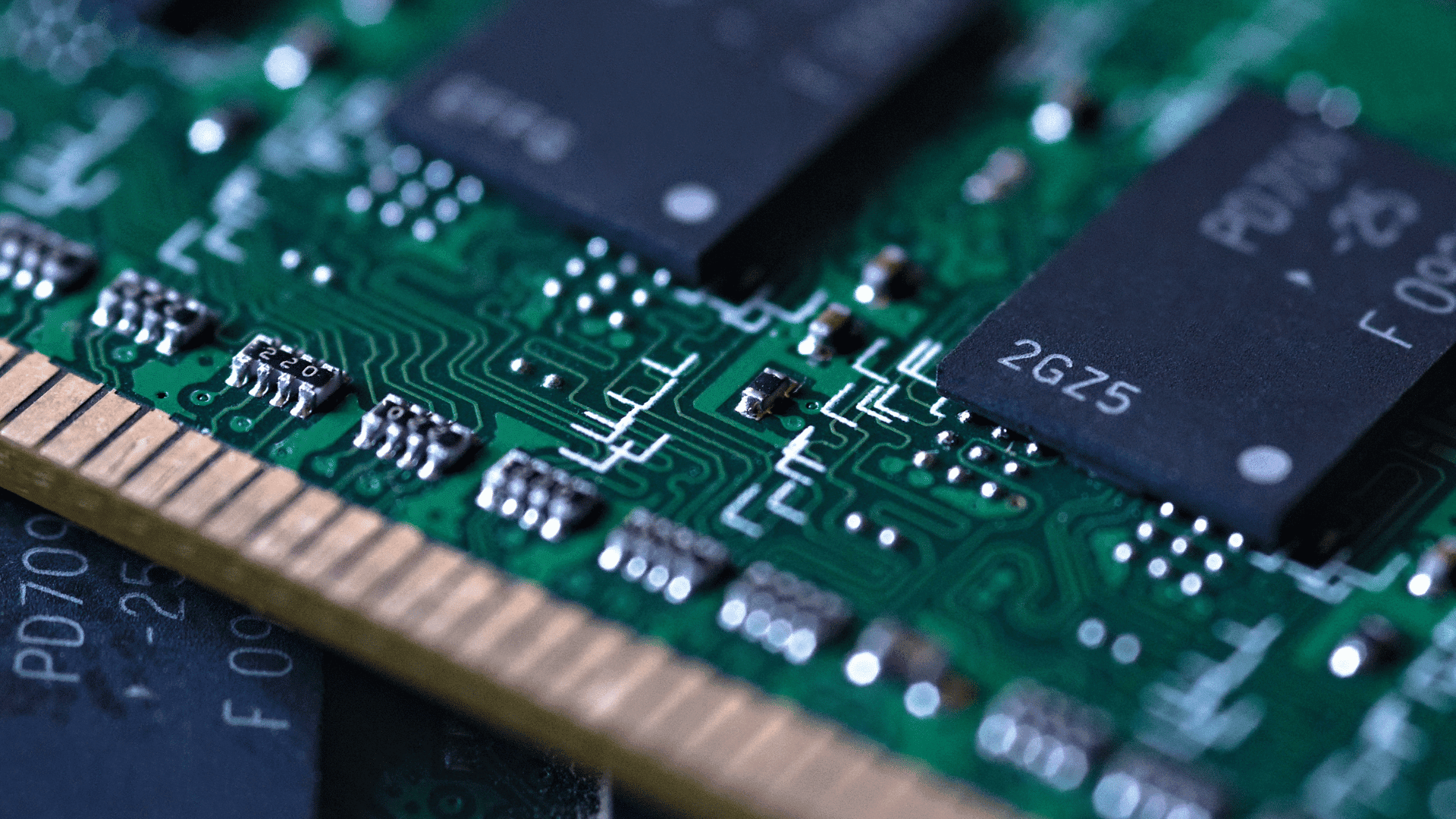
The device is called a memristor; it’s basically a “sandwich” of two electrode layers and a thin ceramic filling. To make this version survive the heat, the team used tungsten for the top and a one-atom-thick layer of carbon called graphene for the bottom.
Usually, high heat causes metal atoms to drift through the ceramic until they short-circuit the device. However, graphene acts like a shield. Tungsten and graphene relate to each other like oil and water. The tungsten atoms can’t find a place to “anchor” onto the graphene, so they just move away instead of causing a crash.
Interestingly, the team didn’t set out to build a heat-proof wonder. They were trying to build something else entirely when they stumbled upon this result.
Advertisement
“To be honest, it was by accident, as most discoveries are,” Yang said. “If you can predict it, it’s usually not surprising, and probably not significant enough.”
From Deep Space to AI
This discovery is also a big deal for space agencies. The surface of Venus is about 500 degrees Celsius, which is hot enough to destroy every lander we’ve ever sent there. This new tech could also help sensors inside nuclear reactors or deep-earth geothermal drills, where the rock actually glows red.
It also has a surprising benefit for AI. Most AI tasks rely on a mathematical process called matrix multiplication. While standard computers do this step-by-step, these memristors do the math instantly using the physical flow of electricity.
“Over 92 percent of the computing in AI systems like ChatGPT is nothing but matrix multiplication,” Yang said. “This type of device can perform that in the most efficient way, orders of magnitude faster and at lower energy.”
While you won’t see these chips in your laptop tomorrow, as there is still a lot of work to do to build full systems around them, the foundation is now there.
“This is the first step,” Yang said. “It’s still a long way to go. But logically, you can see: now it makes it possible. The missing component has been made.”