Plutonium has been studied for over 80 years. Most people know it for its role in nuclear security and power reactors, but the element still holds plenty of undiscovered abilities. Recently, scientists at the Idaho National Laboratory (INL) uncovered a unique quantum property in a specific compound called plutonium hexaboride.
The team found that this compound acts as a “topological Kondo insulator.” In terms that are easier to understand, normal materials either conduct electricity or block it. Topological insulators do both at the same time. The inside of the material blocks electrical current, but the outside surface lets electricity flow freely. On top of that, the electrons inside this material interact so strongly that they create entirely new collective behaviors.
“Plutonium is defined by the unusual dual nature of its 5f electrons,” said INL scientist Krzysztof Gofryk, who led the study. “This makes it difficult to understand, but scientifically fascinating. Plutonium hexaboride gives us a rare opportunity to see how strong correlations and topology work together in actinide materials.”
The Many Challenges of Plutonium
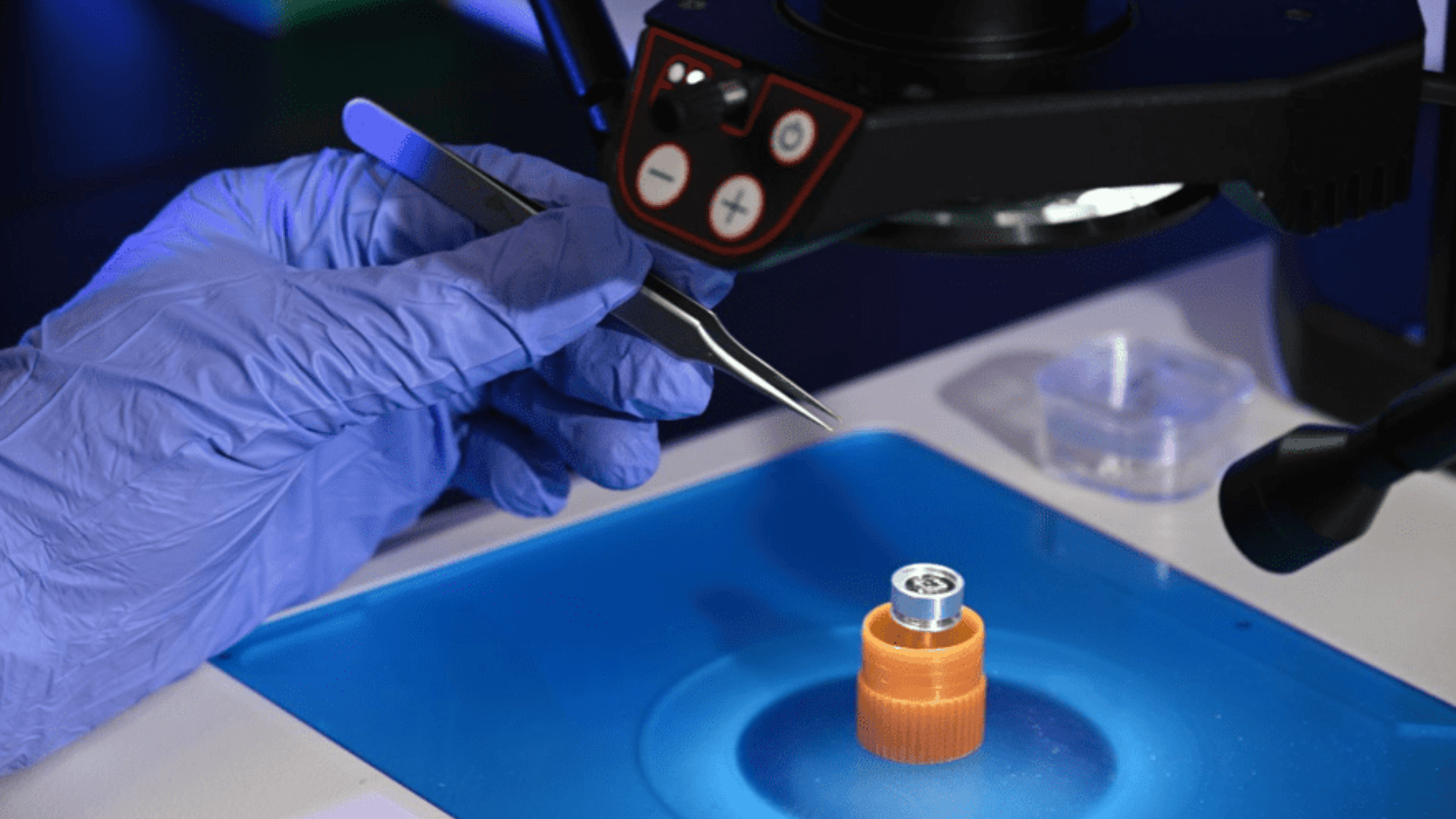
Plutonium compounds are incredibly difficult to handle, make, and measure. Only a few places in the world can work with them safely, and INL is one of them. The lab uses specialized tools, like a plasma focused ion beam, to prepare tiny samples for ultra-cold measurements. This extreme cold helps scientists see quantum mechanics clearly without interference from heat.
Advertisement
“These advanced preparation techniques allow us to study plutonium at very low temperatures,” said INL researcher Daniel Murray. “INL is the only facility with the expertise and infrastructure to efficiently and safely perform this kind of research on transuranium materials.”
To make sense of their lab measurements, the INL team worked with Columbia University to match their experiments with advanced computer modeling.
“Our calculations capture the essential electronic and structural properties of plutonium hexaboride,” said INL researcher Shuxiang Zhou. “They provide strong support for its topological nature and offer an efficient path for studying similar actinide materials.”
Bridging the Nuclear and Quantum Gap
This research bridges the gap between nuclear science and quantum physics. Understanding these quantum states helps scientists predict how nuclear materials age. As a result, it keeps reactors safe and securing energy systems.
The discovery also aligns with a recent $625 million push by the U.S. Department of Energy to advance quantum science. In the long run, these insights could help researchers model complex nuclear behavior, design longer-lasting materials, and develop new technologies in quantum computing and advanced sensing.
 Read Exclusive Stories
 Bookmark & Save Articles For Later