Most of us have heard of PFAS, or “forever chemicals,” that show up in almost everything. The problem is that they eventually leak into our soil and drinking water, and they don’t go away. While we have ways to catch some of the bigger molecules, the smaller ones, known as short-chain PFAS, usually slip through our current filters.
Researchers at Flinders University developed a “nano-sized molecular cage” that acts like a specialized trap for these stubborn pollutants.
How the PFA Trap Works
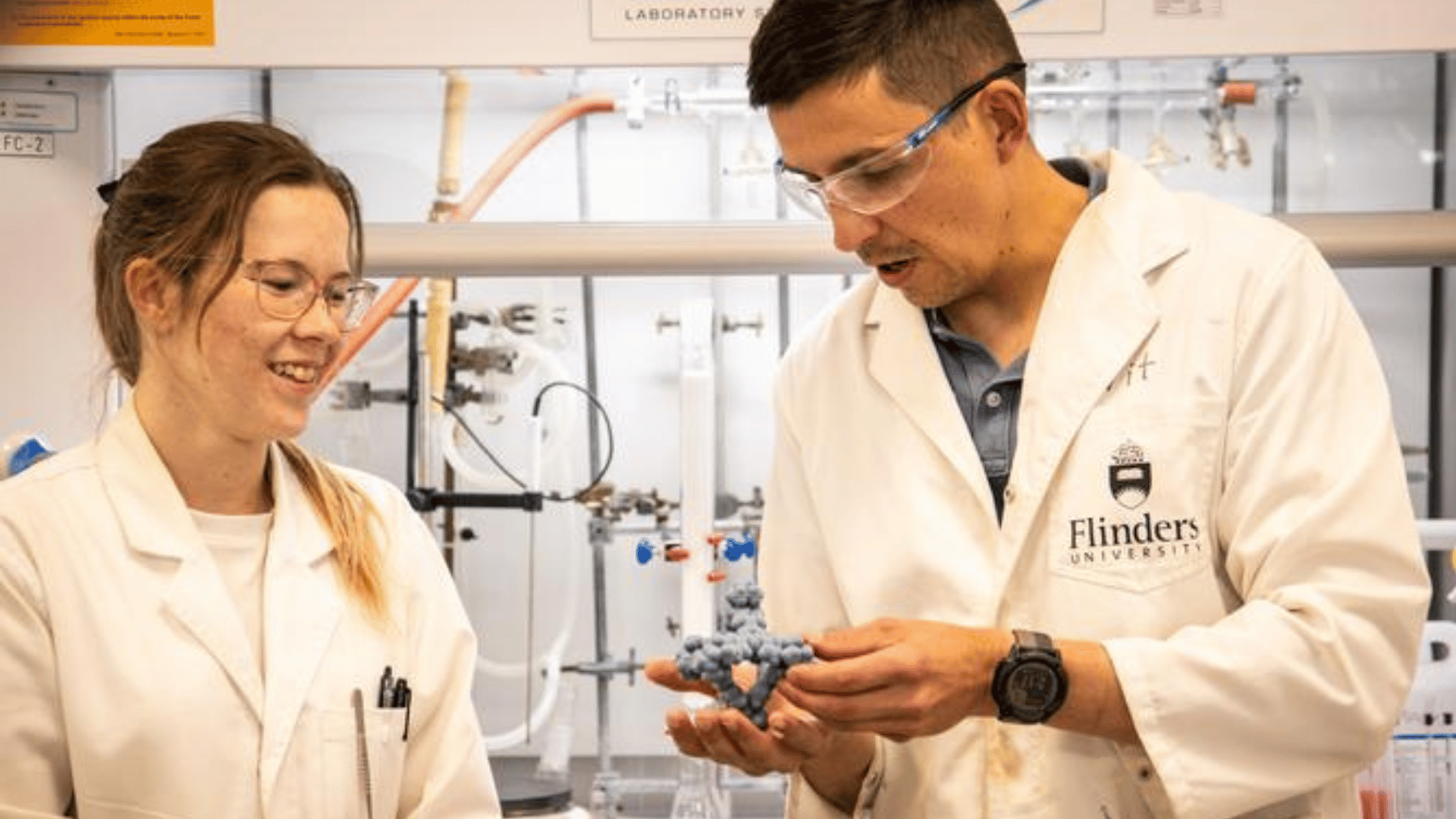
Most filters try to grab onto chemicals as they pass by. The team, led by Dr. Witold Bloch, found that these tiny cages actually force the PFAS molecules to clump together inside them.
“While some long-chain PFAS can be partially removed using existing water treatment technologies, the capture of short-chain PFAS – which are more mobile in water – remains a major unresolved challenge,” said Dr. Bloch. “We discovered that a nano-sized cage captures short-chain PFAS by forcing them to aggregate favorably inside its cavity.”
Advertisement
“This unusually strong binding mechanism is different from that of traditional adsorbent materials,” Dr. Bloch added.
The team then took these cages and tucked them into silica, a material that usually doesn’t care about PFAS at all. Once the cages were added, the silica started acting like a magnet for the chemicals.
Cleaning Up the Water Supply
In tests using model tap water, the material removed up to 98% of the PFAS. Even better, researchers found they could use the same material at least five times without it losing its edge.
“The most exciting aspect of this project was that we first conducted in-depth studies of how PFAS bind within the cage on the molecular level,” Caroline Andersson, a PhD candidate at Flinders, explained. “That allowed us to understand the precise binding behavior and then use that knowledge to design an effective adsorbent for PFAS removal.”
Dr. Bloch suggests these traps could be used as a “polishing” step at the very end of the water treatment process. While there is still work to do to scale this up, it’s a solid step toward eliminating these forever chemicals.