Solar power has been a staple on house roofs for decades, but putting it on a massive seagoing cargo ship is a different story. The salt, the waves, and the constant loading of heavy cargo make it a tough environment for sensitive tech. But Wattlab, a company specializing in maritime solar, says they’ve cracked the code with their “Solar Flatrack” system.
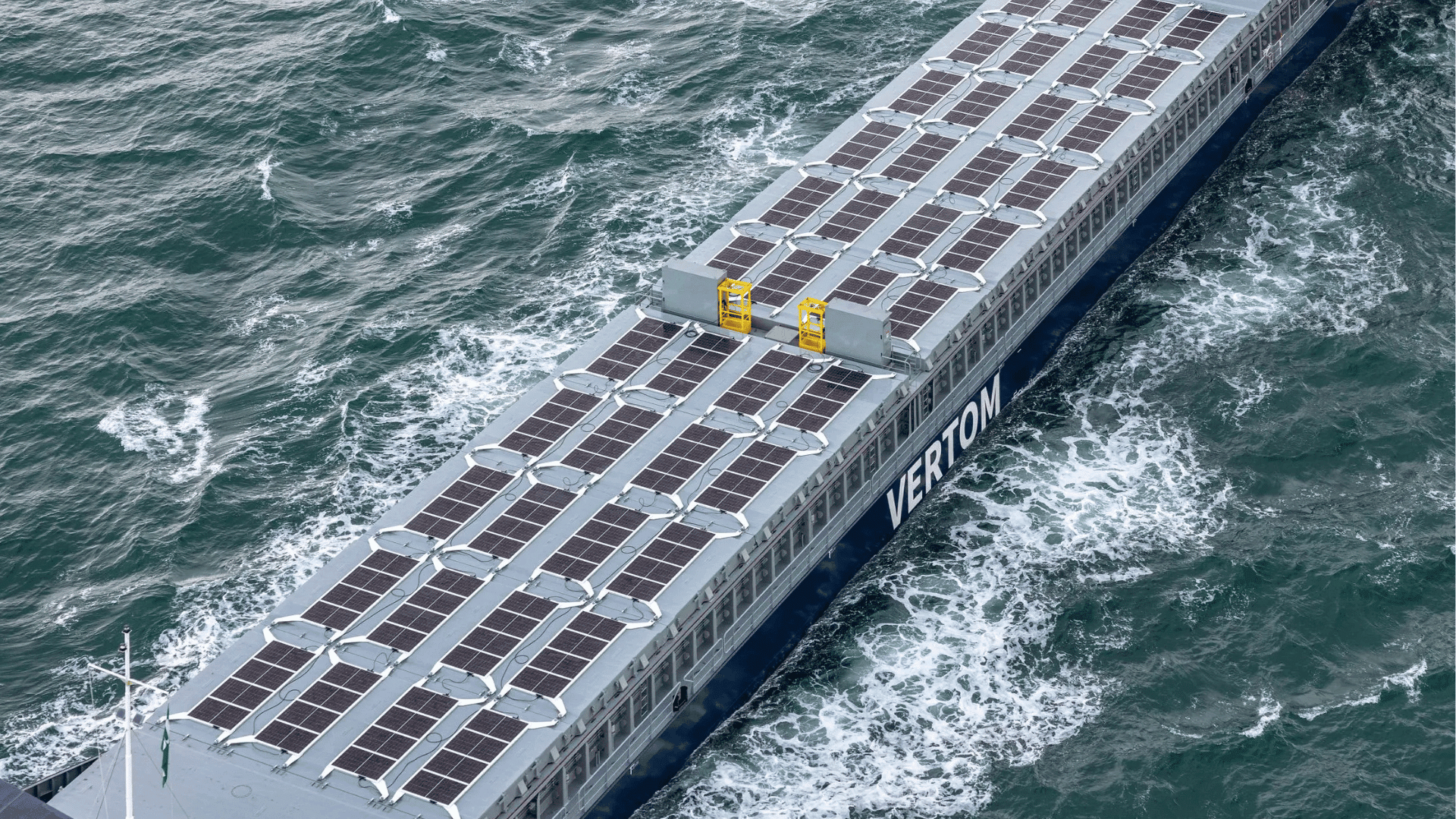
After a few successful trials, they just finished their first full-scale installation on a ship called the Vertom Tula. The ship is now carrying 44 of these solar racks, which handle about 20% of the “hotel load,” the electricity needed for everything on the ship except the main engine, like lights and air conditioning.
“With this step, we show that solar power at sea is no longer an experiment, but a working solution,” said Bo Salet, CEO and co-founder of Wattlab. “Through the two pilot projects, we learned a great deal about usability – both from a technical perspective and in terms of how easily the crew can operate the system.
Salet added, “We also gained valuable insights into seaworthiness. Based on this knowledge, we have significantly upgraded our Solar Flatrack system.”
A Solar Design
Advertisement
The biggest hurdle for solar on cargo ships isn’t just the sun, but the logistics too. If the panels get in the way of cranes or storage, shipowners won’t use them. Wattlab designed these racks to stay put during loading and unloading. If they do need to be moved, they can be stacked up and tucked away in the same space a single 20-foot shipping container would take.
Right now, the tech works for medium-sized vessels like coasters and Supramax carriers. But because the demand is there, the company is already working on versions for even bigger ships, like Panamax and Capesize bulkers.
A Big Move For the Maritime Industry
Shipping companies are under a lot of pressure to cut emissions and follow new European environmental rules. Using solar helps lower fuel costs and keeps ships compliant with regulations like the EU ETS. Plus, it’s a smart financial move. The system usually pays for itself in three to five years.
According to Salet, the industry is paying attention. “Market interest is growing rapidly,” he said. “We have already engaged with more than 200 international parties interested in applying Solar Flatracks across their fleets.”