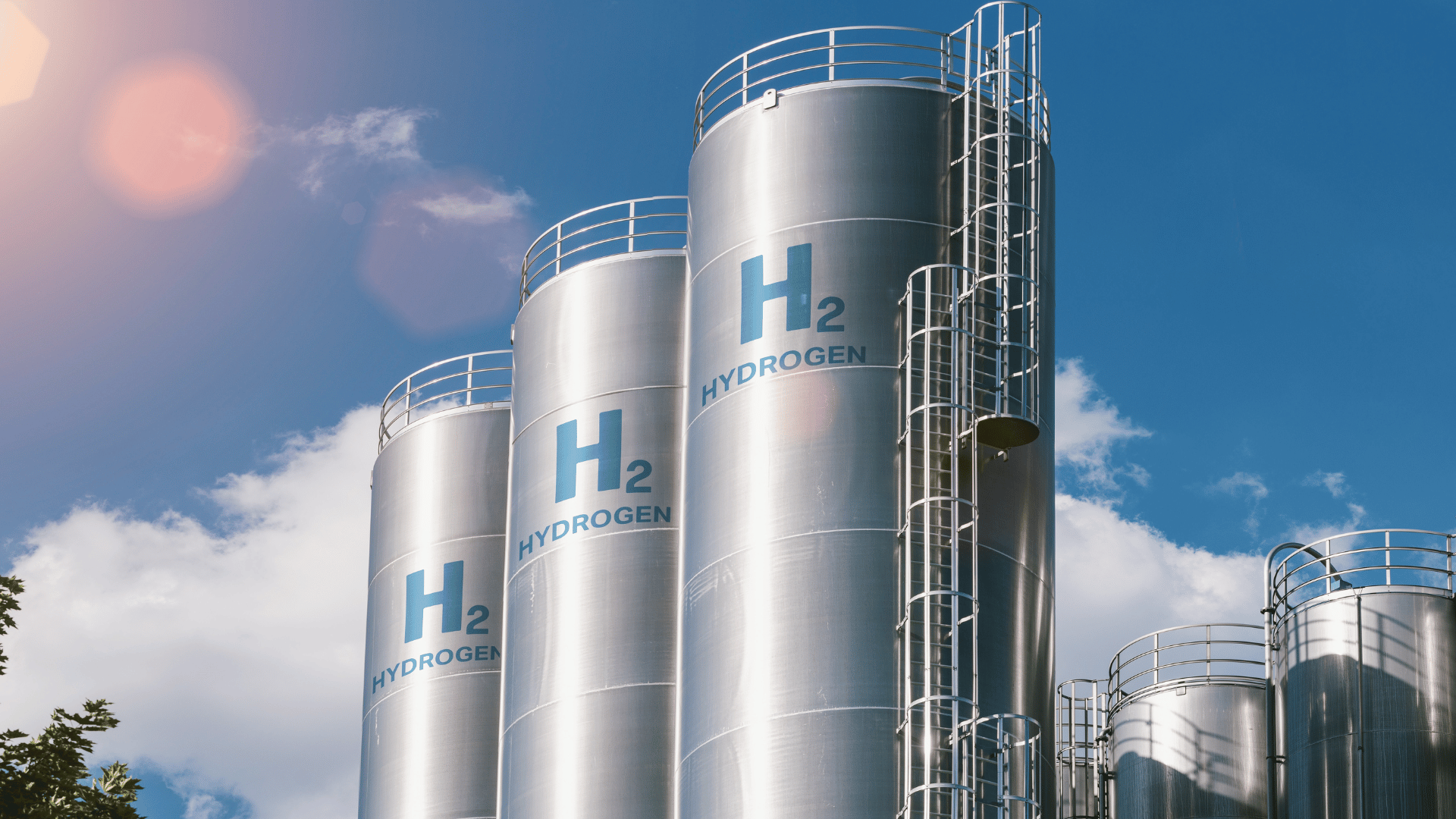
Hydrogen is a common component of almost everything we use, from fertilizer to gasoline. Stanford researcher Henry Moise explained, “It’s so ubiquitous, it kind of becomes invisible.”
Producing hydrogen typically generates large amounts of CO2. Despite the harmful emissions, it is still commonly used. Moise explained, “At least a few percentage points of the GDP depend on hydrogen, and we’re going to keep making it whether it’s dirty or not.”
Stanford researchers developed a cleaner process using a method called methane pyrolysis.
“Today we take natural gas and produce hydrogen from it, but you’re also producing CO2,” Moise said. “Pyrolysis is a similar process, but instead of producing CO2, you produce solid carbon.”
Producing Sustainable Hydrogen
As of now, this process is staying in the lab because bringing it to the commercial world is difficult due to the immense heat it requires.
“If you want to do pyrolysis at the scale required to fulfill hydrogen markets, then you have to create very large reactors,” said Matteo Cargnello, an associate professor at Stanford. “To heat up these reactors to very high temperatures, like 1,000 degrees Celsius (1832 degrees Fahrenheit), your heating methods have to be very efficient.”
Advertisement
Usually, these large reactors are heated from the outside. “You can imagine that once you heat something really big from the outside, it’s hard for the heat to penetrate all the way to the middle of the reactor,” Cargnello said.
To fix this, the team put a burner inside the reactor. By burning a small amount of hydrogen, they produce water rather than CO2, making the overall setup roughly 10 times more efficient.
“It goes back to this idea of efficiency. You can reduce CO2 emissions by avoiding making them in the first place, but you can also reduce CO2 emissions by being more efficient about how you use your energy,” Moise said. “So there’s multiple ways to make a more sustainable process.”
A Useful Bonus
The leftover solid carbon turned out to be high-quality graphite, a material widely used in batteries.
“It’s not that we wouldn’t anticipate some higher quality carbon, but it was just such a high degree of graphitization and high-quality carbon,” Moise said.
This could eventually help the U.S. produce its own graphite. However, the graphite isn’t yet pure enough for battery use.
“This is a big step forward, but there are still other steps and more research that needs to be done,” Cargnello said.
 Read Exclusive Stories
 Bookmark & Save Articles For Later