According to a new study, NASA’s Mars Atmosphere and Volatile EvolutioN (MAVEN) orbiter may have detected the first-ever evidence of a lightning strike on Mars.
Striking Resemblance to Earth Phenomenon
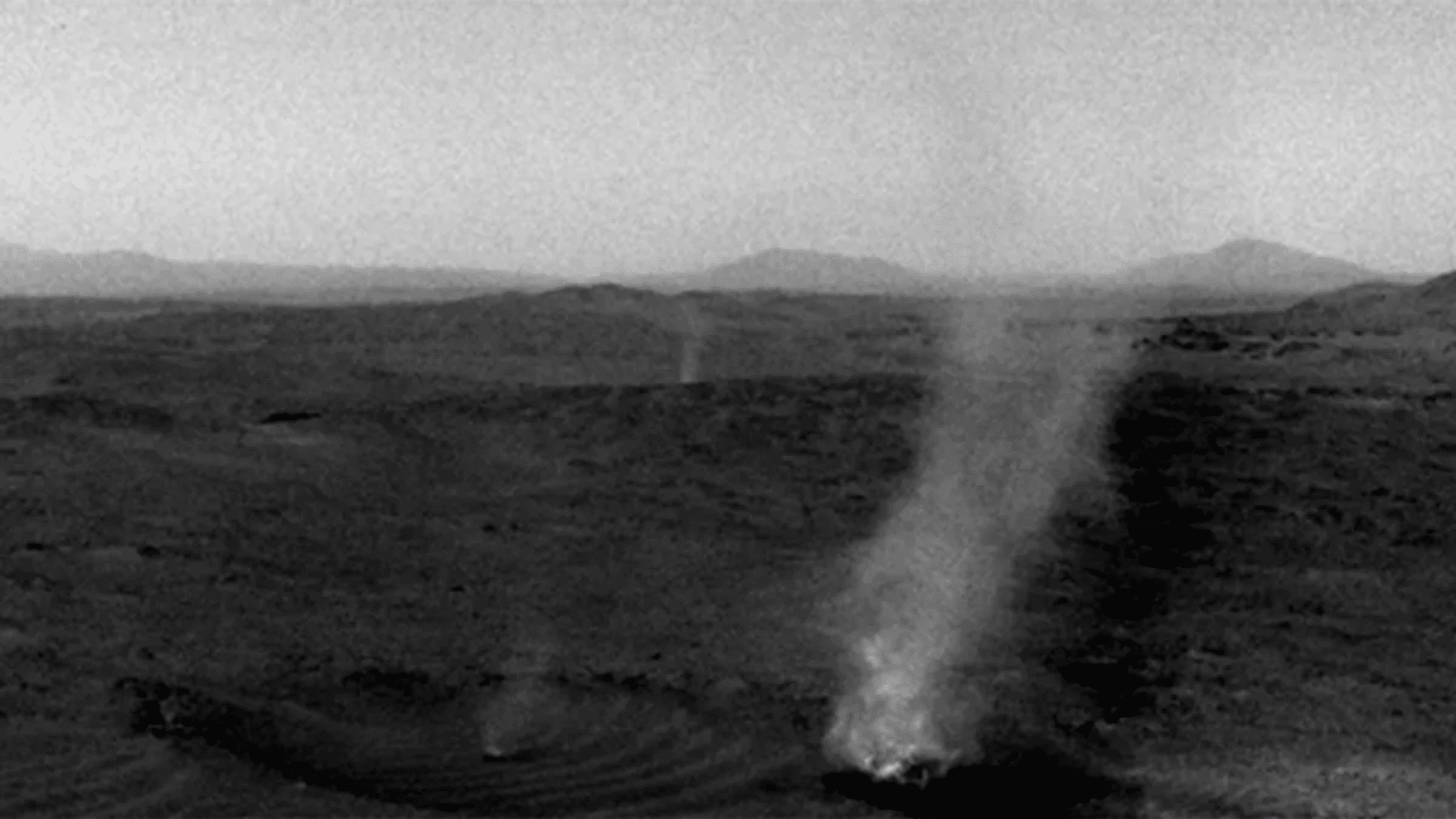
A team of researchers was combing through Perseverance rover data last year when they discovered evidence of a lightning strike on the Red Planet. While filtering through audio data from NASA’s Mars rover, the team uncovered 55 events over the course of two Martian years (one Martian year is 687 Earth days).
Of these events, 16 occurred when Perseverance had close encounters with dust devils. Based on the data, the team believes the dust devils had built up enough charge to create lightning inside them.
“Electrification of airborne dust is a known phenomenon on Earth, caused by charge transfer from collisions and frictional contact between windblown particles,” that international team explained in a paper presented at LPSC 2025.
Advertisement
“The physics of this triboelectric charging is still poorly understood, but experimental observations indicate that large particles tend to be positively charged, while smaller particles tend to be negatively charged. As smaller particles undergo turbulent ascent, larger particles fall to the ground, creating a charge separation that results in the generation of intense electric fields. Such strong electric fields have been observed in both dust storms and dust devils on Earth.”
After examining the data from MAVEN, the team reported that they had detected a “whistler wave”.
“Another possibility for detecting electric discharges stems from the analysis of accompanying electromagnetic radiation in the extremely low frequency/very low frequency range, which, under favorable conditions, can also penetrate the ionosphere,” the team explains in their paper.
“First established and understood on Earth shortly before the space era, these waves have been successfully used to evidence lightning occurrence and properties on Jupiter, Saturn, and Neptune. These waves, characterized by a distinct spectral pattern resulting from frequency dispersion in the plasma medium, are known as whistlers.”
The team looked at over 108,000 observations from the orbiter and found a single whistler event, which lasted 0.4 seconds and resembled whistler waves observed on Earth. It’s still unclear whether lightning is rare on the planet or whether conditions allowing whistler waves are rare.
The study is published in Science.