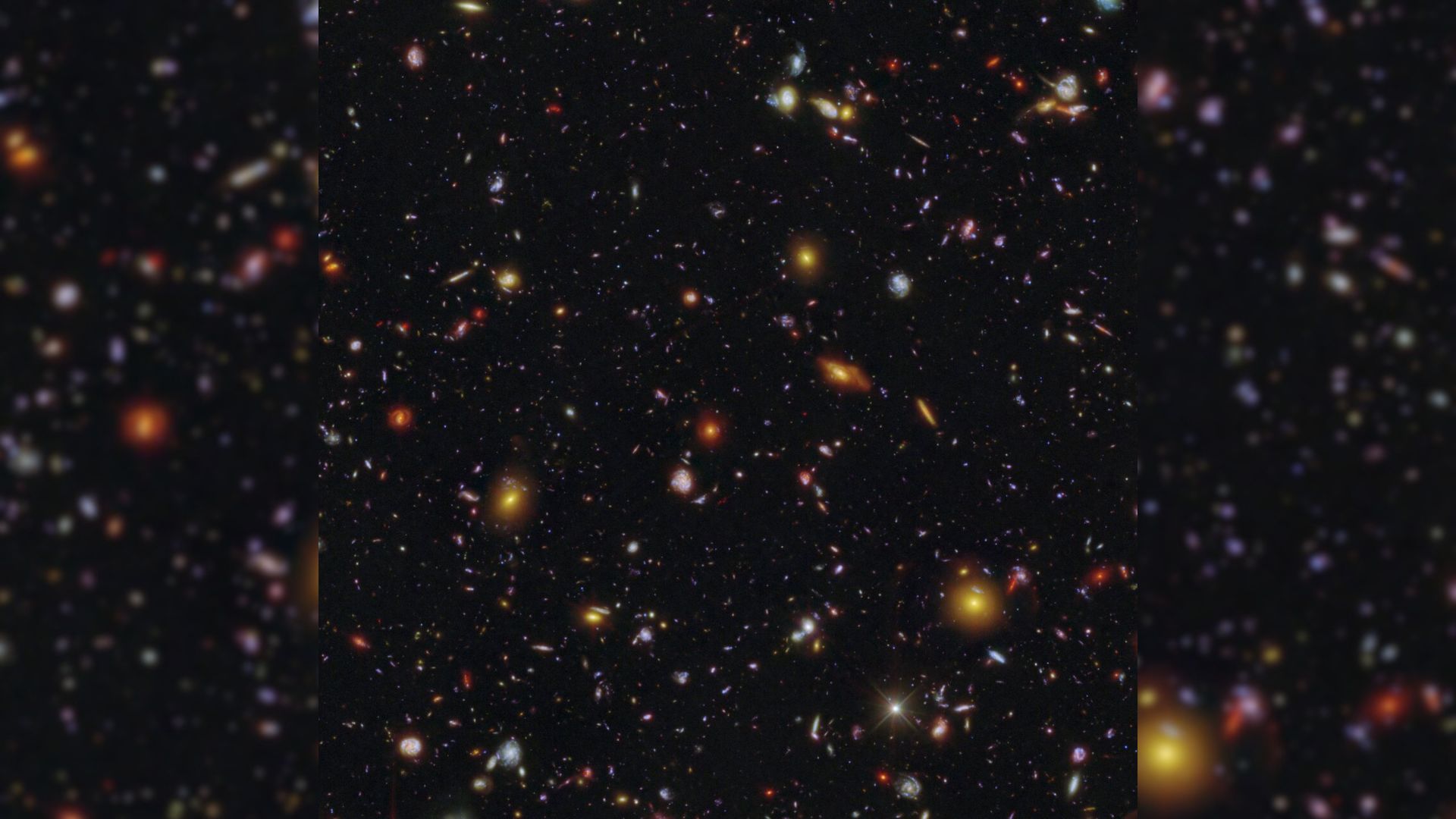
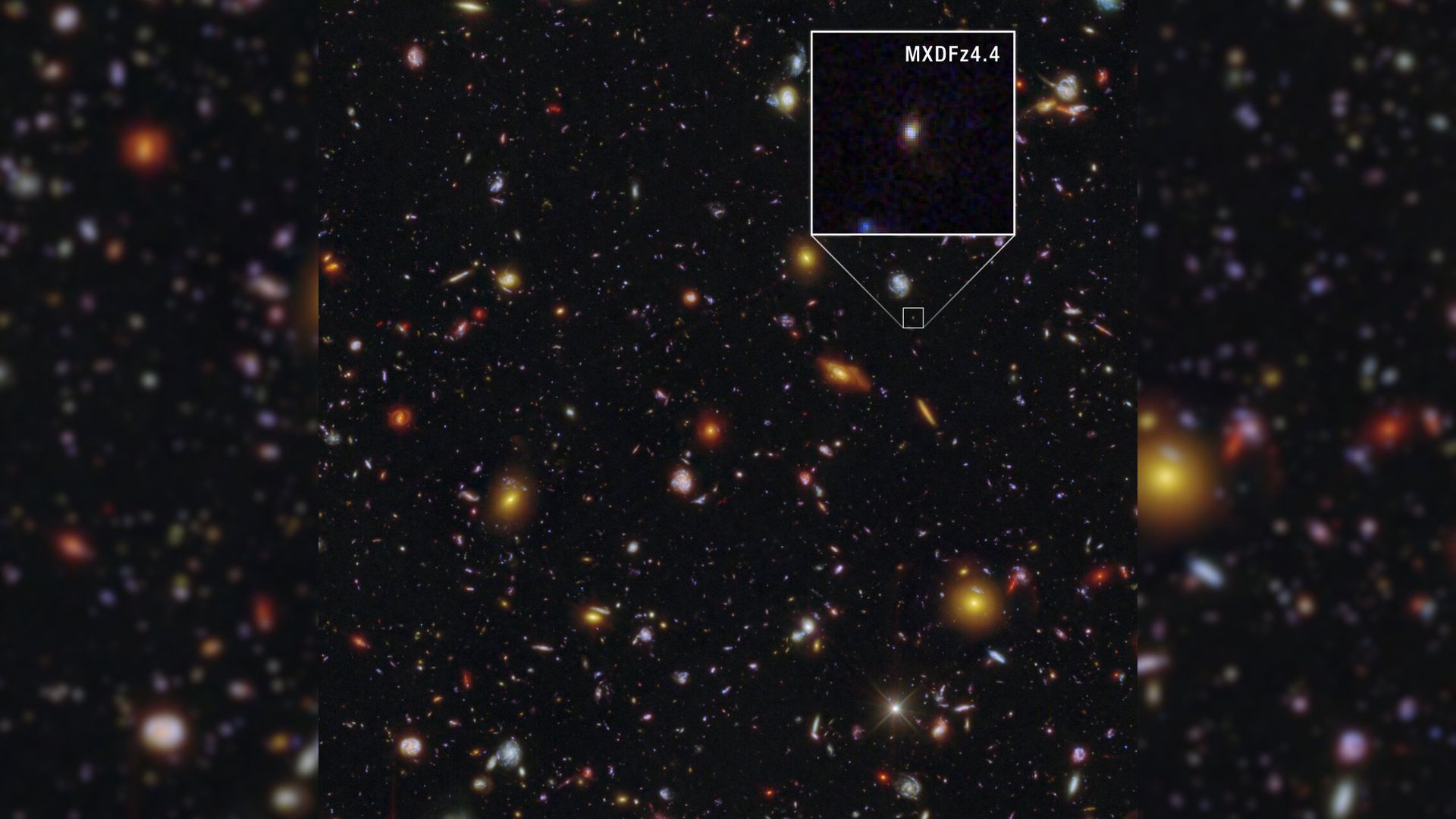
Recently, the Hubble Space Telescope has found a major clue about the early universe. Located in the distant universe is a tiny galaxy that existed only 1.4 billion years after the universe’s beginning.
A Tiny Powerhouse
The galaxy, named MXDFz4.4, is 100 times smaller than the Milky Way. However, do not let its small size fool you. This tiny galaxy is responsible for creating new stars in quantities that are ten times that of the Milky Way.
Due to the small size of the galaxy, all of the newly formed stars are packed incredibly closely together. Astronomers were surprised to find the galaxy with Hubble. Given the nature of the early universe, they assumed that the cosmos would obscure any light radiating from this distant galaxy. However, Hubble did uncover its ultraviolet light that had traveled millions of years through space.
Advertisement
Blasting Away the Fog
The ultraviolet light from these young stars is extremely powerful. The combined energy of all the newly formed massive stars in this distant galaxy can blast their light through the cosmic fog that envelops the early universe. Furthermore, because these massive stars have relatively short lives, their deaths as supernovas will contribute to the clearing of more of the cosmic fog around the galaxy.
Teamwork in Space
In addition to Hubble, two other powerful space-based observatories teamed up to make this discovery. The James Webb Space Telescope enabled astronomers to study older stars in the galaxy to determine its mass. Additionally, other telescopes helped to pinpoint when the galaxy became a part of the universe’s timeline. Using data from these astronomical research teams, scientists have postulated that these small galaxies were responsible for clearing the cosmic fog that blanketed the universe when it was young.
This new finding provides the scientific community with a better understanding of how the universe evolved from a dark, hazy state to the clear, bright universe we see today.
 Read Exclusive Stories
 Bookmark & Save Articles For Later