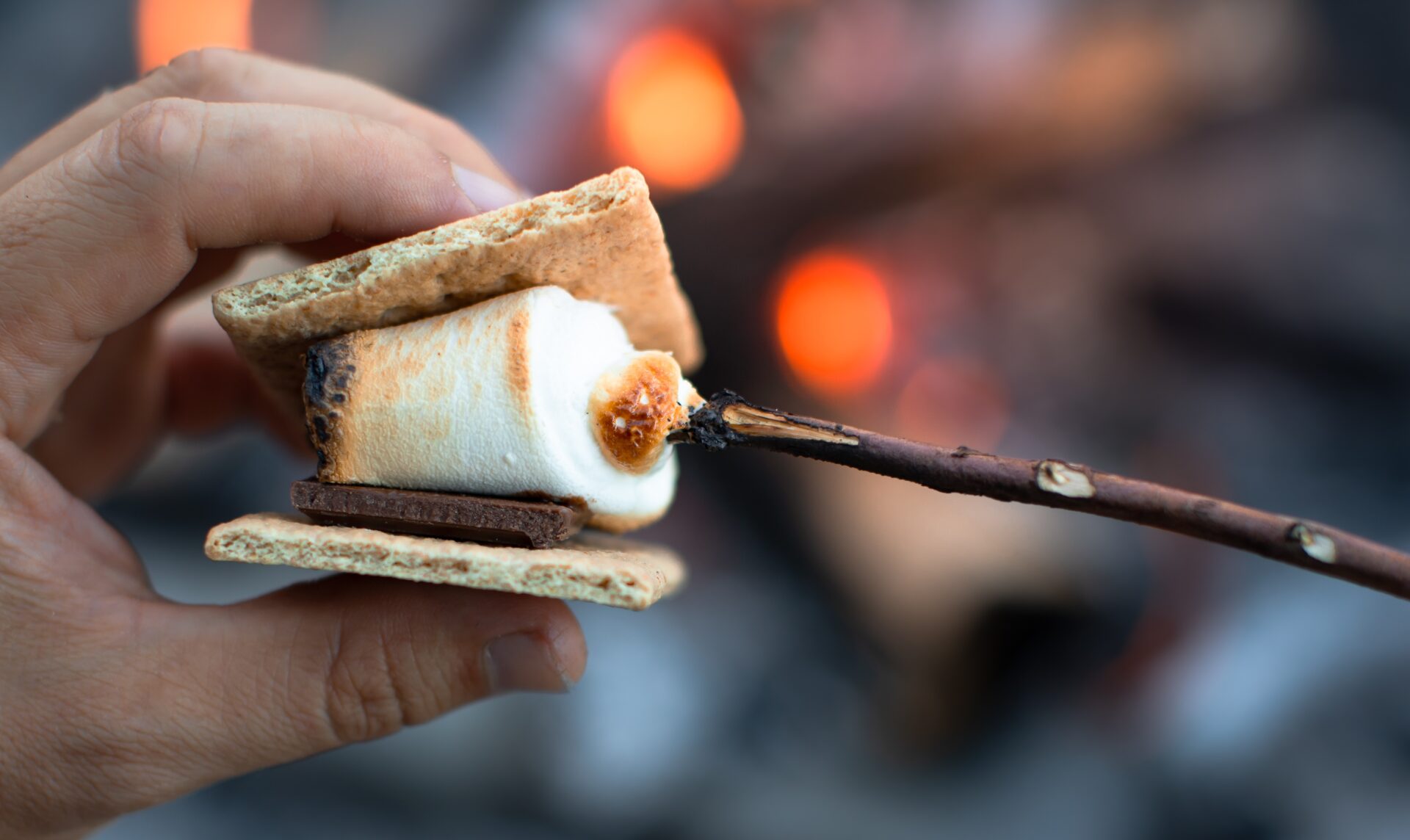
Most people know this campfire treat as a messy stack of graham crackers, chocolate, and a toasted marshmallow. But behind every sticky bite is a mix of history, food chemistry, and sustainable manufacturing.
Where the Campfire Snack Came From
The first official recipe for s’mores appeared in 1927. It was printed in a Girl Scouts guidebook called Tramping and Trailing with the Girl Scouts. The original text called them “Some Mores,” named because everyone kept asking for another one. Over time, campfires across North America turned the phrase into the single word we use today.

While the combination seems simple, making each ingredient requires some clever food science.
The Chemistry Of a Roasted Marshmallow
When you hold a marshmallow over an open flame, heat triggers a chemical reaction known as the Maillard reaction. This happens when amino acids and sugars react under high temperatures. It causes the outside of the marshmallow to turn golden brown, creating hundreds of new flavor compounds in the process.
Advertisement

Inside the marshmallow, heat melts the gelatin structure and expands tiny trapped air pockets. That air expansion is what gives the center its gooey texture. But watch out—if you leave it over the fire too long, the sugar burns and turns into pure carbon, leaving you with a charred outer shell.
Chocolate relies on physics, too. Cocoa butter has a narrow melting point, usually between 86 and 93 degrees Fahrenheit. That is just below human body temperature. When you place a hot marshmallow on chocolate, the heat melts the cocoa butter rapidly, coating your tongue.
Modern Upgrades and Eco-Friendly Treats
Food companies are finding cleaner ways to make s’mores ingredients today. Traditional gelatin in marshmallows comes from animal byproducts. Now, food scientists use plant-based gums like agar and tapioca starch to replicate that springy texture for vegans.
Chocolate makers are also focusing on sustainability. Cocoa farming often requires large amounts of water and land. Modern producers are using satellite imagery and soil sensors to cut water waste on cocoa farms. Some brands even harvest upcycled cocoa fruit pulp—parts of the cocoa pod usually thrown away—to sweeten chocolate without adding extra refined sugar.
Even the graham cracker has evolved. Bakers are using regenerative agriculture methods to grow wheat, which builds healthier soil and pulls carbon out of the air. It might be an old campfire tradition, but real science makes every bite work.
 Read Exclusive Stories
 Bookmark & Save Articles For Later