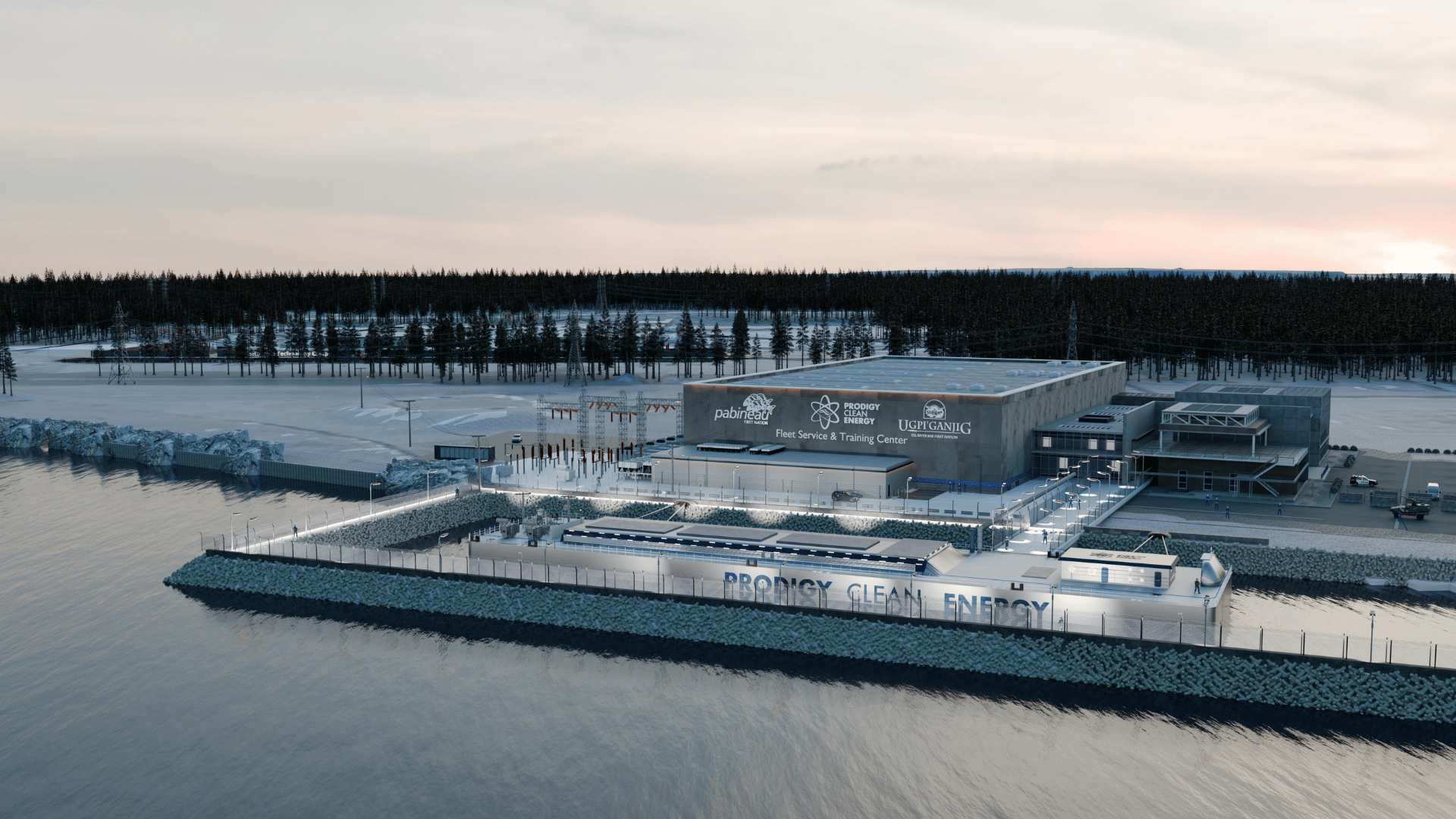
Pabineau First Nation, Eel River Bar First Nation, and Prodigy Clean Energy are partnering to build an Indigenous-owned Transportable Nuclear Power Plant in Belledune, New Brunswick, Canada.
The goal is to have the plant running by the early 2030s, powering up to 40,000 homes. This plant is built in a factory, shipped on a heavy lift ship, and installed in about 18 months. When its life ends, the entire plant is removed, meaning no legacy waste is left behind.
Testing the Transportable Plant
While the Belledune facility is a pilot project, it will help the team determine the logistics for sending future plants to Canada’s North and other global markets. The New Brunswick government signed a letter agreeing to buy the power and asked the federal government for its support.
“We in Pabineau First Nation are proud to partner with Eel River Bar First Nation, Prodigy, and the province of New Brunswick, to lead in providing a solution for energy security and food security for our brothers and sisters in the Northern regions of Canada,” said Chief Terry Richardson, Pabineau First Nation. “By integrating this Canadian clean baseload energy technology with Indigenous ownership and economic participation, this initiative establishes a replicable model to deploy transportable nuclear power infrastructure across Canada, especially in Northern and Arctic regions where energy sovereignty is vital to community prosperity and economic reconciliation.”
Advertisement
Terry added, “This project will further demonstrate an export-ready power plant for markets outside of Canada, generating prosperity not only for Indigenous Peoples and New Brunswick, but also for the country as a whole.”
Jobs and Next Steps
The Belledune site will also include a new campus with an Indigenous visitor center and a maintenance hub. This can help create over 150 jobs during site setup and 40 permanent on-site jobs.
“The successful integration of microreactors and Transportable Nuclear Power Plants into Canada’s Northern and Arctic energy portfolio begins with demonstrating a commercially operating facility south of 60 in an established nuclear jurisdiction,” said Mathias Trojer, President and CEO of Prodigy Clean Energy. “This deployment strategy is consensus-driven, reflecting years of dedicated engagement with Northern Indigenous Rights Holders, provincial and federal governments, utilities, and industry.”
Over the next few months, the project team will pick the exact site and the specific reactor type. They will also work with companies like BWXT Canada Ltd. and Kinectrics Inc. to handle licensing and supply chain details.
 Read Exclusive Stories
 Bookmark & Save Articles For Later