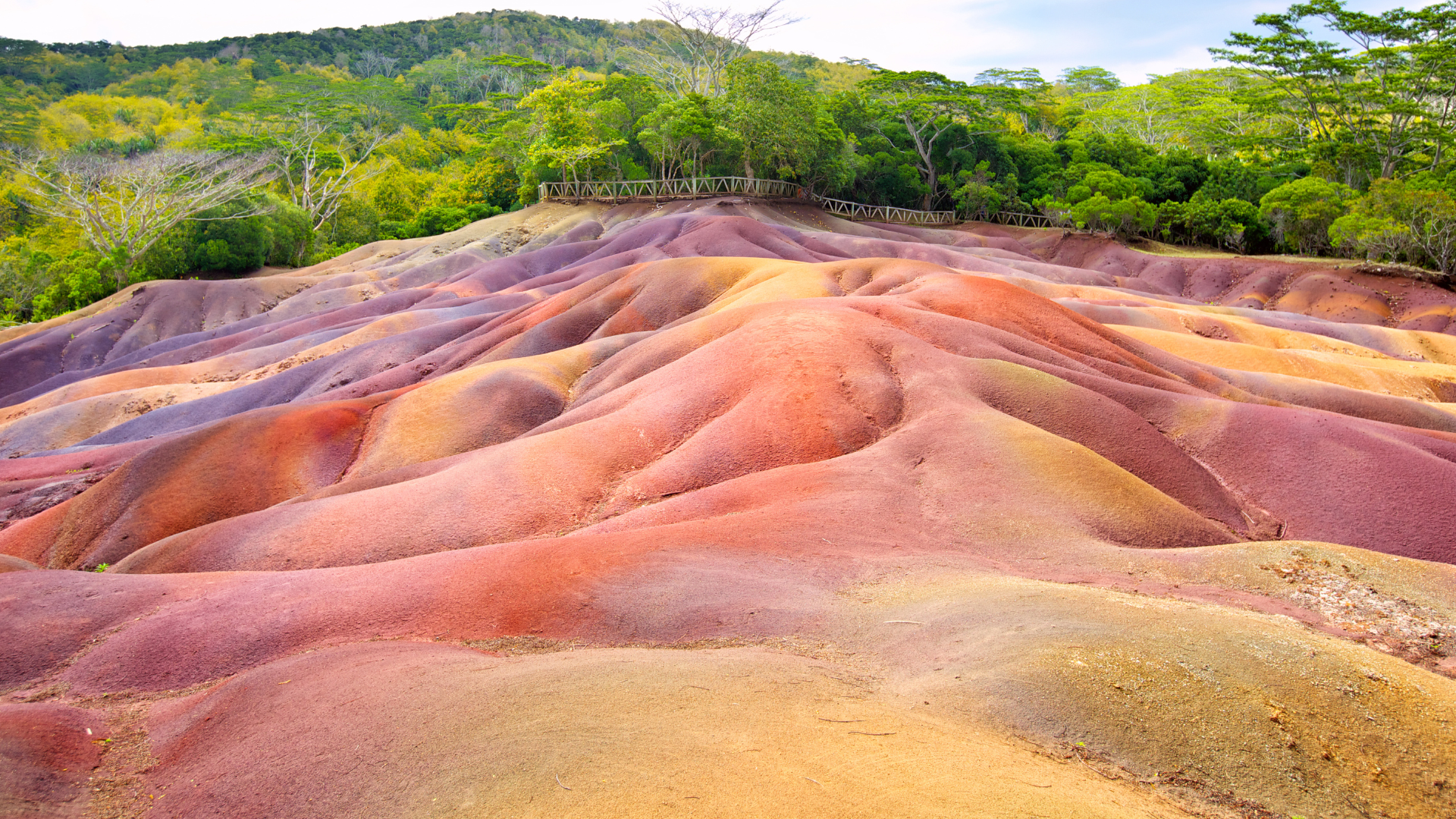
If you travel to the village of Chamarel on the island of Mauritius, you will find a very strange patch of dirt sitting right in the middle of a dense green forest.
It looks like someone brought in truckloads of painted sand and dumped it in rolling piles. The small dunes are completely bare and striped with seven distinct colors: red, brown, violet, green, blue, purple, and yellow. People call it the Seven Colored Earth. While it looks like a man-made art project, it is actually just a weird geological reaction.
A Volcanic Breakdown
The entire island of Mauritius was created by underwater volcanoes. Millions of years ago, liquid magma cooled into dark, solid basalt rock.
But the climate here is hot and wet. Over thousands of years, the tropical weather slowly broke that hard volcanic rock down into clay. Heavy rains constantly washed through the soil. The water stripped away all the normal nutrients and water-soluble minerals that help plants grow.
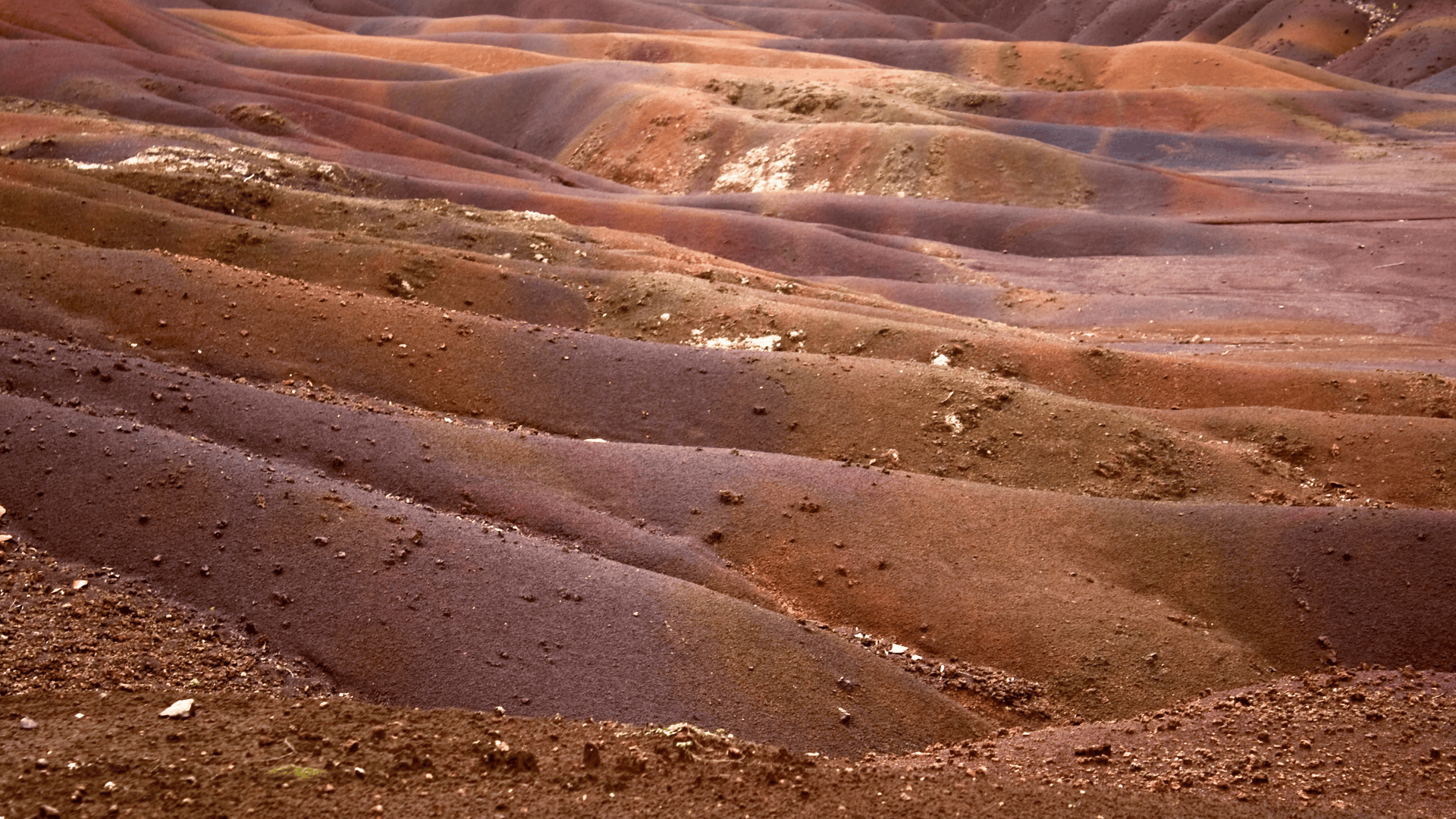
When all the regular dirt washed away, only two main elements remained: iron and aluminum. The iron gives the dirt bright red and brown colors. The aluminum creates the blue and violet shades. As the rock rusted and broke down under the sun, it left these heavy metals sitting right on the surface.
Why The Colors Do Not Mix
Advertisement
Here is what makes this spot a real science puzzle. The colors stay completely separated in their own distinct stripes.
Even if you take a handful of the colored dirt, put it in a jar, and shake it up, the colors will not stay muddy. If you let the jar sit for a few days, the dirt will eventually separate back out into distinct colored layers.
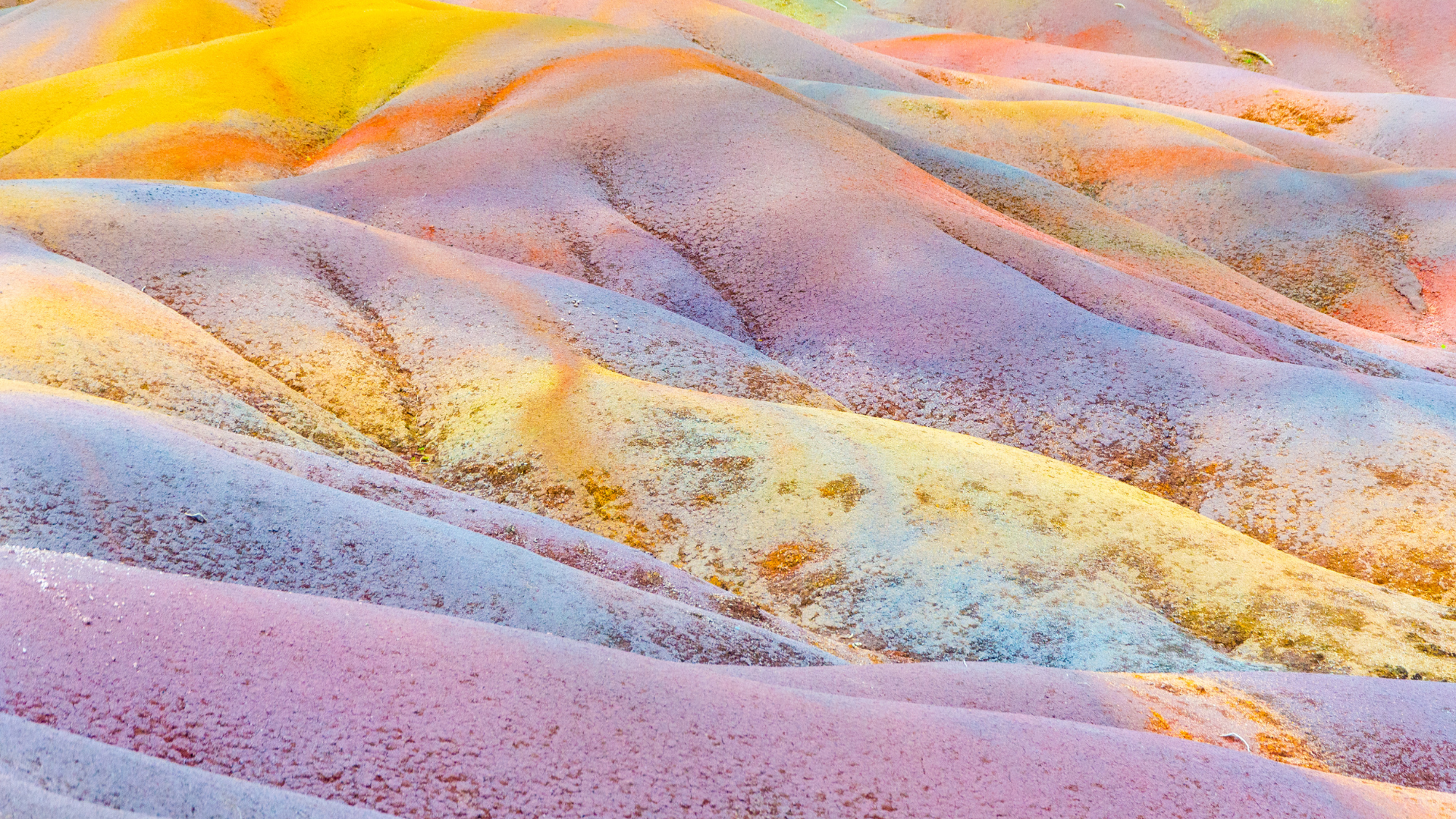
This happens because the iron and aluminum particles naturally repel each other. They refuse to mix permanently. Instead, they group up with their own kind of metal. Because of this natural chemical reaction, the dunes automatically sort themselves out, keeping the stripes looking clean and sharp.
Surviving Heavy Rain
Mauritius gets massive tropical rainstorms. Normally, a bare hill of dirt with no tree roots to hold it together would just wash away into the ocean during the first major storm.
But these dunes barely erode. The specific way these heavy metal particles pack together makes the ground surprisingly solid. The water just runs right off the top without carrying the dirt away. So the colorful dunes just sit there, completely empty of plant life, acting as a permanent visual science lesson right in the middle of the jungle.
 Read Exclusive Stories
 Bookmark & Save Articles For Later