In June 2021, a massive tragedy shocked the country when Champlain Towers South in Surfside, Florida, collapsed and claimed the lives of 98 people. For the following five years, people wondered at the tragedy and its causes. However, the National Institute of Standards and Technology (NIST) finally revealed the cause of the tragic collapse.
How the Collapse Started
The collapse started a few weeks before the building finally fell. On the 14th day of June 2021, the two connections that held the pool deck to the garage columns failed. The failure of those connections caused the pool deck to crack. For the next three weeks, the pool deck’s weight was transferred to other columns in the building that were not as strong as the collapsed columns. On the 24th of June, the southern portion of the pool deck fell off the support wall and struck the supports of the main building tower, causing the middle and east portions of the tower to collapse.
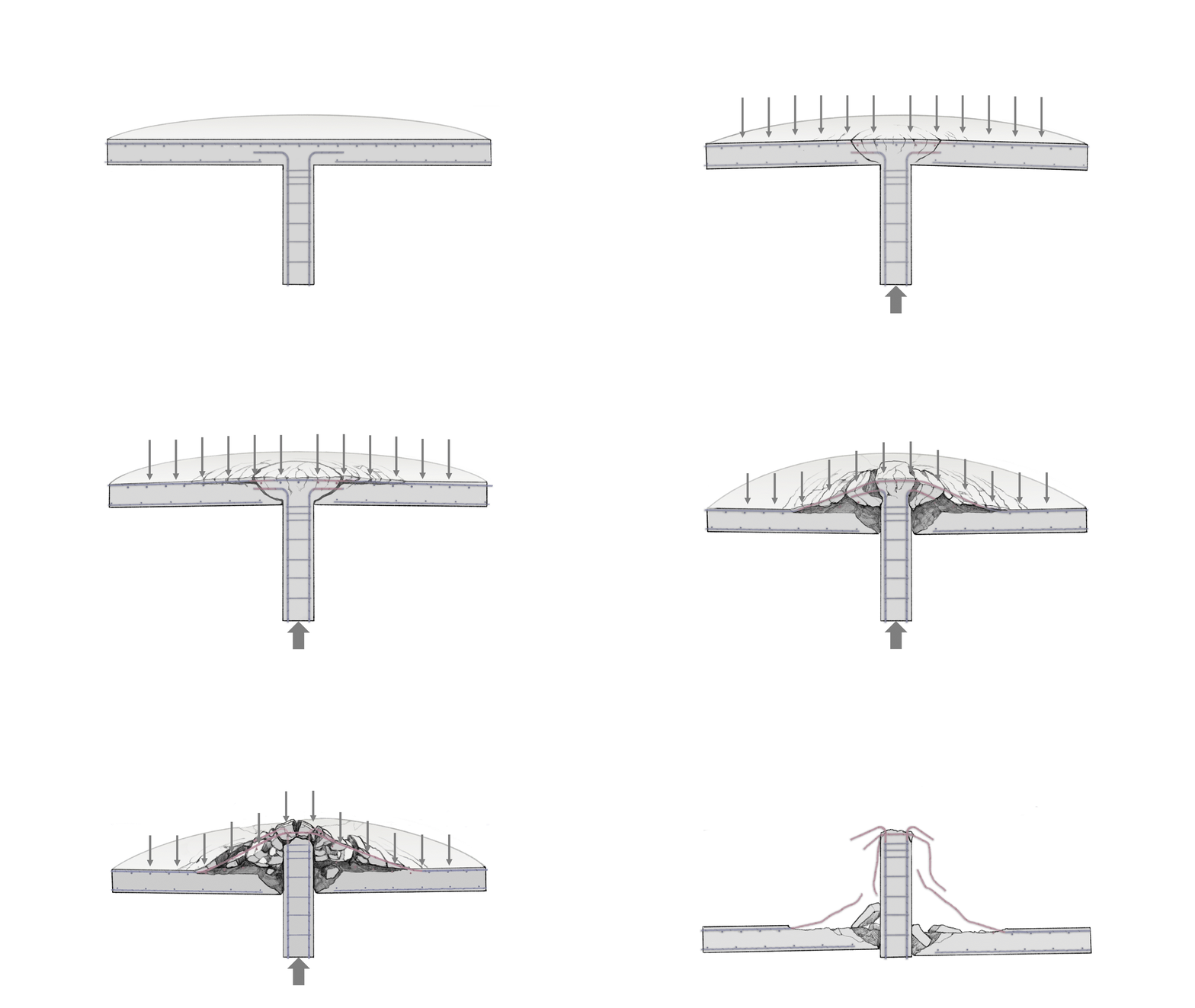
Designed with Flawed Codes and Construction
For normal buildings, a safety margin allows the structures to support more weight than they are designed for. With the Champlain Towers South building, however, the safety margins were extremely narrow. The building was constructed with two major flaws. For one, the plans for the building completely ignored the building codes established in the 1980s. Additionally, the construction crew did not follow the plans made for the building’s construction in 1981. Over the next 40 years, the building succumbed to the corrosive effects of ocean water and to the additional weight placed on the pool deck during renovations. All of this continued to erode the building’s safety margins.
Learning from the Tragedy
The investigation into the collapse of Champlain Towers South was challenging. The investigation ruled out sinkholes, hurricanes, and vibrations from construction or nearby explosions.
Advertisement
Instead, investigators examined the scene of the tragedy to determine the cause. The investigators built computer models of the building’s structure as it was constructed in 1981. Additionally, they created models of the concrete used in 1981 to determine the strength of the building materials.
Using information gathered from the investigation, NIST is publishing a report that will include recommendations for modern construction codes to prevent another tragedy in a building.
 Read Exclusive Stories
 Bookmark & Save Articles For Later