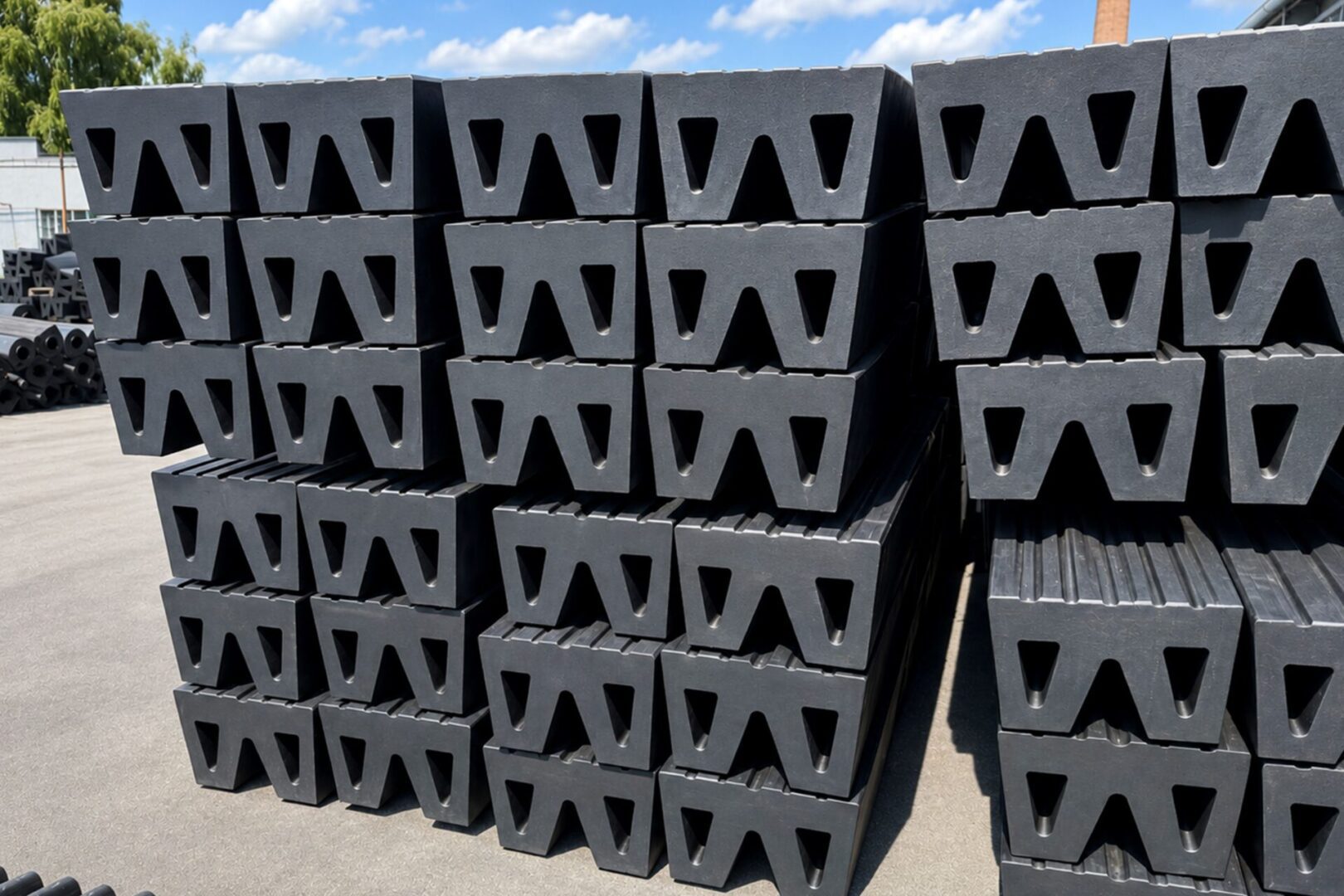
Ports and shipyards need heavy-duty rubber fenders to protect docks and vessels. But making that rubber usually takes a heavy toll on the planet. Slovakia-based Bencros Marine Fenders just changed that equation. They figured out a way to build tough marine fenders out of recycled industrial rubber waste. And now, they have proof to back it up.
Bencros made history in Hamburg by launching the world’s first independent Emission Reduction Certificates for marine fenders. Bureau Veritas verified that Bencros saved 13,112 tonnes of CO₂e between 2024 and 2025.
Here is how they pull it off. Bencros takes rejected rubber compounds from tire and industrial factories. They mix that waste with powder from old, ground-up tires. Instead of burning that rubber or throwing it in a landfill, they turn it into high-performance fenders. Over those two years, they reused 5,070 tons(!) of rubber.
For buyers, the process is remarkably simple. You get the exact same fender performance you expect. But every single ton of the product now comes with a certified saving of about 2.6 tons of CO₂e compared to using virgin rubber.
Most of that saving—2.42 tons per ton—goes straight into the buyer’s own greenhouse gas inventory. It cuts right into Scope 3 supply chain numbers. The rest covers the carbon saved by stopping waste rubber from being burned.
Buyers have their certificates registered in their own names under the Proba carbon standard. You can claim the credit once. And nobody else can buy it.
Advertisement
“This is not an offset,” says Joost Komijn, founder and CEO of Bencros. “An offset is like planting a tree to offset your flight emissions. This saving happens inside the product you actually bought, in your own supply chain.”
Komijn points out that the carbon reduction comes directly from your reported footprint. You buy the fender you already needed, and the climate savings come with it. Certificates cost about $93 per ton of CO₂e saved. That money funds the messy logistics of recycling. It pays to collect, sort, and clean waste rubber to meet strict manufacturing standards. It also covers the cost of independent third-party verification.
What Does This Look Like in Tomorrow’s World?
A Norwegian customer already bought the first batch of fenders along with their carbon certificates. Bencros expects to save nearly 5,000 tons of CO₂ in 2026 alone.
This step fits right into how the company has always operated. Bencros built its entire production model around recovered materials. They even run a take-back program. When old fenders reach the end of their lifespan, customers can return them. Bencros shreds them down and mixes them right back into fresh fender production, closing the loop completely.
Real sustainability is not about buying blank checks for distant trees. It means fixing the products we build every single day. Bencros proves you can protect a ship, clear out industrial waste, and slash your carbon footprint all at once.
 Read Exclusive Stories
 Bookmark & Save Articles For Later