Making pottery is quite a way away from building rocket ships. However, the science behind both of these industries is the same. It all revolves around heating the Earth to extreme temperatures.
Turning Mud Into Glass
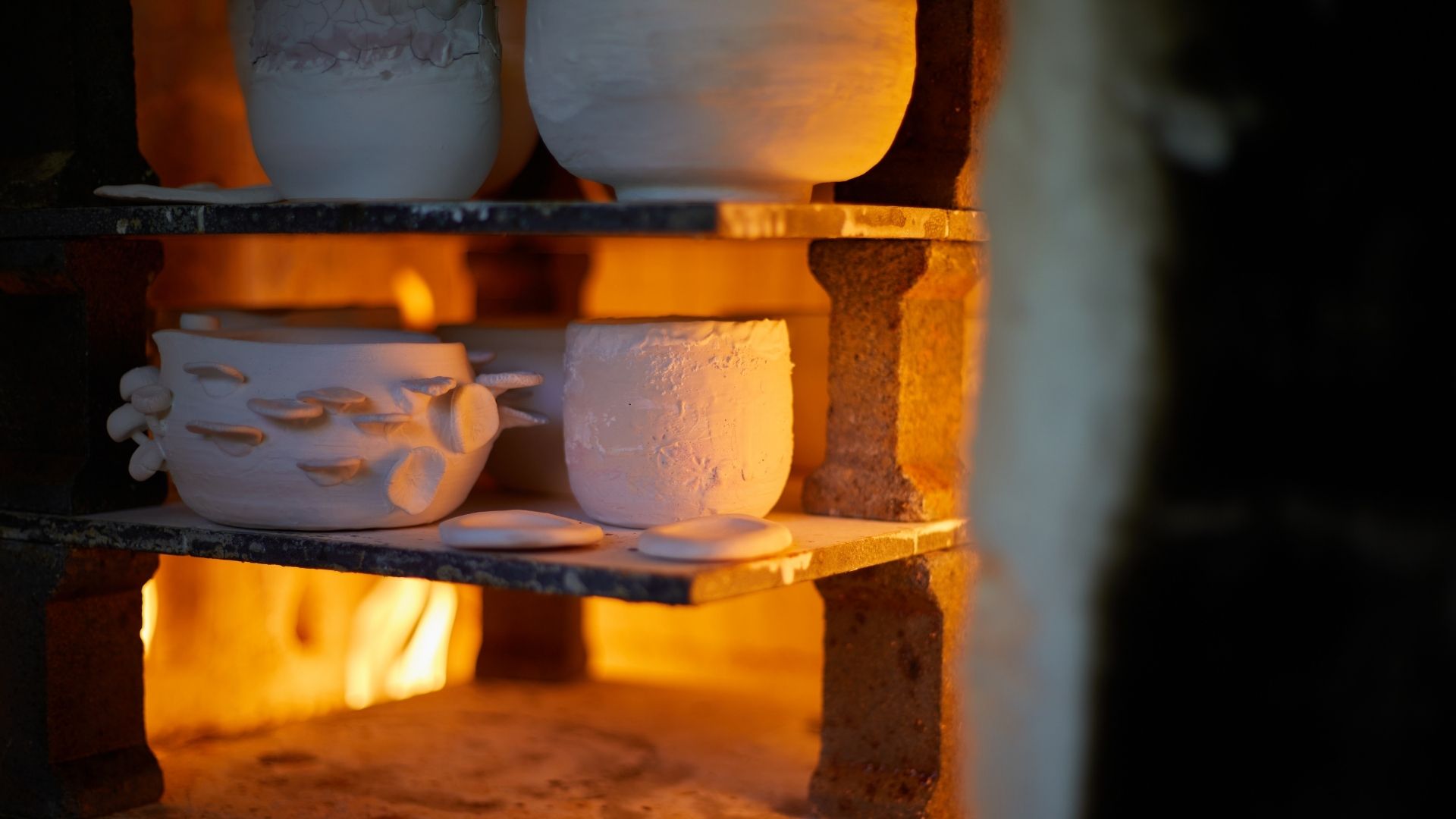
Around 5,000 years ago, humans learned that heating clay to high temperatures changes the clay’s structure. Clay is mostly water, alumina, and silica. When clay is heated to 2,200 degrees Fahrenheit in a kiln, the silica in the clay melts and transforms into liquid glass.
This liquid fills the microscopic pores inside the clay. When the clay finally cools, the glass hardens and becomes solid. As a result, the water can no longer pass through the pottery pieces. This process, called vitrification, is used to create porcelain mugs that hold soup without dripping. However, making pottery waterproof was just the beginning of what could be done with this skill.
Stopping Heat in Space
Now, 5,000 years later, NASA was dealing with an issue with the Space Shuttle program. When the shuttle returned to Earth, the friction with the atmosphere would heat the craft to around 3,000 degrees. This would melt any metal on the shuttle in just a few seconds.
Advertisement
To combat this, a NASA engineer created ceramic tiles from pure silica sand. Similar to the pottery process, the engineers heated the silica to high temperatures in an oven. However, the ceramic tile was mostly composed of empty air spaces.
As a result, the ceramic was terrible at conducting heat. Engineers were able to pull the tiles out of the oven to temperatures of 3,000 degrees and hold them by the corners for just a few seconds. The same skill used to make porcelain mugs was used to save the astronauts in space.
Fixing Electric Car Batteries
Finally, ceramics are being used to solve one of the present-day problems in the electric car world. Most electric car batteries use a liquid inside. This liquid is highly flammable. If the battery is punctured or overheats, the liquid will ignite and start a fire in the electric car. Additionally, tiny metal spikes can form in the liquid over time and short out the electric car battery.
To solve this problem, scientists have created solid-state batteries by using a solid ceramic to replace the liquid electrolyte. Because ceramic materials are fired at extremely high temperatures, they cannot burn. Additionally, the solid-fired ceramic prevents the metal spikes from passing through.
These solid-state batteries are safer, can charge faster, and last longer. Thus, solutions to modern-world problems require an ancient skill.
 Read Exclusive Stories
 Bookmark & Save Articles For Later